-
Robot
Most Wanted

- Rep Power
- 84
 TechPowerUP NEWS
NVIDIA today announced major updates to its GeForce NOW cloud gaming platform that turns practically any screen with a game controller into a powerful gaming platform with graphics akin to PCs. The company brought NVIDIA GeForce RTX 5080 performance tier to GeForce NOW in 2025, priced at $19.99 a month to be able to play on any device, at resolutions of up to 5K @ 120 FPS or 1080p @ 360 FPS, with NVIDIA Reflex low latency, and Cinematic quality streaming, with a game library spanning over 4,000. In 2026, NVIDIA is announcing a handful interesting updates.
Perhaps the biggest GeForce NOW update today is support for exotic game controller types, such as slight control, racing wheels, and newer kinds of simulator hardware. Your client device should be able to recognize the controller and let GeForce NOW use it, so you can use the controller for playing titles such as Microsoft Flight Simulator 2024, etc. Next up, NVIDIA announced the addition of more AAA games to GeForce NOW, including Resident Evil Reqium, 007 First Light, Crimson Desert, and Active Matter.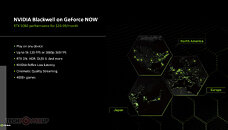



Read full story
More...
-
Robot
Most Wanted
- Rep Power
- 84
NVIDIA Updates G-SYNC Pulsar Standard and Ambient Adaptive Technology
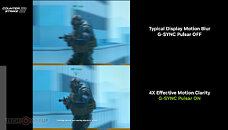
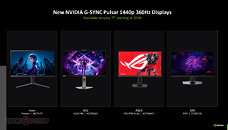
NVIDIA today announced updated G-SYNC Pulsar display standard for fast-paced competitive e-sports gaming. The standard builds on NVIDIA's proven G-SYNC variable refresh-rate technology that ensures that the display and GPU are in perfect sync with output framerates and display refresh-rates, to eliminate screen tearing and stuttering. The new G-SYNC Pulsar spec calls for a standardized 27-inch QHD (2560 x 1440 pixels) gaming display with refresh rate of 360 Hz on the display's side, and the capability of over 1000 Hz perceived motion clarity that works at the game rendering level to eliminate motion blur. In the example shown below, G-SYNC Pulsar in "Counter Strike 2" is shown improving effective motion clarity by 4 times.
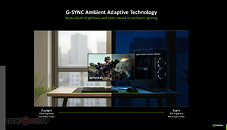
The other new standard being introduced today is Ambient Adaptive Technology. Similar to your smartphone, which uses its front-camera to gauge ambient lighting conditions to dynamically adjust display and color temperature, this feature relies on an optical sensor on the display to analyze ambient lighting conditions, and respond to broad daylight with 100% brightness, cooler white colors (higher color temperatures); and nighttime with 36% brightness, and warmer colors (lower color temps). At CES, popular gaming monitor manufacturers are announcing their G-SYNC Pulsar capable monitors, which include Acer Predator XB273U F5, AOC AGON Pro AG276QSG2, ASUS ROG Strix Pulsar XG27AQNGV, and MSI MPG 272QRF X36. These displays will be available from tomorrow (January 7), with prices starting at $599.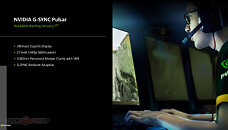
More...
-
Robot
Most Wanted
- Rep Power
- 84
NVIDIA Announces DLSS 4.5 with Increased Image Quality, 6x FrameGen, a
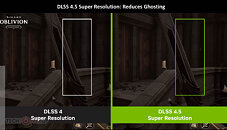
NVIDIA today announced the new DLSS 4.5 technology at its 2026 International CES media event, to improve gaming performance and image quality, bringing higher resolutions and refresh rates within reach of PC gamers. DLSS 4.5 is a major update over DLSS 4 that debuted in 2024 with the GeForce RTX 50-series "Blackwell" graphics cards. It is designed to bring games with performance-intensive path tracing effects to a broader audience, with the fastest RTX 50-series GPU models being able to play path-traced games at 4K Ultra HD with 240 Hz.
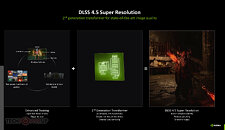
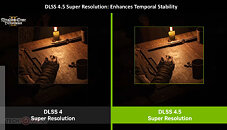
At the heart of the DLSS 4.5 update are two key announcements—2nd Generation Super Resolution Transformer, and Dynamic Multi Frame Generation. One of the defining features of DLSS 4 is its high-quality upscaler, which replaced convolutional neural network (CNN) based AI models with a newer Transformer-based model, resulting in a significant improvement in image quality. Now, at CES, NVIDIA announced that they have updated their algorithm with an even newer Transformer-based model that has been trained on a much larger dataset. This 2nd Gen Transformer was developed using five times the compute power that went into the first-gen DLSS 4 Transformer upscaler, and leverages the FP8 data format that's supported by the Tensor cores of GeForce RTX 40-series "Ada" and 50-series "Blackwell" GPUs. DLSS 4.5 is still supported on older 30-series "Ampere" and 20-series "Turing" GPUs, however these generations lack FP8 acceleration, so the performance uplift over native wouldn't be as significant as with newer GPUs.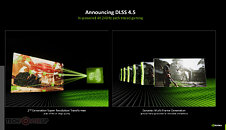
Read full story
More...
-
Robot
Most Wanted
- Rep Power
- 84
MSI Shows Off New AI Mini-PCs with Intel, AMD, and NVIDIA DGX Spark Pl
MSI has officially unveiled the specifications of its new AI-centric mini PC line-up that is being debuted at CES 2026. The new line-up offers something for everyone—as long as you're looking to run local LLMs or similar AI workloads—whether you're looking for a hyper-compact x86 system powered by AMD's RDNA 3.5, a more powerful NVIDIA RTX 5070, or something more exotic with NVIDIA's new Arm-based DGX Spark platform.
Perhaps the most interesting mini PC that MSI is showing off at CES is the EdgeXpert, which is targeted at AI developers and is built on NVIDIA's DGX Spark platform. In the EdgeXpert, which was announced earlier this year, that means 20 Arm CPU cores and an AI Blackwell GPU as well as NVIDIA's NVLink C2C tech, which claims to offer "five times the bandwidth of PCIe 5.0," for improved data transfer and sharing between the CPU and GPU. According to MSI, the EdgeXpert is capable of a petaFLOP of AI performance. It also features 128 GB of LPDDR5x unified system memory and a vapor chamber cooling system.
Read full story
More...
-
Robot
Most Wanted
- Rep Power
- 84
-
Robot
Most Wanted
- Rep Power
- 84
-
Robot
Most Wanted
- Rep Power
- 84
Cooler Master Reveals New PC Cases and Accessories at CES 2026
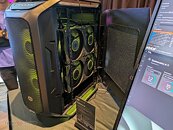
At CES 2026, Cooler Master showed off its latest PC cases from the COSMOS and MasterFrame lines, along with a range of matching add-ons. The high-end COSMOS series now includes the new COSMOS Alpha case. It is built using a modular design, curved aluminium frame and tempered glass side panels. One of its standout features is a sliding motherboard tray, which allows the internal layout to be adjusted for cleaner airflow or liquid-cooling-focused builds. Cooler Master also includes a sliding, adjustable fan bracket that supports multiple fan sizes. COSMOS Alpha can house E-ATX and EEB motherboards in addition to ATX and microATX, graphics cards up to 400 mm long, and power supplies up to 240 mm. Cooling support includes up to 15 fans, with dual pre-installed 200 × 38 mm extra-thick fans, removable dust filters, and radiators up to 420 mm.
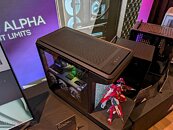
Cooler Master also expanded its open-frame MasterFrame lineup with the new MasterFrame 360 series, built around a 360-degree display concept. The series includes three variants: MasterFrame 360 Panorama, a sealed tempered-glass enclosure designed for full visibility and protection; MasterFrame 360 Stage Mirror, an open-frame design with a mirrored base to enhance visual depth; and MasterFrame 360 Stage LCD, which integrates a 15.6-inch display for custom visuals or use as a secondary screen.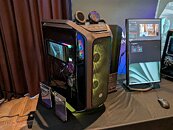

Read full story
More...
-
Robot
Most Wanted
- Rep Power
- 84
-
Robot
Most Wanted
- Rep Power
- 84
-
Robot
Most Wanted
- Rep Power
- 84
(PR) NVIDIA DGX Spark and DGX Station Power the Latest Open-Source and
Open-source AI is accelerating innovation across industries, and NVIDIA DGX Spark and DGX Station are built to help developers turn innovation into impact. NVIDIA today unveiled at the CES trade show how the DGX Spark and DGX Station deskside AI supercomputers let developers harness the latest open and frontier AI models on a local deskside system, from 100-billion-parameter models on DGX Spark to 1-trillion-parameter models on DGX Station. Powered by the NVIDIA Grace Blackwell architecture, with large unified memory and petaflop-level AI performance, these systems give developers new capabilities to develop locally and easily scale to the cloud.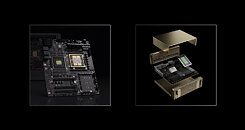
Read full story
More...
-
Robot
Most Wanted
- Rep Power
- 84
(PR) NVIDIA DGX SuperPOD Sets the Stage for Rubin-Based Systems
NVIDIA DGX SuperPOD is paving the way for large-scale system deployments built on the NVIDIA Rubin platform—the next leap forward in AI computing. At the CES trade show in Las Vegas, NVIDIA today introduced the Rubin platform, comprising six new chips designed to deliver one incredible AI supercomputer, and engineered to accelerate agentic AI, mixture‑of‑experts (MoE) models and long‑context reasoning. The Rubin platform unites six chips—the NVIDIA Vera CPU, Rubin GPU, NVLink 6 Switch, ConnectX-9 SuperNIC, BlueField-4 DPU and Spectrum-6 Ethernet Switch—through an advanced codesign approach that accelerates training and reduces the cost of inference token generation.
DGX SuperPOD remains the foundational design for deploying Rubin‑based systems across enterprise and research environments. The NVIDIA DGX platform addresses the entire technology stack—from NVIDIA computing to networking to software—as a single, cohesive system, removing the burden of infrastructure integration and allowing teams to focus on AI innovation and business results. "Rubin arrives at exactly the right moment, as AI computing demand for both training and inference is going through the roof," said Jensen Huang, founder and CEO of NVIDIA.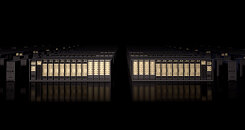
Read full story
More...
-
Robot
Most Wanted
- Rep Power
- 84
(PR) NVIDIA BlueField-Powered Cybersecurity and Acceleration Arrive on
AI is powering breakthroughs across industries, helping enterprises operate with greater intelligence and speed. As AI factories scale, the next generation of enterprise AI depends on infrastructure that can efficiently manage data, secure every stage of the pipeline and accelerate the core services that move, protect and process information alongside AI workloads.
NVIDIA has expanded the NVIDIA Enterprise AI Factory validated design to include NVIDIA BlueField cybersecurity and infrastructure acceleration capabilities. This accelerates the data center services that keep AI factories running and delivers security that can operate at the same speed as AI. Leading software platforms from NVIDIA BlueField ecosystem partners Armis, Check Point, F5, Fortinet, Palo Alto Networks, Rafay, Red Hat, Spectro Cloud and Trend Micro are now validated as part of NVIDIA Enterprise AI Factory, helping enterprises enhance runtime protection, streamline operations and strengthen the infrastructure that powers AI.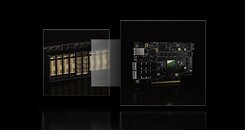
Read full story
More...
-
Robot
Most Wanted
- Rep Power
- 84
-
Robot
Most Wanted
- Rep Power
- 84
ADATA and XPG Portable SSDs at CES 2026
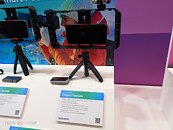
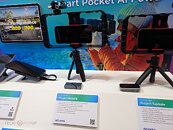
At CES 2026, ADATA showed off its latest consumer portable SSD products. The ADATA SR800 is a combination of a portable SSD and a power bank, for smartphones and with USB-C interfaces. The drive features a USB 3.2 Gen 2x2 (20 Gbps) data-interface, and comes in capacities of 1 TB and 2 TB, offering sequential transfer speeds of 2 GB/s. As a power bank, it packs a 5000 mAh battery, and can deliver up to 15 W of power over wire, and 15 W over Qi-compatible wireless. It can latch onto your phone with a magnetic surface, recharge it, while you're moving stuff to its storage.
ADATA Project BulletX is a USB4 portable SSD that comes in a form-factor resembling the SE920, but much smaller. ADATA claims that this is the industry's most compact USB4 SSD. The drive fully saturates 40 Gbps USB4, offering sequential speeds of up to 4 GB/s reads, with up to 3.6 GB/s writes, and comes in capacities ranging from 1 TB to 4 TB. ADATA Project TapSafe is an upcoming secure portable SSD that features NFC smart card-based unlock mechanism, it integrates an NFC reader. The drive features a 20 Gbps USB 3.2 Gen 2x2 interface and comes in capacities of 1 TB and 2 TB, with up to 2 GB/s of sequential transfer speeds.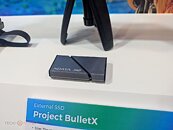


More...
-
Robot
Most Wanted
- Rep Power
- 84
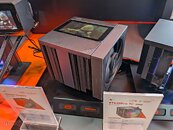
CPS PCCooler at 2026 CES: First Air CPU Cooler with True-Color Display
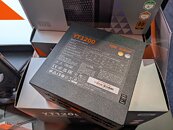
CPS PCCooler brought a large selection of new cases, PSUs, AIO and air type CPU coolers, to the 2026 International CES. Starting things off, we've come across their KN-series, YS-series, and YT-series premium ATX 3.1 PSU series, each with modern 12V-2x6 connectors, and differentiated by features such as idle fan-stop, Cybenetics acoustics ratings, body depth, and fan sizes. The SU1650 is a Cybenetics Titanium-rated 1650 W PSU (probably the most efficient PSU in its wattage-class), and puts out two 600 W 12V-2x6 connectors.
Next up, are the DA Max line of AIO CPU coolers, a revision of the DA line of coolers introduced last year, with improvements made to the pump and fan performance. The GT-M series of AIO CLCs come with rectangular true-color displays framed by large, cuboidal pump-block designs. The RZ820 Display is perhaps the first and only air CPU cooler we've come across that features a true-color display. It comes with a 5-inch IPS LCD in landscape layout, arranged along the top-plate of this dual fin-stack CPU cooler. There are two fans included, which are arranged in push-pull configuration.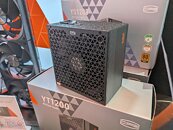

Read full story
More...
 Posting Permissions
- You may not post new threads
- You may not post replies
- You may not post attachments
- You may not edit your posts
-
Forum Rules


