Thanks:
0

Likes:
0

Dislikes:
0
-
Robot
Most Wanted

- Rep Power
- 80
-
Robot
Most Wanted
- Rep Power
- 80
-
Robot
Most Wanted
- Rep Power
- 80
-
Robot
Most Wanted
- Rep Power
- 80
 Lip-Bu Tan Mentions Making of Custom Xeon CPU that Fully Integrates NV
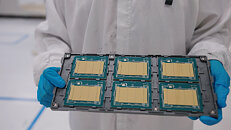
Around mid-September of last year, Intel and NVIDIA announced a somewhat surprising joint venture. At the time, the two partners teased an eventual deployment of unspecified GeForce RTX iGPU designs within futuristic Intel x86 System-on-Chips (SoCs). We have not heard much about this mainstream project since autumn time—in the meantime, Team Blue has gone all in on hyping up next-gen "Panther Lake-H" mobile processors, that utilize in-house Arc Xe3 graphics architecture. Lately, Lip-Bu Tan—CEO of Intel—has mentioned the existence another co-development with the Green Team. In a recent earnings call, regarding Q4 2025 results, the boss slipped in a brief teaser about an in-progress enterprise-grade processor design.
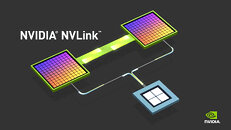
When discussing his company's ongoing simplification of server product roadmaps, Tan disclosed that: "we also continue to work closely with NVIDIA to build a custom Xeon fully integrated with their NVLink technology, to bring best-in-class x86 performance to AI host nodes." He swiftly moved onto talking about the Xeon division being laser-focused on getting 16-channel "Diamond Rapids" out into the wild. Naturally, it is too early to tell whether the latest Intel + NVIDIA collab will leverage sixth or seventh generation Xeon technologies. The further out "Coral Rapids" family is expected to resurrect Hyper-Threading for datacenter workflows. Tan stated that another main goal is the acceleration of Xeon "Coral Rapids" series' introduction to market. Prior to publication of Intel's Q4 '25 financial results, the semiconductor industry rumor mill proposed a second half of 2027 release window.

More...
-
Robot
Most Wanted
- Rep Power
- 80
(PR) AMD Intros ROCm v7.2 - Smarter, Faster, & More Scalable for Moder
Modern AI workloads demand more than raw compute—they require a tightly integrated software stack that can extract maximum performance, scale efficiently across systems, and operate reliably in production environments. With the latest ROCm 7.2 release, we're delivering a broad set of optimizations and software enhancements designed to improve developer productivity, runtime performance, and enterprise readiness.
In this blog, we highlight the latest ROCm 7.2 enhancements for AMD Instinct GPUs, designed to boost AI and HPC performance. Learn how hipBLASLt and GEMM optimizations, FP8/FP4 support in rocMLIR and MIGraphX, and topology-aware communication with GDA and RCCL deliver higher throughput and lower latency. We also cover AI model tuning for AMD Instinct MI300X and MI350 GPUs and Node Power Management (NPM) for efficient multi-GPU operation—together enabling faster, more scalable, and reliable AI workloads.

Read full story
More...
-
Robot
Most Wanted
- Rep Power
- 80
-
Robot
Most Wanted
- Rep Power
- 80
-
Robot
Most Wanted
- Rep Power
- 80
-
Robot
Most Wanted
- Rep Power
- 80
(PR) ASRock Industrial's New AiSafeguard Bolsters Device Security with
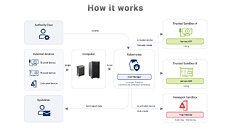
As industries accelerate toward digital and connected operations, cybersecurity has become critical to maintaining trust and reliability at the edge. ASRock Industrial, the trusted pioneer in Secure Edge AI Platforms, today announced the launch of AiSafeguard, an intelligent device isolation solution designed to strengthen endpoint protection and ensure continuous, secure operations in industrial and enterprise environments. Built on ASRock Industrial's security vision of Secure Device, Secure Deployment, and Secure Operation, AiSafeguard leverages Honeypot Sandbox technology and a zero-trust architecture to seamlessly integrate with ASRock Industrial Robust Edge AIoT Platforms.
The solution automatically detects, classifies, and isolates external devices in real time, allowing trusted peripherals to access host resources securely while containing untrusted devices for behavioral analysis. With adaptive isolation, trusted access control, and centralized management, AiSafeguard establishes a robust, self-defending cybersecurity framework at the edge.
Read full story
More...
-
Robot
Most Wanted
- Rep Power
- 80
AMD Claims
According to an unreleased slide leaked by VideoCardz, AMD has prepared a section for its upcoming Ryzen 7 9850X3D CPU about difference in memory speeds affecting FPS performance. In AMD's own testing, going from DDR5-6000 to DDR5-4800 memory yield less than 1% drop of FPS, meaning that the memory selection isn't very important for this gaming CPU. The slide aims to demonstrate that even with cheaper DDR5 memory, priced around $400 for a 2x16 GB kit running at 4,800 MT/s, performance remains largely unaffected. AMD noted that a more expensive 2x16 GB DDR5 kit running at the "sweet spot" of 6,000 MT/s is priced at about $470. This means spending 17.5% more on memory does not provide significant real-world benefits. Gamers can instead to allocate their budget elsewhere and consider more affordable memory options, while keeping frame-rate in check.
Finally, this slide leaked just six days before AMD's official launch on January 29, with a suggested retail price of $499. This 8-core/16-thread processor features the "Zen 5" microarchitecture, enhanced with 3D V-Cache technology, and offers a 400 MHz speed boost over the current 9800X3D. The chip has a base frequency of 4.70 GHz and a maximum boost frequency of 5.60 GHz. Some samples have even been observed running at a 5.75 GHz boost frequency, indicating that enthusiasts might achieve even higher frequencies even under typical home conditions. As memory selection isn't a big differentiator, the 400 MHz boost increase from its sibling—Ryzen 7 9800X3D—will be the topic of discussion for third party review.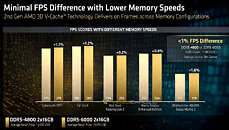
More...
-
Robot
Most Wanted
- Rep Power
- 80
(PR) Focus Entertainment Highlights MIO: Memories in Orbit's Critical
Focus Entertainment and Douze Dixièmes are today celebrating MIO: Memories in Orbit's critical success with a brand-new trailer. Distinguished by its striking art direction and an equally remarkable original soundtrack, this French‑crafted metroidvania has resonated strongly with international critics, securing a Metacritic score of 83/100.
MIO: Memories in Orbit launched on January 20 and is available on PlayStation 5, Xbox Series X|S, Nintendo Switch (both generations), and PC via Steam, Epic Games Store, and Microsoft Store. The game is also playable day one on Xbox Game Pass and runs seamlessly on Steam Deck. Composed by Nicolas Gueguen, the game's original soundtrack is now available across all major streaming platforms—including Spotify, Apple Music, YouTube, Bandcamp, and more.



Read full story
More...
-
Robot
Most Wanted
- Rep Power
- 80
Microsoft Reportedly Considering Fable Switch 2 Port, Could Hinge on "
Yesterday, Microsoft used the fourth edition of its regular Developer_Direct showcase to promote Fable's path to release. The comedy-heavy fantasy open world experience is projected to launch this autumn on PC platforms, as well as Xbox Series X|S and PlayStation 5 consoles. Certain industry observers have questioned the validity of this broad (Q3/Q4) timetable—weighing in with theories of Playground Games' PS5 port arriving at a later date. A simultaneous launch across multiple rival hardware systems is a tall task, especially for a studio more accustomed to making racing games on primary Xbox and PC platforms. A first try—2021's Forza Horizon 5—successfully headed over to PlayStation 5, last year. Instead of opting into using Epic's popular Unreal Engine 5, the British development outfit's Fable team has stuck with in-house ForzaTech engine tech. This week, senior Playground Games staffers have engaged with members of the press—many journalists have asked about the UK-based team's approach to getting Fable ported over to PS5.
Bravely, a select few interviewers have broached the subject of a possible Switch 2 version. Late last night, Jez Corden disclosed that he was informed about a potential conversion onto Nintendo's latest hybrid console, but this future prospect: "isn't 100% definite for now, but under consideration for the future." The Windows Central scribe/executive editor elaborated further in social media exchanges—he mentioned that "decision-making" was in the hands of "logistics," as of January 22. Corden believes that development of a speculative Switch 2 port has not started yet, but rates its chances of approval in the near future. A small selection of former Xbox exclusives have turned up on Switch 1 in the recent past. Last October, Phil Spencer—Microsoft Gaming's CEO—mentioned that Nintendo had provided "excellent support" of in-progress Xbox-to-Switch 2 titles. Weeks later, former NoA boss—the ever-dynamic Reggie Fils-Aimé—expressed surprise about the current lack of first-party Xbox games on Switch 2.


More...
-
Robot
Most Wanted
- Rep Power
- 80
-
Robot
Most Wanted
- Rep Power
- 80
Intel Arc GPU Graphics Drivers 101.8362 WHQL Released
Intel has released its latest 32.0.101.8425 and 32.0.101.8362 WHQL drivers as launch drivers for the new Core Ultra Series 3 "Panther Lake" processors, featuring Arc B390 and Arc B370 integrated graphics. Alongside day-one support for these iGPUs, the latest GPU drivers introduce Intel's XeSS 3 multi-frame generation technology, which can insert up to three generated frames between two rendered frames to boost FPS by a 3:1 ratio of generated to rendered frames. Intel promises a significant performance boost for its Arc B390 and Arc B370 iGPUs on "Panther Lake," making these SoCs ideal for handheld gaming devices. In addition to new features, these drivers fix issues such as game crashes found in the demo version of Capcom's PRAGMATA SKETCHBOOK running DirectX 12. Some issues persist, which you can find in the logs below. We are updating our driver page, so be patient for the release.
DOWNLOAD: Intel Arc GPU Graphics Drivers 101.8362 WHQL
Read full story
More...
-
Robot
Most Wanted
- Rep Power
- 80
AMD Prepares Radeon Low-Latency Video Decode for Linux Drivers
AMD has introduced a new low-latency video decode solution for Radeon GPUs on Linux with the RadeonSI Gallium3D driver as part of the Mesa 26.1 release. This Linux patch, utilizing Video Core Next (VCN), is designed to maximize the performance of AMD Radeon hardware-accelerated multimedia decode and encode. The patch aims to deliver a high-performance decoding kernel that reduces video decoding latency, although it requires more power consumption from the GPU, trading off some efficiency.
For users of the RadeonSI Gallium3D driver, this option can be enabled with the AMD_DEBUG=lowlatencydec environment variable. By default, this option is turned off due to its more aggressive power profile. The default setting is a higher-latency mode, which is more power-efficient. This distinction is particularly important for AMD laptops running Radeon GPUs on Linux, as they must balance performance and efficiency. While desktop users might benefit from having the new low-latency mode enabled by default, laptop users will need to consider the trade-off between reduced battery life and faster video decoding.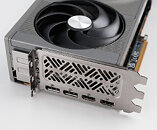
More...
 Posting Permissions
- You may not post new threads
- You may not post replies
- You may not post attachments
- You may not edit your posts
-
Forum Rules


 Reply With Quote