-
Robot
Most Wanted

- Rep Power
- 82
 Preloading File Explorer in Windows 11 Doubles RAM Usage, Offers Minim
Just a week ago, we discussed Microsoft's efforts to enhance File Explorer performance by preloading the application at startup. Recent testing by Windows Latest suggests that this approach results in diminishing returns, as the application uses more RAM while offering only marginal performance improvements. Microsoft has acknowledged the performance issues with File Explorer on Windows 11, which is concerning given its role as a core application within the operating system. To address this, Microsoft has started preloading File Explorer in the background to enable quicker access when users open the application.
Windows Latest testing now confirms that preloading works partially, allowing File Explorer to load faster, but not fast enough. In a virtual machine running the latest Windows 11 Insider Preview Build 26220.7271 (KB5070307) available in the Dev and Beta channels, the regular File Explorer launch uses 35 MB of RAM. However, the preloaded version nearly doubles that to 67.4 MB of RAM due to background processes. To the end-user, the change is barely noticeable as File Explorer still feels sluggish. The difference becomes apparent only when the speed of a video comparison is reduced to 0.25x, revealing the real difference. However, since real-world usage does not occur at 0.25x speed, the change makes little impact on everyday usage.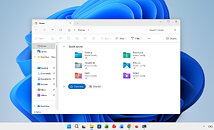
Read full story
More...
 Posting Permissions
- You may not post new threads
- You may not post replies
- You may not post attachments
- You may not edit your posts
-
Forum Rules


