-
Robot
Most Wanted

- Rep Power
- 82
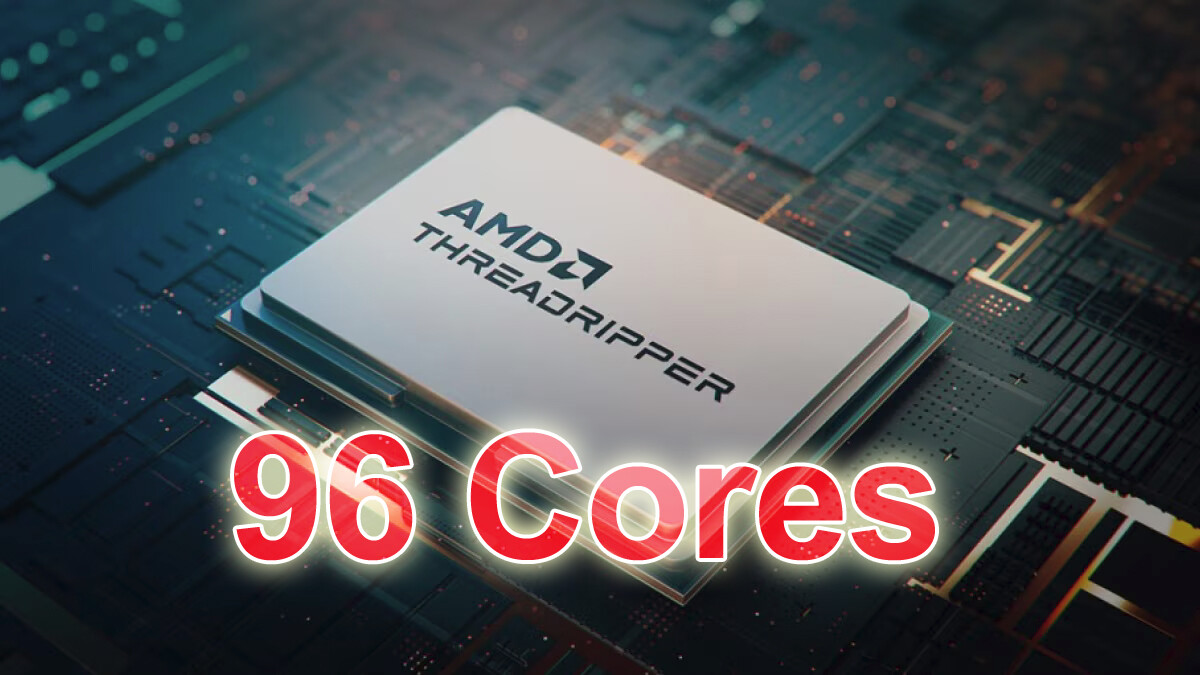
 Intel Readies "Arrow Lake" Variant with Oversized iGPU to Take on AMD
AMD "Strix Halo" isn't just a mobile processor with an oversized iGPU meant to power "gaming ultraportables," it has other potential applications such as game consoles (both handheld and standalone). Not willing to cede this market to AMD, Intel is reportedly readying its own such chip, which is being reported as the "Arrow Lake Halo" for the lack of an official name. This chip will feature a large iGPU based on the Xe2 "Battlemage" graphics architecture, the variant of Xe2 Intel plans to use for its next-generation Arc discrete GPUs. The CPU compute complex will be carried over from the regular "Arrow Lake" chips, and feature a mix of "Lion Cove" P-cores, and "Skymont" E-core clusters.
To meet the higher memory bandwidth demand that arises from a high-performance iGPU and CPU, AMD designed the RDNA 3.5 graphics architecture to be more LPDDR5-aware, since at the physical layer, LPDDR operates differently from GDDR. Intel will probably do something similar, and deploy a 256-bit wide LPDDR5/x memory interface replacing the 128-bit wide interface the regular "Arrow Lake" mobile chips come with. Whether "Arrow Lake Halo" and "Strix Halo" remain competitive will depend a lot on which gaming experiences the two companies want to sell. The way the iGPU of "Strix Halo" is rumored to be specced suggests something that is 1440p-capable, or 4K-capable with FSR 3.
Read full story
More...
-
Robot
Most Wanted
- Rep Power
- 82
-
Robot
Most Wanted
- Rep Power
- 82
Japan Unveils Plans for Zettascale Supercomputer: 100 PFLOPs of AI Com
The zettascale era is officially on the map, as Japan has announced plans to develop a successor to its renowned Fugaku supercomputer. The Ministry of Education, Culture, Sports, Science and Technology (MEXT) has set its sights on creating a machine capable of unprecedented processing power, aiming for 50 ExaFLOPS of peak AI performance with zettascale capabilities. The ambitious "Fugaku Next" project, slated to begin development next year, will be headed by RIKEN, one of Japan's leading research institutions, in collaboration with tech giant Fujitsu. With a target completion date of 2030, the new supercomputer aims to surpass current technological boundaries, potentially becoming the world's fastest once again. MEXT's vision for the "Fugaku Next" includes groundbreaking specifications for each computational node.
The ministry anticipates peak performance of several hundred FP64 TFLOPS for double-precision computations, around 50 FP16 PFLOPS for AI-oriented half-precision calculations, and approximately 100 PFLOPS for AI-oriented 8-bit precision calculations. These figures represent a major leap from Fugaku's current capabilities. The project's initial funding is set at ¥4.2 billion ($29.06 million) for the first year, with total government investment expected to exceed ¥110 billion ($761 million). While the specific architecture remains undecided, MEXT suggests the use of CPUs with special-purpose accelerators or a CPU-GPU combination. The semiconductor node of choice will likely be a 1 nm node or even more advanced nodes available at the time, with advanced packaging also used. The supercomputer will also feature an advanced storage system to handle traditional HPC and AI workloads efficiently. We already have an insight into Monaka, Fujitsu's upcoming CPU design with 150 Armv9 cores. However, Fugaku Next will be powered by the Monaka Next design, which will likely be much more capable.
More...
-
Robot
Most Wanted
- Rep Power
- 82
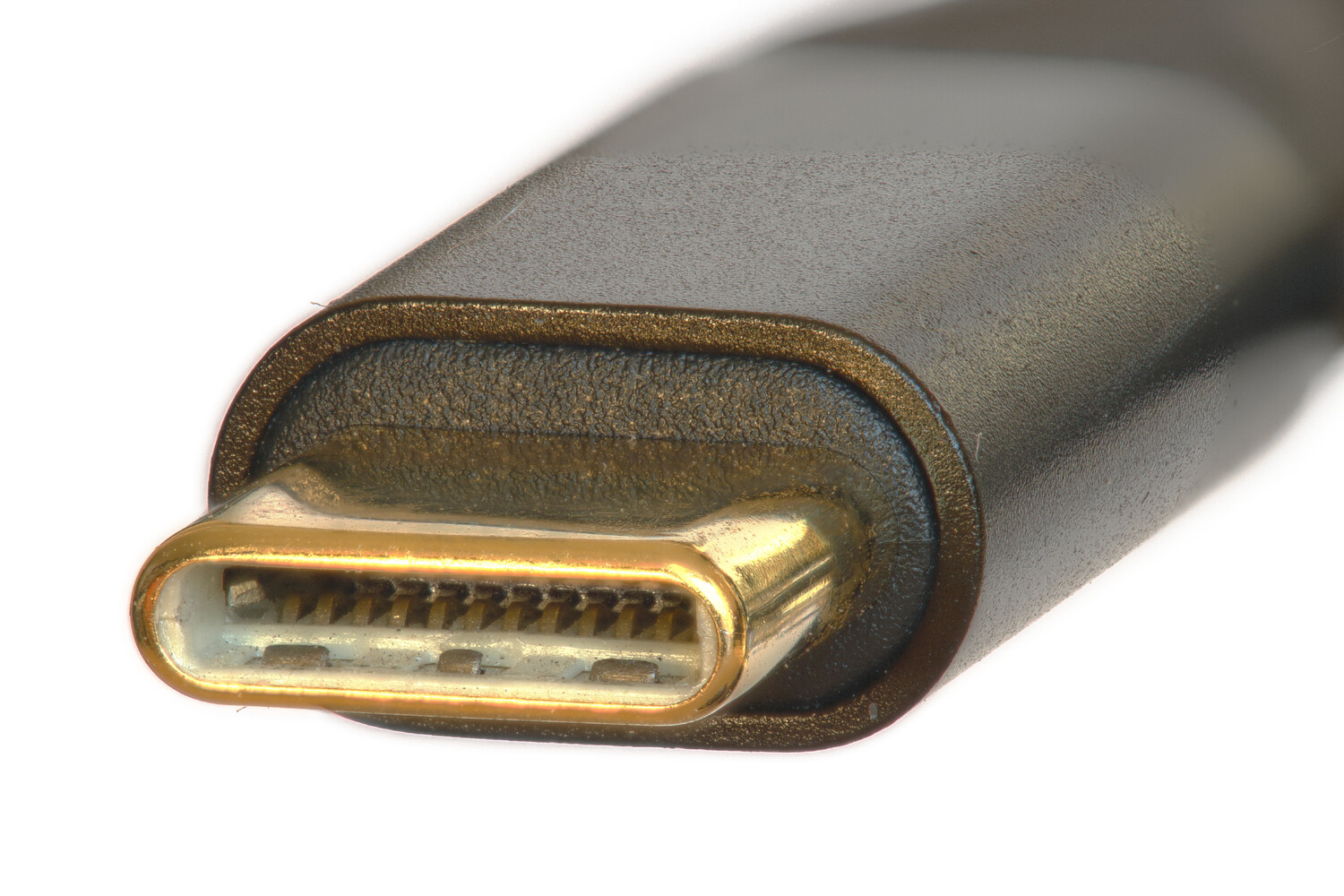
(PR) USB-IF Launches New Conformity Test Program in Support of EU Comm
USB Implementers Forum (USB-IF), the support organization for the advancement and adoption of USB technology, today announced the launch of the USB-IF Conformity to IEC 62680 (USB) Specifications Program. This new initiative is designed to assist Original Equipment Manufacturers (OEMs)/Original Device Manufacturers (ODMs) in conforming to the basic requirements of the European Union (EU) Common Charger Directive, which mandates the use of standardized charging technology across a wide range of portable battery-powered devices in the EU.
In response to the EU's 2022 approval of the common charger directive—which will take effect on January 1, 2025, for portable battery-powered devices and in 2026 for laptops—the USB-IF Conformity to IEC 62680 (USB) Specifications Program specifically addresses key aspects of the directive. These include portable battery-powered devices, USB Type-C receptacles, USB Type-C cables and connectors, external power supplies (EPS), and the USB Power Delivery (USB PD) protocol for devices advertising more than 15 Watts.
Read full story
More...
-
Robot
Most Wanted
- Rep Power
- 82
MSI Prepares X870E "GODLIKE" Flagship Motherboard for AM5 Platform Pro
MSI is set to launch its most advanced AM5 motherboard to date: the MEG X870E GODLIKE. This flagship model is designed to support AMD's Ryzen 9000 series processors and beyond. The MEG X870E GODLIKE boasts an impressive 28-phase power delivery system with 110 A power stages, surpassing its predecessor's capabilities. This robust VRM design ensures a stable power supply even for the most demanding scenarios of next-generation CPUs. The motherboard's E-ATX form factor provides ample space for its array of features, including support for DDR5 memory speeds exceeding 8000 MT/s and a capacity of up to 256 GB. Connectivity is a strong suit for this motherboard, featuring eight USB Type-C ports with varying speeds of up to 40 Gbps. Storage options include five M.2 slots (two PCIe Gen 5 and three Gen 4) and four SATA III ports.
For graphics, the board offers two PCIe Gen 5.0 slots. MSI has also included several user-friendly features, such as EZ M.2 and PCIe release mechanisms, making component installation and removal a breeze. The M.2 slots are equipped with MSI's Shield Frozr heatsinks, ensuring optimal thermal performance for NVMe SSDs. Perhaps most intriguing is the inclusion of an additional 8-pin power connector, specifically designed to support future multi-GPU setups like NVIDIA's anticipated RTX 50 "Blackwell" series. While pricing details are yet to be announced, the MEG X870E GODLIKE is expected to carry a premium price tag, reflecting its top-tier status in MSI's lineup. With the high-end power delivery setup, overclockers will find this motherboard interesting, and users are planning to upgrade to next-generation RTX 50 series GPUs. Availability is also unknown as of time of writing.
More...
-
Robot
Most Wanted
- Rep Power
- 82
Micron is Buying More Production Plants in Taiwan to Expand HBM Memory
Micron has been on a spending spree in Taiwan, where the company has been looking for new facilities. Micron has agreed to buy no less than three LCD plants from display maker AUO, which are located in the central Taiwanese city of Taichung. Micron is looking at paying NT$ 8.1 billion (~US$253.3 million). Initially, Micron was interested in buying another plant in Tainan from Innolux, but was turned down, so Micron turned to AUO for the purchases. Earlier this year, TSMC spent NT$17 billion (~US$531.6 million) to buy a similar facility from Innolux, but it seems that Innolux wasn't willing to part with any more facilities this year.
The three AUO plants are said to have produced LCD colour filters and the two of the plants had closed for production earlier this month. However, it appears that for some reason, the plant that is still in operation, will be leased by AUO and the company will continue production of colour filters in the factory. The larger plant measures 146,033 square metres, with the smaller measuring 32,500 square metres. As for Micron's plans, not much is known at this point in time, but the company has announced that it's planning on using at least some of the space for front-end wafer testing and that the new plants will support its current and upcoming DRAM production fabs in Taichung and Taoyuan, which the company is currently expanding. Market sources in Taiwan are quoted as saying that the focus will be on HBM memory, due to the high demand from various AI products in the market, least not from NVIDIA. The deal is expected to be finalised by the end of the year.
More...
-
Robot
Most Wanted
- Rep Power
- 82
-
Robot
Most Wanted
- Rep Power
- 82
TechPowerUp x GIGABYTE GS34WQC Giveaway: The Winners!
TechPowerUp, in partnership with GIGABYTE, brought our readers in the US, Canada, and the EU, a chance to bring home the GIGABYTE GS34WQC curved gaming monitor. This fine piece of GIGABYTE engineering offers a great balance of features and value for the premium gaming desktop of today and tomorrow! The 34-inch monitor comes with a 1500R curvature, 21:9 aspect-ratio, and WQHD resolution (3440 x 1440 pixels), with plenty of speed for your fast-paced gameplay—120 Hz normal refresh-rate that's overclockable to 135 Hz, and 1 ms MPRT response time. The entries have closed, and GIGABYTE has chosen two winners. Without further ado, here they are!
A huge congratulation to Maria and Wyatt! TechPowerUp and GIGABYTE will return with more such interesting giveaways!
More...
-
Robot
Most Wanted
- Rep Power
- 82
AMD Ryzen Branch Prediction Optimizations Now Available to Windows 11
AMD announced that its Ryzen processor branch prediction optimization that provide gaming performance uplifts, is now available for Windows 11 23H2, through an optional update. This update applies to AMD Ryzen processors based on the "Zen 3," "Zen 4," and "Zen 5" microarchitectures, and essentially yields the kind of performance you get in the real Administrator account, on regular Windows accounts, especially non-local (online) accounts. Users should look for "Cumulative Update Preview for Windows 11 Version 23H2 for x64-based Systems (KB5041587)" in Windows Update, which should begin showing up as an optional update. This update requires a system restart to apply.
With this update in place, gaming performance uplifts between Windows 11 23H2 and 24H2 should be identical. "We wanted to let you know that the branch prediction optimization found in Windows 11 24H2 has now been backported to Windows 11 23H2. Users will need to look for KB5041587 under Windows update > Advanced options > Optional updates. We expect the performance uplift to be very similar between 24H2 and 23H2 with KB5041587 installed," AMD said in a statement to Wccftech.
More...
-
Robot
Most Wanted
- Rep Power
- 82
-
Robot
Most Wanted
- Rep Power
- 82
-
Robot
Most Wanted
- Rep Power
- 82
(PR) Lexar Announces PLAY 2280 PCIe Gen 4.0 SSD for PlayStation 5
Lexar, a leading global brand of flash memory solutions, is excited to announce the PLAY 2280 PCIe Gen 4.0 SSD. Delivering blazing performance of 7400 MB/s max read and 6500 MB/s max write, this SSD is made to live up to hardcore gamers' demands, ensuring reduced load times and seamless gameplay. Tested and approved for the PS5, this drive provides additional storage and allows gamers to play directly from the drive, so they don't need to transfer or delete files from their consoles. The included heatsink, optimized for PS5, allows the console to maintain peak performance and power efficiency. With capacity up to 8 TB, users can store about 150+ AAA games and an endurance rating of 6400 TBW offers assurance about the drive's stability.
The PLAY 2280 PCIe 4.0 SSD can also be used for PC gaming. It features HMB and SLC Dynamic cache which deliver improved performance, accelerated data access speeds, and enhanced overall responsiveness when used with a PC.

Read full story
More...
-
Robot
Most Wanted
- Rep Power
- 82
-
Robot
Most Wanted
- Rep Power
- 82
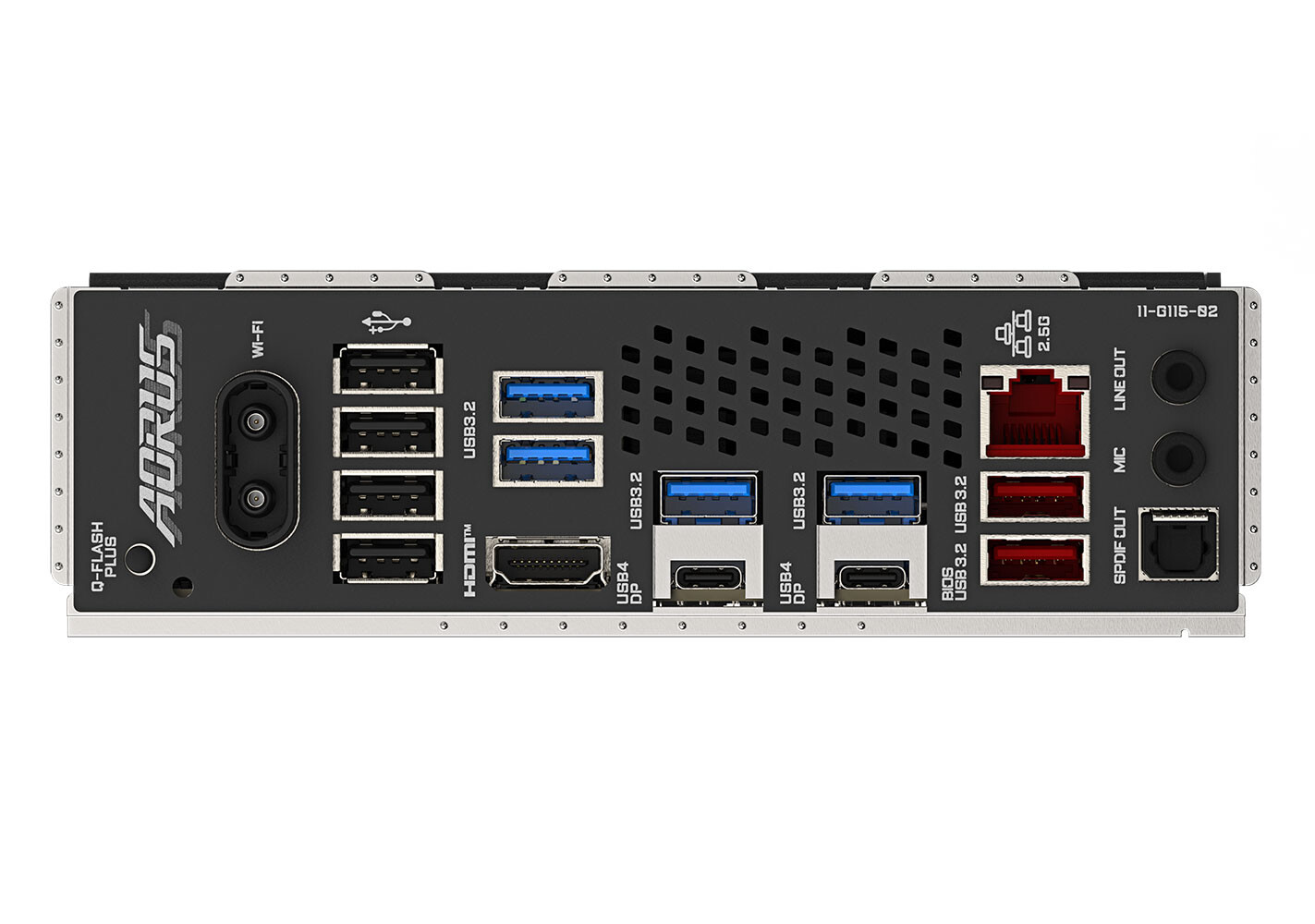
GIGABYTE Intros X870 AORUS Elite WIFI7 Motherboard
GIGABYTE just released its second AMD 800-series chipset motherboard following last week's debut of the X870E AORUS Master, the more affordable X870 AORUS Elite WIFI7. This board is based on the slightly more affordable AMD X870 (non-E) chipset, which offers connectivity nearly identical to that of the previous-generation AMD B650E, but with the addition of USB4. The board is built in the ATX form-factor, and features a 6-layer PCB. It draws power from a combination of 24-pin ATX and two 8-pin EPS power connectors. The CPU VRM solution consists of a 16+2+2 phase setup, with the vCore side of it being 8-phase with phase doubling. The Socket AM5 is wired to four DDR5 DIMM slots for up to 256 GB of memory.
Expansion slots include a PCI-Express 5.0 x16 wired to the CPU, a PCI-Express 4.0 x16 (electrical Gen 4 x4), and a third PCI-Express 3.0 x16 (electrical Gen 3 x2). The main Gen 5 x16 PEG slot gets a quick-release lever. You press a button, and it ejects the graphics card. Storage connectivity includes three M.2 Gen 5 x4 slots, two of these are wired to the CPU's dedicated Gen 5 x4 NVMe lanes, while the third slot subtracts 8 lanes from the Gen 5 x16 PEG slot. There is a fourth M.2 slot, which is Gen 4 x4, and wired to the X870 FCH. All four slots get heatsinks. Four SATA 6 Gbps ports make for the rest of the storage connectivity.


Read full story
More...
-
Robot
Most Wanted
- Rep Power
- 82
 Posting Permissions
- You may not post new threads
- You may not post replies
- You may not post attachments
- You may not edit your posts
-
Forum Rules