-
Robot
Most Wanted

- Rep Power
- 82
 TechPowerUP NEWS
BIOSTAR, a leading manufacturer of motherboards, graphics cards, storage devices, and IPC products, is excited to introduce the all-new BIAST-PAT industrial motherboard solution. The BIAST-PAT motherboard is expertly designed to meet the diverse needs of System Integration (SI) businesses and industry professionals seeking to build robust, efficient, and future-proof systems for business and industrial applications. It is a highly versatile platform, perfectly suited for applications in AIOT machines, automation systems, edge computing devices, HMI machines, and digital signage.
The BIOSTAR BIAST-PAT motherboard, with its robust wide temperature and broad voltage support, is engineered to excel in a variety of demanding environments, making it a prime choice for numerous outdoor applications. Its design incorporates M.2 Key-M, Key-B, and Mini-PCIe slots, offering exceptional versatility in connectivity options. This compatibility extends to Hailo AI acceleration cards, further enhancing its edge AI utility.
Read full story
More...
-
Robot
Most Wanted
- Rep Power
- 82
Intel's Upcoming 800-series Chipsets Leak in Detail
What appears to be the full details of all of Intel's upcoming 800-series chipsets have leaked and although we've already seen what the Z890 chipset will offer, no details of the other SKUs have leaked to date. Maybe the biggest news is that there won't be an H870 chipset this time around, according to the leaker @jaykihn0 over at X/Twitter. The full range appears to be Z890, B860 and H810 for consumers, W880 for workstations and Q870 for corporate desktops. That said, the Z890 and W880 are identical in terms of slots and ports, but whereas the W880 gains full ECC support and Intel vPro and remote management, it loses the CPU and bus overclocking features of the Z890. The Q870 loses four chipset PCIe 4.0 lanes, one 20 Gbps or two 10 Gbps USB 3.2 ports, but is otherwise similar to the Z890, minus all the overclocking features, but with Intel vPro and remote management.
The B860 ends up on the chopping block as always and loses not only 10 chipset PCIe lanes compared to the Z890 chipset, but also four lanes from the CPU and four lanes on the DMI interface to the chipset. On top of that bifurcation goes out the window toigether with PCIe RAID and the chipset is only capable of having two 20 Gbps or four 10 Gbps USB 3.2 ports, but at least memory overclocking is still on the table. Finally, the H810 chipset is as basic as it gets, with no extra CPU PCIe lanes beyond the 16 lanes for a graphics card, but they are at least PCIe 5.0 this time around. The chipset itself is only equipped with a mere eight PCIe 4.0 lanes and it gets zero 20 Gbps and two 10 Gbps USB 3.2 ports. Note that all platforms support one or two Thunderbolt 4 / USB4 ports, but it's unclear if this is native support or via an add-on chip. Also note that the USB ports are shared and the maximum count is that for the 5 Gbps ports in the details below, so the Z890 for example, doesn't have 25 USB 3.2 ports in total, but rather only 10. All in all, we'll see a migration to PCIe 5.0 for the x16 slot across the entire 800-series chipset range and from the B860 and up, all chipsets will have a dedicated PCIe 5.0 x4 interface that will most likely be used for an M.2 slot. Also, the PCIe lane count is the maximum, but due to Intel's HSIO layout, some resources will be shared with SATA and Ethernet, which means not all PCIe lanes will be accessible.
More...
-
Robot
Most Wanted
- Rep Power
- 82
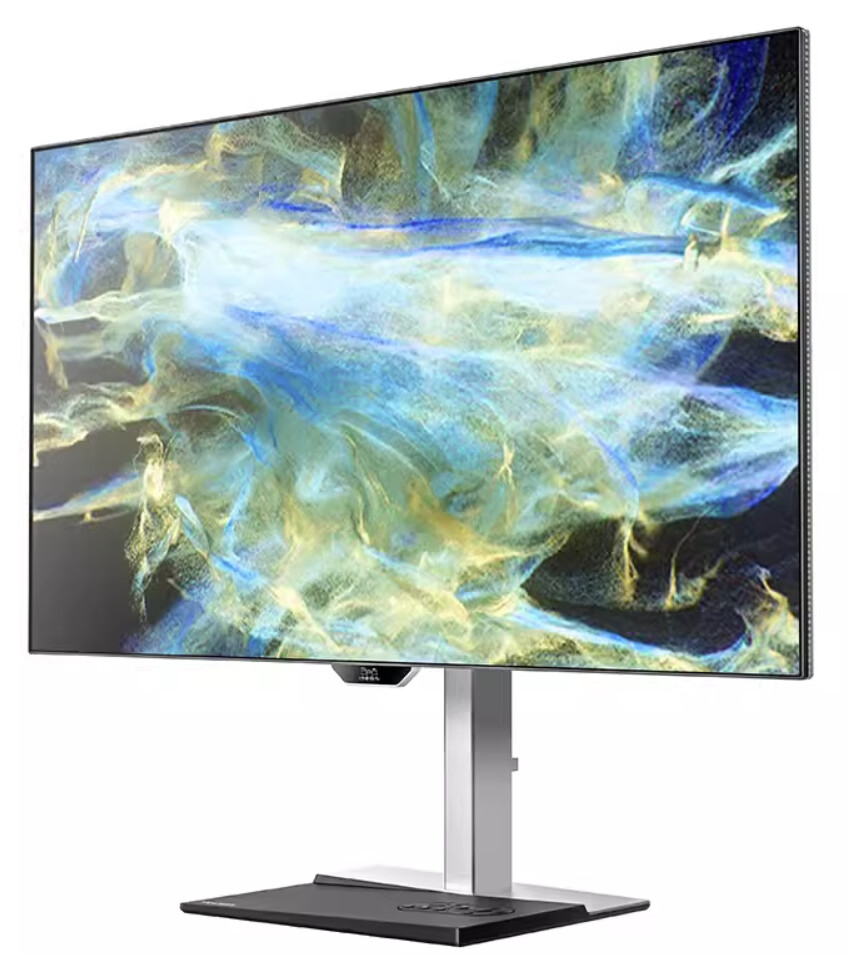
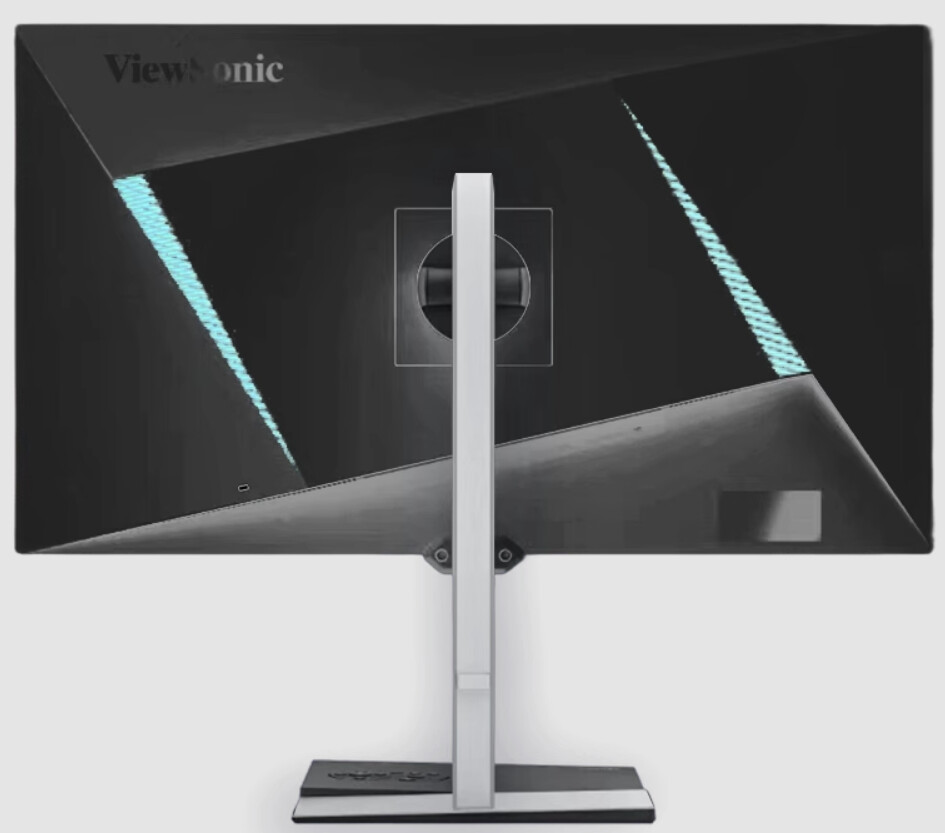
ViewSonic's XG323-4K-OLED2 brings dual-mode, DisplayPort 2.1 and 140 W
ViewSonic has launched a new OLED gaming monitor in the Chinese market that not only is a dual-mode 4K 240 Hz / 1080p 480 Hz display, but it also brings DisplayPort 2.1 connectivity as part of the package. The XG323-4K-OLED2 is said to sport a 31.5-inch LG OLED panel with an anti glare coating, that delivers up to 450 nits brightness, but it can reach as high as 1300 nits in HDR mode. The 10-bit OLED panel delivers 0.03 ms Grey to Grey response time, 98.5 percent of the DCI-P3 colour gamut and it's also VESA DisplayHDR True Black 400 certified. There's also support for VRR via some form of AMD FreeSync version.
However, what stands out here is the paired back design, especially considering that the XG323-4K-OLED2 is being sold as a gaming monitor. We get a more traditional square stand and a much thicker display back compared to most other gaming OLED displays. That said, we're not quite sure what ViewSonic was thinking when the base of the stand was designed, as it's not flat. Connectivity, besides two DisplayPort 2.1 port with full 80 Gbps UHBR20 support, also consists of a USB Type-C port with DP Alt-mode and 140 W USB PD support—a first as far as we're aware—as well as more mundane options like two HDMI 2.1 inputs, one USB 3.2 Type-B input, three USB 2.0 outputs and an audio jack. The stand supports the standard tilt, swivel and height adjustments, as well as rotation. Finally the XG323-4K-OLED2 sports a pair of 5 W speakers and a remote control. JD.com is listing the display of RMB 10,999 which is just north of US$1,500. It's unclear which, if any other markets ViewSonic will offer the XG323-4K-OLED2 in.


More...
-
Robot
Most Wanted
- Rep Power
- 82
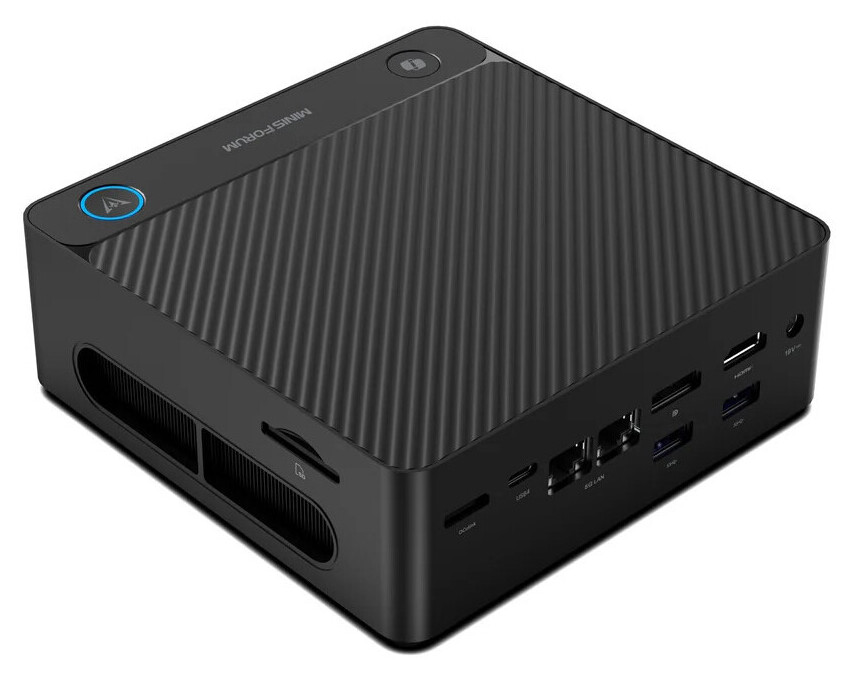
(PR) Minisforum Launches UH125 Pro Mini PC with Intel Core Ultra 5 CPU
Minisforum, a leader in mini PC innovation, today announces the launch of the UH125 Pro, a game-changing mini PC that redefines what's possible in compact computing. The UH125 Pro delivers a powerful blend of performance, efficiency, and versatility, making it the ultimate solution for professionals, gamers, and creators alike.
Unleashing the Power of Intel Core Ultra 5:
UH125 Pro lies the lightning-fast Intel Core Ultra 5 processor, featuring Intel 4 technology and a 3D high-performance hybrid architecture. This cutting-edge processor delivers a remarkable 65 W TDP 4, resulting in a dual improvement in performance and efficiency. With 14 cores (4 Performance Cores + 8 Efficiency Cores + 2 LP Efficiency Cores), 18 threads, 18 MB L3 Cache, and a maximum Turbo Frequency of 4.5 GHz, the UH125 Pro effortlessly handles even the most demanding tasks.


Read full story
More...
-
Robot
Most Wanted
- Rep Power
- 82
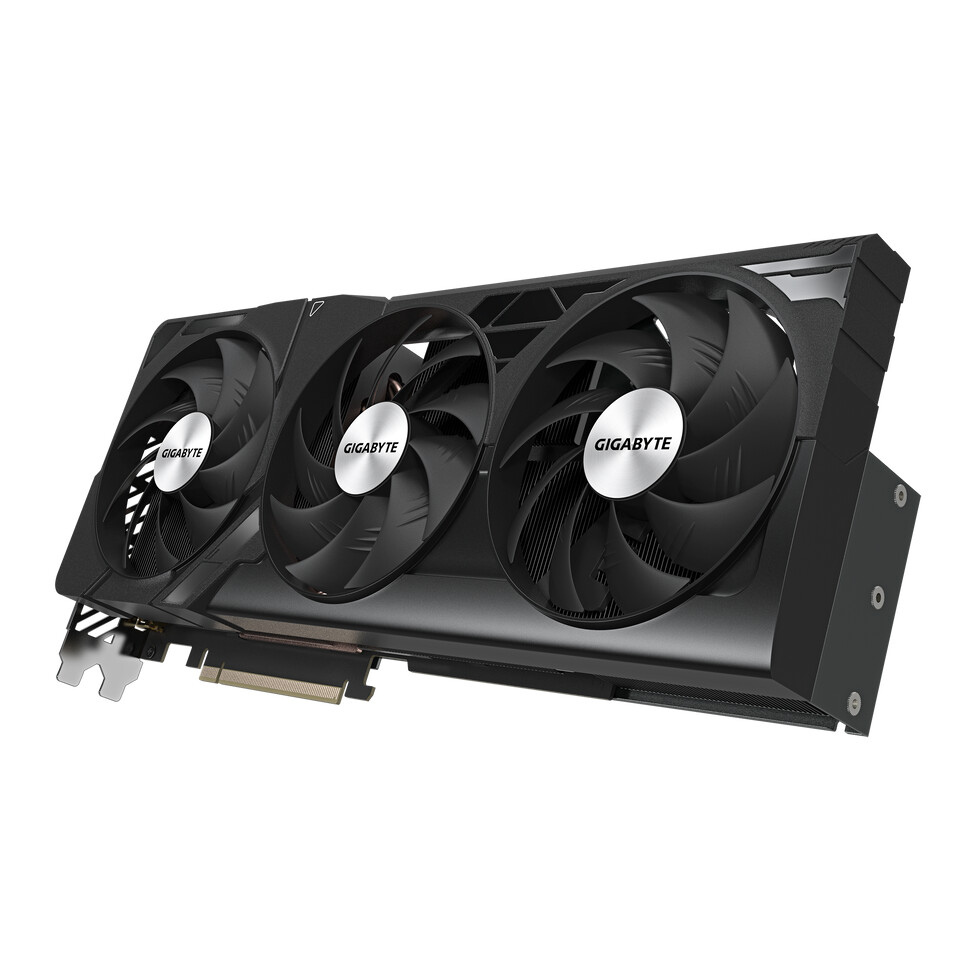
NVIDIA GeForce RTX 4070 Ti SUPER with AD102 GPU Appears on German Reta
The GeForce RTX 4070 Ti SUPER featuring the AD102 GPU, initially speculated to be an Asia-exclusive release, is now confirmed for worldwide distribution. This development comes as the GIGABYTE RTX 4070 Ti SUPER Windforce MAX OC 16 GB, the first model equipped with this configuration, has appeared on German online retailer listing, specifically at Mindfactory. Previously using AD103-275 GPU SKU for the regular GIGABYTE RTX 4070 Ti SUPER Windforce model, the "MAX" variant now comes with AD102-225 GPU SKU. Priced at over 950 Euros, it commands a premium over the standard Windforce model. The "MAX" designation not only indicates the different GPU but also boasts an official 30 MHz higher clock speed. The Max variant also employs the more robust cooling system typically found in the GeForce RTX 4080/4090 class. This is a departure from the smaller RTX 4070 Ti design used in the SUPER variant with the AD103 GPU.
While the performance and power consumption differences between the AD102 and AD103 versions may be negligible for most users, the adoption of larger cooling systems in many custom designs could prove beneficial. This enhanced thermal management might appeal to enthusiasts and overclockers looking to push their graphics cards to the limit. While the regular AD103 card measures 261x126x50 mm, the MAX model with its AD102 and beefier coolers measures 331x136x55.5 mm. Overclockers could push the performance of this card further, and we wait to see what will come out of the AD102-225 silicon on the RTX 4070 Ti SUPER platform.


More...
-
Robot
Most Wanted
- Rep Power
- 82
FTC Issues Warning to ASRock, Zotac, and GIGABYTE About Warranty Pract
The United States Federal Trade Commission (FTC) has taken action against three prominent PC companies, ASRock, Zotac, and GIGABYTE, for their unlawful warranty practices. The FTC has issued stern warnings, urging these companies to immediately cease their actions that have been found to be in violation of consumer protection laws. The trio has been engaging in practices that unfairly restrict consumers' ability to repair or modify their own devices with the "warranty void if removed" stickers. The FTC has made it clear that these companies cannot void warranties or deny service simply because a consumer has opened or repaired their product. "Consumers have a right to repair their own products, and companies shouldn't make that harder by putting up illegal barriers," said Samuel Levine, Director of the FTC's Bureau of Consumer Protection, adding that "Manufacturers who try to circumvent the law will face the consequences."
The FTC's investigation revealed that these PC companies have been including deceptive warranty terms that claim consumers will void their warranties if they open or modify their devices. However, the Magnuson-Moss Warranty Act (MMWA), a federal law, prohibits such practices unless the company can demonstrate that the consumer's actions directly caused the need for repair. The FTC has ordered the companies to stop these unlawful warranty practices immediately and to clearly inform consumers of their right to repair their devices without voiding the warranty. All three manufacturers are given a 30-day period to update their promotional and warranty information on their websites to indicate the updated information. Failure to comply with the FTC's directives could result in significant fines and further legal action.
More...
-
Robot
Most Wanted
- Rep Power
- 82
-
Robot
Most Wanted
- Rep Power
- 82
-
Robot
Most Wanted
- Rep Power
- 82
Nanya and Winbond Boost Memory Production Amid Rising Demand and Price
As memory prices and volumes increase, manufacturers Nanya and Winbond have ceased the production cuts they implemented last year, with production now back to normal levels. Market research agencies and supply chain analysts indicate that memory shipments are expected to continue recovering in Q3 2024. Currently, memory factories are operating at a capacity utilization rate of 90% to full capacity, which is significantly higher than the 60% to 70% capacity utilization rate of wafer foundries with mature processes. Last year, Nanya adjusted its production volume reducing it by up to 20%. This year, production has gradually increased, reaching 70% to over 80% in the second quarter, and has now resumed normal levels.
Nanya anticipates that DRAM market conditions and prices will improve quarter by quarter, with the overall industry trending positively, potentially turning losses into profits in the third quarter. Nanya announced yesterday that its consolidated revenue for June was 3.363 billion yuan, marking a monthly increase of 0.35% and an annual increase of 36.83%, setting a high for the year. The cumulative consolidated revenue for the first half of the year was 19.424 billion yuan, a 44.4% increase compared to the same period last year. Nanya will hold a press conference on July 10 to announce its second-quarter financial results and operating outlook.
Read full story
More...
-
Robot
Most Wanted
- Rep Power
- 82
-
Robot
Most Wanted
- Rep Power
- 82
(PR) Basemark Releases Breaking Limit Cross-Platform Ray Tracing Bench
Basemark announced today the release of a groundbreaking cross-platform ray tracing benchmark, GPUScore: Breaking Limit. This new benchmark is designed to evaluate the performance of the full range of ray tracing capable devices, including smartphones, tablets, laptops and high-end desktops with discrete GPUs. With support for multiple operating systems and graphics APIs, Breaking Limit provides a comprehensive performance evaluation across various platforms and devices.
As ray tracing technology becomes increasingly prevalent in consumer electronics, from high-end desktops to portable devices like laptops and smartphones, there is a critical need for a benchmark that can accurately assess and compare performance across different devices and platforms. Breaking Limit addresses this gap, providing valuable insights into how various devices handle hardware-accelerated graphics rendering. The benchmark is an essential tool for developers, manufacturers, and consumers to measure and compare the performance of real-time ray tracing rendering across different hardware and software environments reliably.


Read full story
More...
-
Robot
Most Wanted
- Rep Power
- 82
Intel Arc "Battlemage" Xe2 GPUs with 448 EUs (56 Xe cores) Spotted in
Intel very much does intend to make discrete gaming GPUs based on its Xe2 "Battlemage" graphics architecture, which made its debut with the Core Ultra 200V "Lunar Lake-MX" processor as an iGPU. With its next generation, Intel plans to capture an even bigger share of the gaming graphics market, both on the notebook and desktop platforms. "Battlemage" will be crucial for Intel, as it will be able to make its case with Microsoft and Sony for semi-custom chips, for their next-generation consoles. Intel has all pieces of the console SoC puzzle that AMD does. A Xe2 "Battlemage" discrete GPU sample, codenamed "Churchill Falls," has been spotted making its transit in and out of locations known for Intel SoC development, such as Bangalore in India, and Shanghai in China.
Such shipping manifests tend to be incredibly descriptive, and speak of an Arc "Battlemage" X3 and Arc "Battlemage" X4 SKUs, each with 448 execution units (EU), across 56 Xe cores. Assuming an Xe core continues to have 128 unified shaders in the "Battlemage" architecture, you're looking at 7,168 unified shaders for this GPU, a staggering 75% increase in just the numerical count of the shaders, and not accounting for IPC increase and other architecture-level features. The descriptions also speak of a 256-bit wide memory bus, although they don't specify memory type or speed. Given that at launch, the Arc A770 "Alchemist" was a 1440p-class GPU, we predict Intel might take a crack at a 4K-class GPU. Besides raster 3D performance, Intel is expected to significantly improve the ray tracing and AI performance of its Xe2 discrete GPUs, making them powerful options for creative professionals.

More...
-
Robot
Most Wanted
- Rep Power
- 82
-
Robot
Most Wanted
- Rep Power
- 82
AOOSTAR Launches GEM13 Mini PC with AMD Ryzen 7 Hawk Point
AOOSTAR has released a new Mini PC for its GEM series powered by an AMD Ryzen 7 Hawk Point processor. Despite its compact size (130 mm x 126 mm x 45 mm), the AOOSTAR GEM13 integrates an AMD Ryzen R7 8845HS Octa-Core processor with 16 threads, running at speeds of up to 5.1 GHz, and an NPU for AI with up to 38 TOPS. It includes a powerful 12-core Radeon 780M iGPU RDNA 3 that reaches a speed of 2.7 GHz. This setup should be sufficient to support a wide range of applications and games running in 720p and 1080p resolution. For internal memory and storage, it supports up to 32 GB DDR5 5600 MHz and up to 1 TB storage via an M.2 2280 NVMe PCIe x4 SSD. Inside, there is enough space to install an additional 2.5" SATA internal storage unit.
For network connectivity, it features a combination of WiFi 6, Bluetooth 5.2, and two RJ45 2.5G network ports. As for interfaces, it sports 2x USB 3.0 ports, 2x USB 2.0 ports, a full front USB-C, a 3.5 mm audio jack, and two HDMI 2.1 video outputs. It also has a USB4 Type-C with DisplayPort 1.4 data, power, and video output that could be used for an eGPU to increase gaming performance. The AOOSTAR GEM13 comes with a small 100 W external power supply and Windows 11 Pro as the operating system.


Read full story
More...
-
Robot
Most Wanted
- Rep Power
- 82
(PR) ASUS Announces NUC 14 Pro+ With Intel Core Ultra CPUs
ASUS today announced the ASUS NUC 14 Pro+, an ultracompact PC that offers best-in-class performance thanks to the power of the new Intel Core Ultra processor, which gives it the ability to locally run generative AI workloads. The machine's robust computing capabilities are further boosted by certified Bluetooth dongle-free connectivity, energy-efficient WiFi Sensing, and three AI engines (GPU, NPU, and CPU) that enable high throughput, low power consumption, and fast response. The eye-catching 5 x 4-inch anodized aluminium chassis is perfect for corporate or home office settings, and it features toolless access for fast, safe, and easy upgrades.
Style meets AI-driven performance
Available with Intel Core Ultra 9, 7, or 5 CPUs, the Intel Arc GPU for enhanced graphics, and Intel AI Boost (NPU), the ASUS NUC 14 Pro+ meets most computing needs and combines style with powerful performance. Together, its three AI engines - GPU, NPU, and CPU - enable higher throughput, lower power consumption, and faster response to locally run generative AI workloads. The Intel Core Ultra processors represent Intel's most power-efficient client processors to date. Compared to its predecessor, the NUC 13 Pro Mini PC, the ASUS NUC 14 Pro+ offers significantly enhanced AI processing performance, offering unmatched stability and up to 35% faster local computing, especially noticeable in tasks such as text-to-image generation using stable-diffusion software.


Read full story
More...
 Posting Permissions
- You may not post new threads
- You may not post replies
- You may not post attachments
- You may not edit your posts
-
Forum Rules