-
Robot
Most Wanted

- Rep Power
- 82
-
Robot
Most Wanted
- Rep Power
- 82
-
Robot
Most Wanted
- Rep Power
- 82
 AMD Athlon K7 CPU Easter Egg Discovered Decades Later
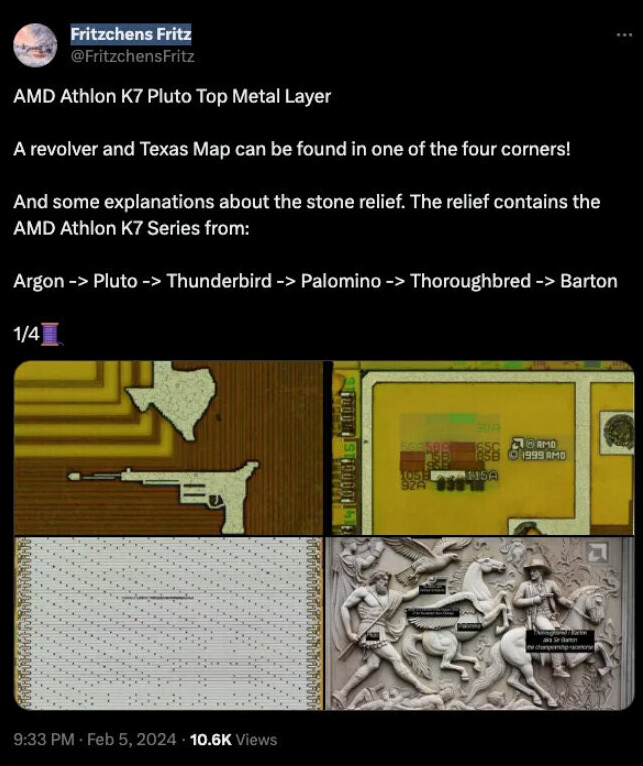
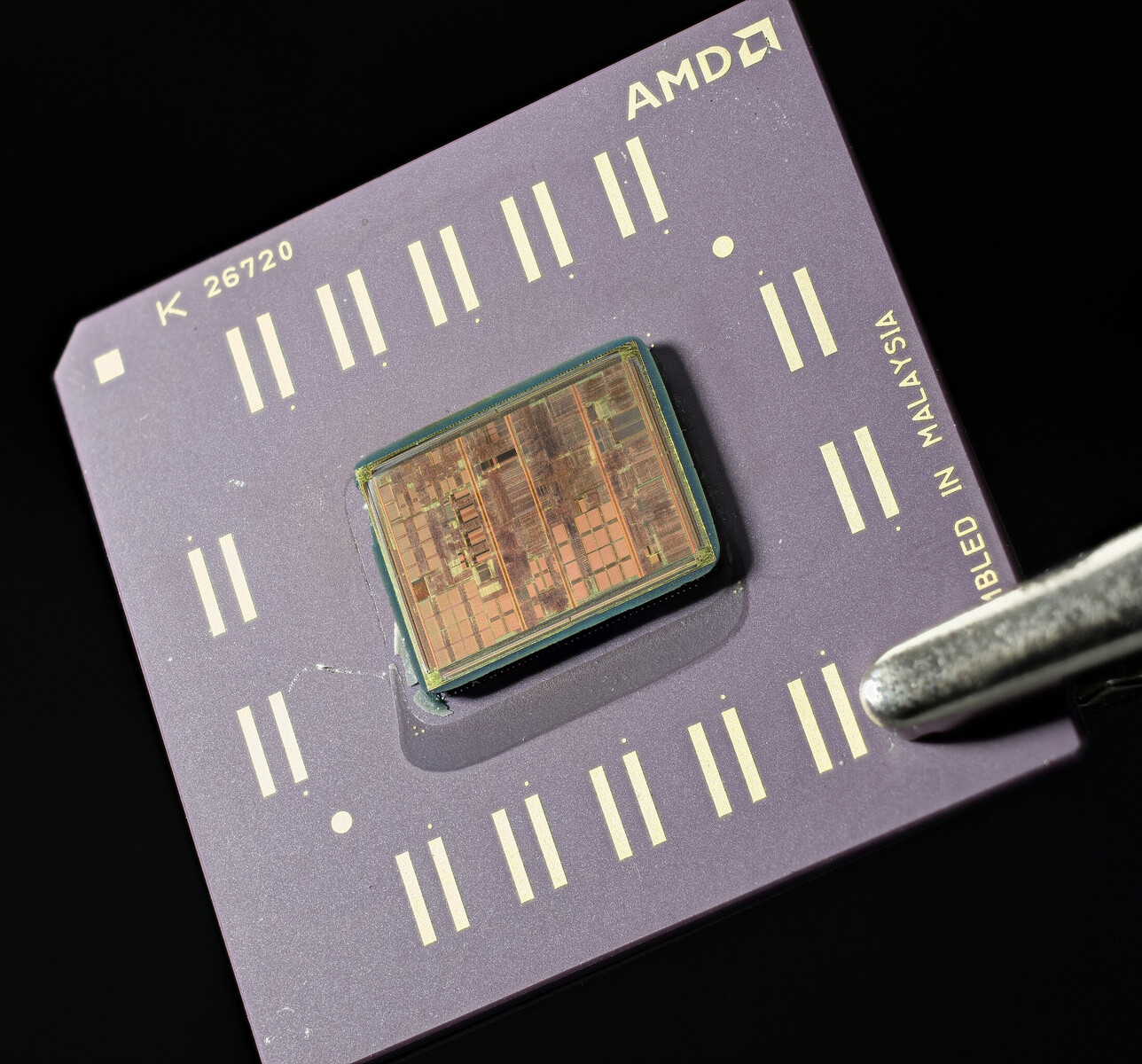
An AMD Athlon K7 "Pluto" processor has been examined by Fritzchens Fritz, a well known close-up photographer of CPU and GPU dies—his latest project has uncovered a decades old hidden secret. He posted this discovery to social media earlier this week, and made sure to include various images for context purposes: "AMD Athlon K7 Pluto Top Metal Layer. A revolver and Texas Map can be found in one of the four corners! And some explanations about the stone relief. The relief contains the AMD Athlon K7 Series from: Argon -> Pluto -> Thunderbird -> Palomino -> Thoroughbred -> Barton." Team Red's turn of the millennium mainstream processor family fought off Intel's Pentium III CPU architecture (1999 to 2000)—many contemporary reports have handed that time period's victory to AMD. Fritz's funny find received a lot of news coverage, with many authors expressing disbelief about the miniscule revolver and Map of Texas being hidden in (sort of) plain sight for nearly 25 years.
Phil Park, an AMD veteran—currently working in the memory systems department as a Fabric performance engineer—posted an insightful reply to Fritz's historical guesstimations (Greco-Roman themes via the stone relief). Another Team Red revelation was revealed: "The original Athlon naming scheme (Mustang, Thunderbird, Spitfire) had a different theme (cars), but the rumor was that some companies got wind of this, so we changed themes rather than get involved in dumb trademark battles over internal codenames. So it became horses." If we read between the very obvious lines, Park suggests that Ford, Chevrolet, and BMW were keeping an eye on AMD product naming conventions.


More...
-
Robot
Most Wanted
- Rep Power
- 82
(PR) GOG & CD Projekt RED Announce Account Migration, Effective March
We are alerting users of online features, including Cross Progression and My Rewards, in CD PROJEKT RED games, as well as participants in platforms like the CD PROJEKT RED Forums. We are migrating these products to a new account system, owned and operated by CD PROJEKT S.A., effective from March 5th, 2024. This consolidation will involve the transfer of governance of personal data, including email address and username, from the GOG account system to the CD PROJEKT RED account system.
What does this change?
Starting March 5th, 2024, the above mentioned online features and services will be available through a new CD PROJEKT RED account system.
Do I need to take any action?
No, a new CD PROJEKT RED account will be created for you automatically based on your GOG Account information: user ID, username and email address. This will allow you to continue using features provided by CD PROJEKT RED with no interruption. No action is required on your end.

Read full story
More...
-
Robot
Most Wanted
- Rep Power
- 82
Hafnia Material Breakthrough Paves Way for Ferroelectric Computer Memo
Scientists and engineers have been experimenting with hafnium oxide over the past decade—many believe that this "elusive ferroelectric material" is best leveraged in next generation computing memory (due to its non-volatile properties), although this requires a major scientific breakthrough to get working in a practical manner. Hafnia's natural state is inherently non-ferroelectric, so it takes some effort to get it into a suitable state—a SciTechDaily article explores past efforts: "Scientists could only get hafnia to its metastable ferroelectric state when straining it as a thin, two-dimensional film of nanometer thickness." Research teams at the University of Rochester, New York and University of Tennessee, Knoxville have presented evidence of an exciting landmark development. Sobhit Singh, assistant professor at UoR's Department of Mechanical Engineering, believes that the joint effort has created a lane for the creation of bulk ferroelectric and antiferroelectric hafnia.
His "Proceedings of the National Academy of Sciences" study proposes an alternative material path: "Hafnia is a very exciting material because of its practical applications in computer technology, especially for data storage. Currently, to store data we use magnetic forms of memory that are slow, require a lot of energy to operate, and are not very efficient. Ferroelectric forms of memory are robust, ultra-fast, cheaper to produce, and more energy-efficient." Professor Janice Musfeldt's team at the University of Tennessee have managed to produce a ferroelectric form of hafnia—through an experimental high pressure process, based on Singh's exact calculations. The material remained in a metastable phase post-experiment, even in a pressure-relieved state. Musfeldt commented on the pleasing results: "This is as an excellent example of experimental-theoretical collaboration." Memory manufacturers are likely keeping an eye on Hafnia's breakthrough potential, but material costs are dampening expectations—Tom's Hardware cites shortages (going back to early 2023): "Hafnium (the key component in Hafnia) has seen a nearly fivefold price increase due to increased demand since 2021, raising its cost from about $1,000 per kilogram to about $5,000. Even at $1000 a kilogram, though, hafnium is by far more expensive than silicon, which measures in the tens of dollars per kilogram."


More...
-
Robot
Most Wanted
- Rep Power
- 82
(PR) Enshrouded Devs Working on Quest Progression Improvements
Hi everyone, we have received feedback from players about the quest progression of Enshrouded. Many of you are frustrated with the fact that it is currently mainly server-side instead of player-side. We have some good news to share. Put your reading hats on, this one's long...When designing this system, we believed that the best way to enjoy Enshrouded was with a group of friends who are all working cooperatively together. However, we know that having quests completed while one player is offline might feel bad for those who feel they are missing parts of the gameplay experience. We designed Enshrouded as a co-op game. While working on it, we envisioned one group of friends experiencing the world together—sharing bases, resources, crafting recipes, and loot.
Furthermore, we wanted players to be able to play together meaningfully with different groups of friends and on different servers. We developed a game environment where a new player could join a long-running server and jump into the same action as their friends. Skipping the "tutorial" server quests to instead learn through conversation and cooperation, uniting the group. Our reasoning was that players shouldn't feel forced to participate in quests. Our player base is diverse, after all. Not everyone is bound to enjoy our combat or puzzles as much as building a base or exploring. If some players in a group want to focus on building or farming, while others are going on adventures, both making meaningful progress for the group, that should be fine.


Read full story
More...
-
Robot
Most Wanted
- Rep Power
- 82
Widespread GeForce RTX 4080 SUPER Card Shortage Reported in North Amer
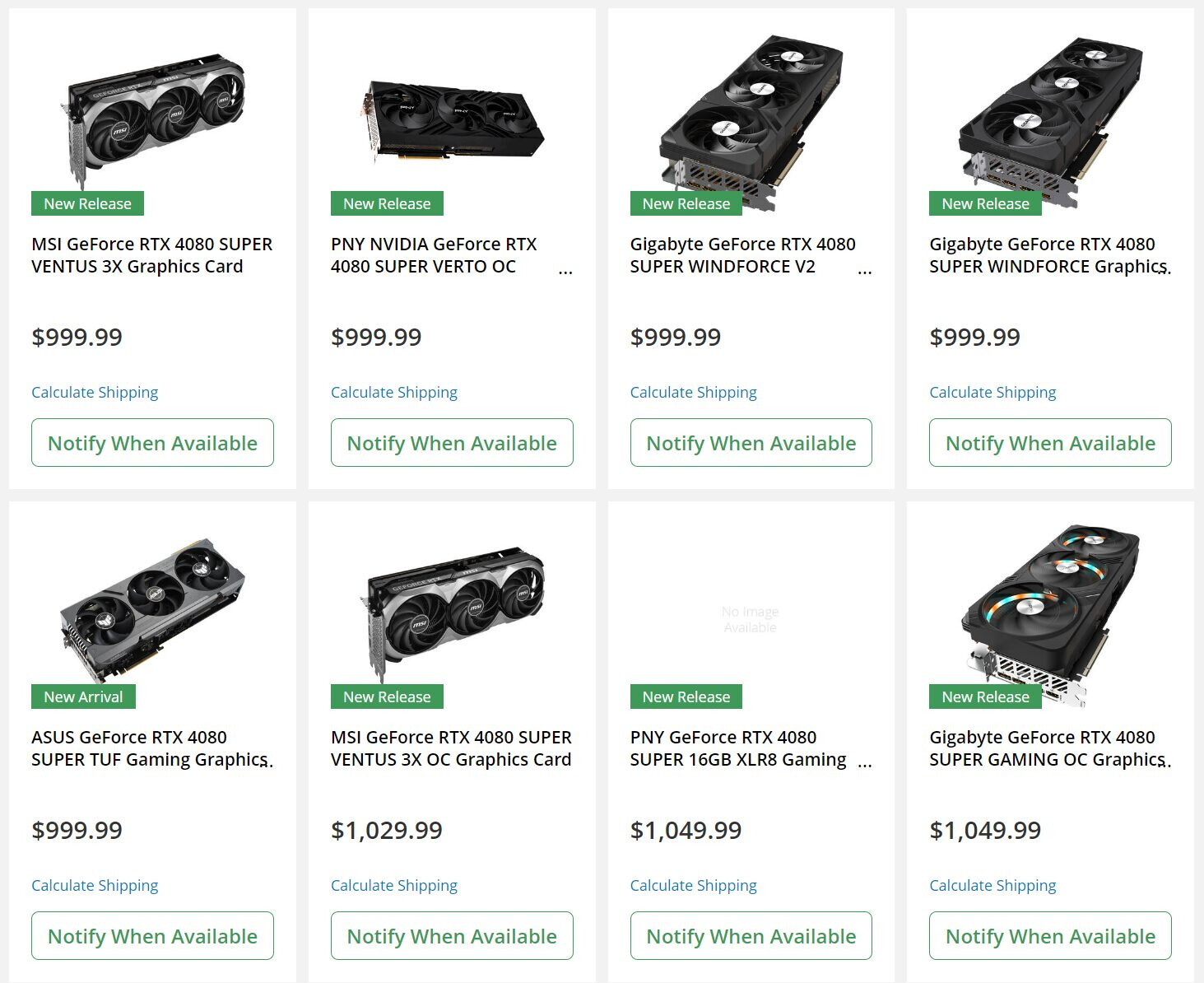
NVIDIA's decision to shave off $200 from its GeForce RTX 4080 GPU tier has caused a run on retail since the launch of SUPER variants late last month—VideoCardz has investigated an apparent North American supply shortage. The adjusted $999 base MSRP appears to be an irresistible prospect for discerning US buyers—today's report explains how: "a week after its release, that GeForce RTX 4080 SUPER cards are not available at any major US retailer for online orders." At the time of writing, no $999 models are available to purchase via e-tailers (for delivery)—BestBuy and Micro Center have a smattering of baseline MSRP cards (including the Founders Edition), but for in-store pickup only. Across the pond, AD103 SUPER's supply status is a bit different: "On the other hand, in Europe, the situation appears to be more favorable, with several retailers listing the cards at or near the MSRP of €1109."
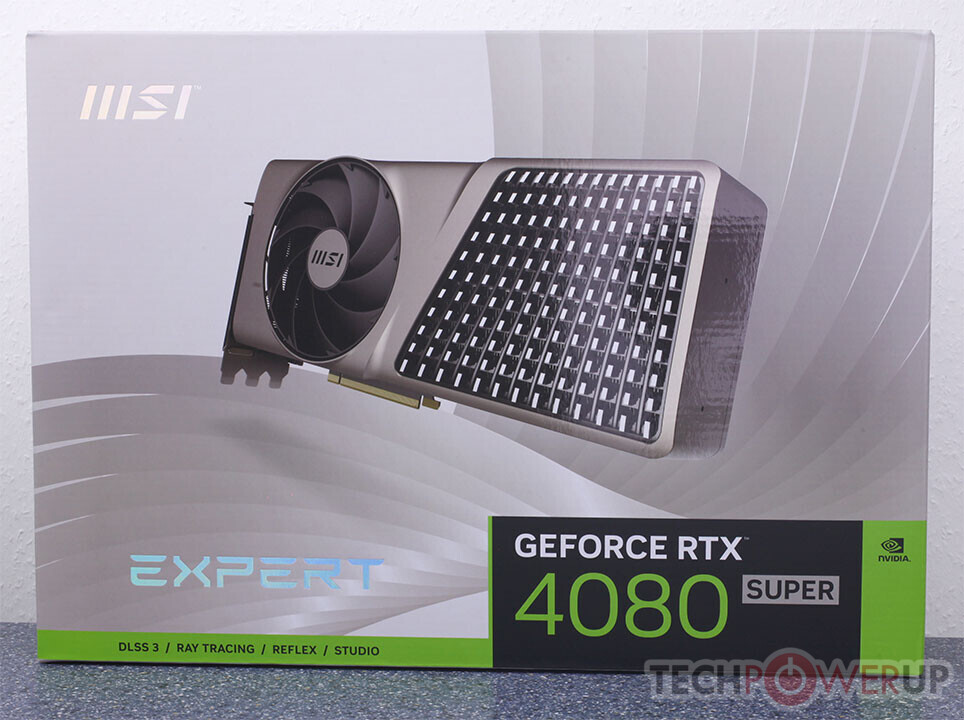
The cheapest custom GeForce RTX 4080 SUPER SKU, at $1123, seems to be listed by Amazon.com. Almost all of Newegg's product pages are displaying an "Out of Stock" notice—ZOTAC GAMING's GeForce RTX 4080 SUPER Trinity OC White Edition model is on "back order" for $1049.99, while the only "in stock" option is MSI's GeForce RTX 4080 Super Expert card (at $1149.99). VideoCardz notes that GeForce RTX 4070 SUPER and RTX 4070 TI SUPER models are in plentiful supply, which highlights a big contrast in market conditions for NVIDIA's latest Ada Lovelace families. The report also mentions an ongoing shortage of GeForce RTX 4080 (Non-SUPER) cards, going back weeks prior to the official January 31 rollout: "Similar to the RTX 4090, finding the RTX 4080 at its $1200 price point has proven challenging." Exact sales figures are not available to media outlets—it is unusual to see official metrics presented a week or two after a product's launch—so we will have to wait a little longer to find out whether demand has far outstripped supply in the USA.


More...
-
Robot
Most Wanted
- Rep Power
- 82
-
Robot
Most Wanted
- Rep Power
- 82
(PR) Cisco & NVIDIA Announce Easy to Deploy & Manage Secure AI Solutio
This week, Cisco and NVIDIA have announced plans to deliver AI infrastructure solutions for the data center that are easy to deploy and manage, enabling the massive computing power that enterprises need to succeed in the AI era. "AI is fundamentally changing how we work and live, and history has shown that a shift of this magnitude is going to require enterprises to rethink and re-architect their infrastructures," said Chuck Robbins, Chair and CEO, Cisco. "Strengthening our great partnership with NVIDIA is going to arm enterprises with the technology and the expertise they need to build, deploy, manage, and secure AI solutions at scale." Jensen Huang, founder and CEO of NVIDIA said: "Companies everywhere are racing to transform their businesses with generative AI. Working closely with Cisco, we're making it easier than ever for enterprises to obtain the infrastructure they need to benefit from AI, the most powerful technology force of our lifetime."
A Powerful Partnership
Cisco, with its industry-leading expertise in Ethernet networking and extensive partner ecosystem, together with NVIDIA, the inventor of the GPU that fueled the AI boom, share a vision and commitment to help customers navigate the transitions for AI with highly secure Ethernet-based infrastructure. Cisco and NVIDIA have offered a broad range of integrated product solutions over the past several years across Webex collaboration devices and data center compute environments to enable hybrid workforces with flexible workspaces, AI-powered meetings and virtual desktop infrastructure.
Read full story
More...
-
Robot
Most Wanted
- Rep Power
- 82
-
Robot
Most Wanted
- Rep Power
- 82
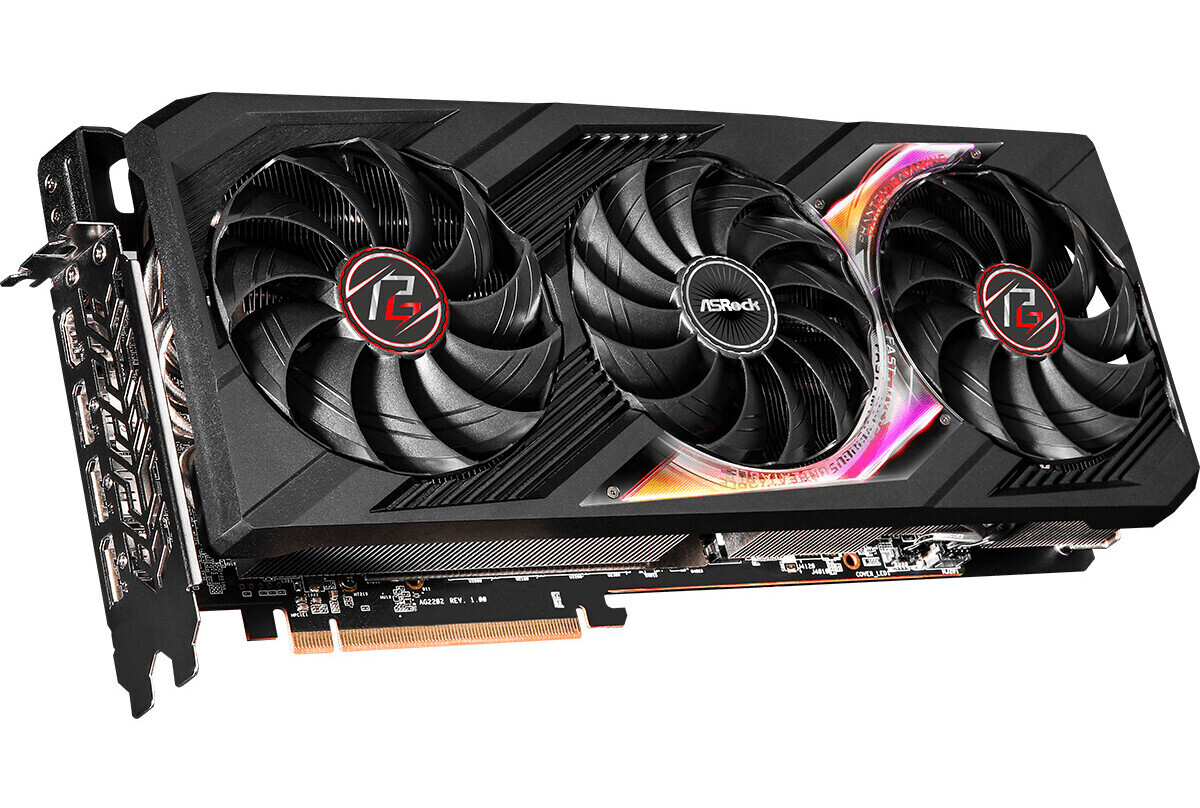
ASRock Dives Into Why it Lacks NVIDIA GeForce Graphics Cards; Doesn't
ASRock, ODM giant Pegatron's retail channel brand, built its reputation over its high cost/performance motherboards, and got into graphics cards rather recently (less than 5 years ago), beginning with AMD Radeon graphics cards, before expanding into Intel Arc GPUs. The company has shown with its high-end AMD Radeon cards that it can design complex custom-design graphics cards with heavy cooling solutions, especially given that AMD Radeon boards tend to have more elaborate power designs than NVIDIA. So then, where are the ASRock GeForce RTX graphics cards? Korean tech publication QuasarZone set to find out from ASRock.
Put simply, ASRock does not rule out making custom design GeForce RTX graphics cards in the future, but says that getting into that market right now, is "challenging." NVIDIA now commands the vast majority of discrete GPU market, and as such most of the top DIY PC retail channel brands (such as ASUS, MSI, GIGABYTE), sell both GeForce and Radeon products. They started making GeForce graphics cards decades ago, and have built market presence over the years. NVIDIA also has a set of board partners that exclusively sell GeForce—such as PNY, Palit-Gainward, Galax-KFA2, and Colorful, which make it all the more tough for ASRock to break in. On the specific question asked by Quasar Zone, here was ASRock's answer (machine translated to English by VideoCardz).
Read full story
More...
-
Robot
Most Wanted
- Rep Power
- 82
-
Robot
Most Wanted
- Rep Power
- 82
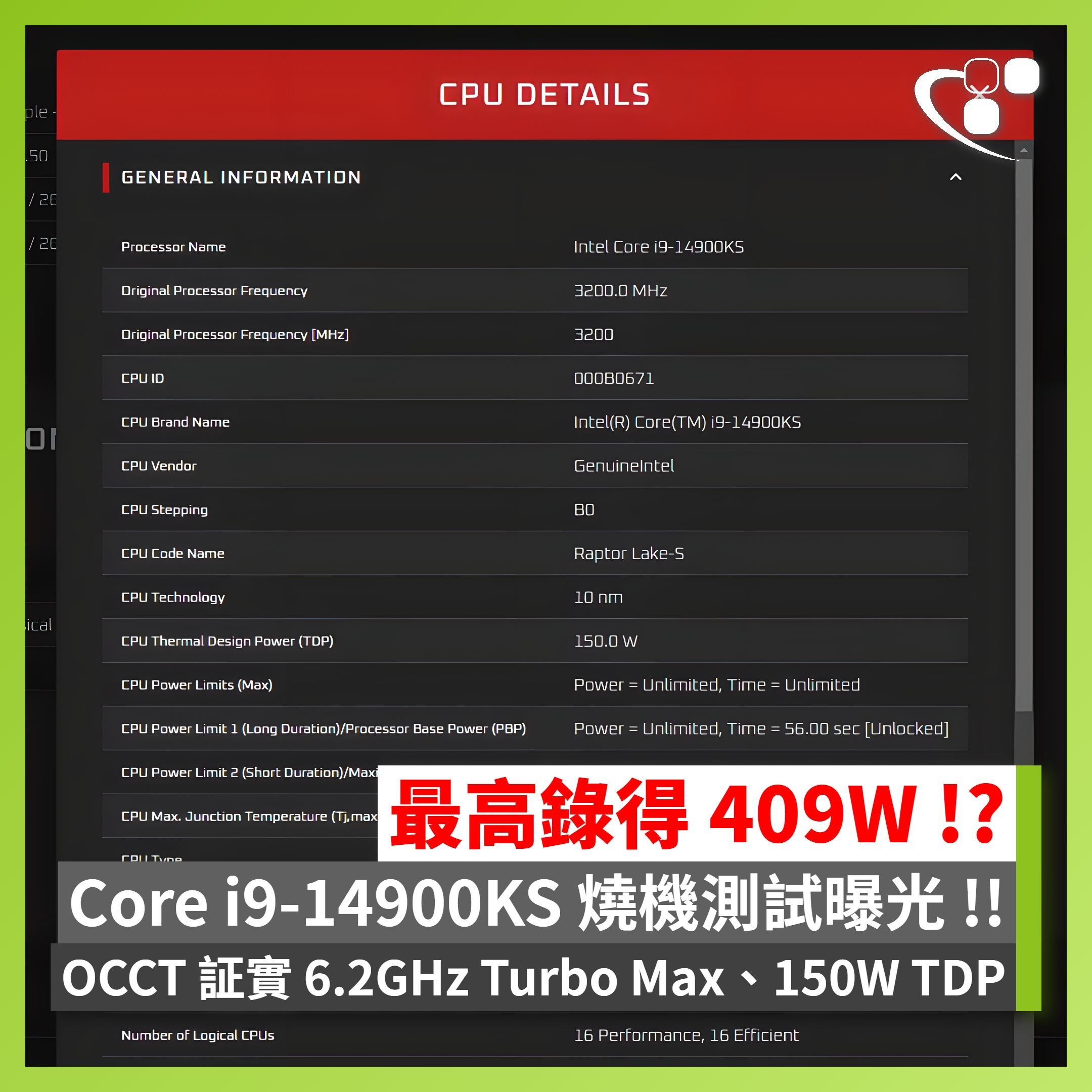
Intel Core i9-14900KS Draws as much as 409W at Stock Speeds with Power
Intel's upcoming limited edition desktop processor for overclockers and enthusiasts, the Core i9-14900KS, comes with a gargantuan 409 W maximum package power draw at stock speeds with its PL2 power limit unlocked, reports HKEPC, based on an OCCT database result. This was measured under OCCT stress, with all CPU cores saturated, and the PL2 (maximum turbo power) limited set to unlimited/4096 W in the BIOS. The chip allows 56 seconds of maximum turbo power at a stretch, which was measured at 409 W.
The i9-14900KS is a speed-bump over its predecessor, the i9-13900KS. It comes with a maximum P-core boost frequency of 6.20 GHz, which is 200 MHz higher; and a maximum E-core boost frequency of 4.50 GHz, which is a 100 MHz increase over both the i9-13900KS and the mass market i9-14900K. The i9-14900KS comes with a base power value of 150 W, which is the guaranteed minimum amount of power the processor can draw under load (the idle power is much lower). There's no word on when Intel plans to make the i9-14900KS available, it was earlier expected to go on sale in January, along the sidelines of CES.
More...
-
Robot
Most Wanted
- Rep Power
- 82
ASML High-NA EUV Twinscan EXE Machines Cost $380 Million, 10-20 Units
ASML has revealed that its cutting-edge High-NA extreme ultraviolet (EUV) chipmaking tools, called High-NA Twinscan EXE, will cost around $380 million each—over twice as much as its existing Low-NA EUV lithography systems that cost about $183 million. The company has taken 10-20 initial orders from the likes of Intel and SK Hynix and plans to manufacture 20 High-NA systems annually by 2028 to meet demand. The High-NA EUV technology represents a major breakthrough, enabling an improved 8 nm imprint resolution compared to 13 nm with current Low-NA EUV tools. This allows chipmakers to produce transistors that are nearly 1.7 times smaller, translating to a threefold increase in transistor density on chips. Attaining this level of precision is critical for manufacturing sub-3 nm chips, an industry goal for 2025-2026. It also eliminates the need for complex double patterning techniques required presently.
However, superior performance comes at a cost - literally and figuratively. The hefty $380 million price tag for each High-NA system introduces financial challenges for chipmakers. Additionally, the larger High-NA tools require completely reconfiguring chip fabrication facilities. Their halved imaging field also necessitates rethinking chip designs. As a result, adoption timelines differ across companies - Intel intends to deploy High-NA EUV at an advanced 1.8 nm (18A) node, while TSMC is taking a more conservative approach, potentially implementing it only in 2030 and not rushing the use of these lithography machines, as the company's nodes are already developing well and on time. Interestingly, the installation process of ASML's High-NA Twinscan EXE 150,000-kilogram system required 250 crates, 250 engineers, and six months to complete. So, production is as equally complex as the installation and operation of this delicate machinery.
More...
-
Robot
Most Wanted
- Rep Power
- 82
(PR) Western Digital Achieves ASPICE CL3 Certification to Meet Dynamic
More than mere modes of transportation, today's software-defined vehicles are a result of the ongoing transformation of the automobile from a product that is mainly hardware-based to a software-centric device on wheels. Premium vehicles today can have up to 150 million lines of software code, distributed among hundreds of electronic control units (ECUs), sensors, cameras, Lidar and more.
It is critical for automotive OEMs to ensure the quality and reliability of these software-intensive systems. Automotive SPICE (Software Process Improvement and Capability dEtermination) is an industry-standard guideline for evaluating the automotive embedded software development process. This ISO/IEC 15504 standard proves the software and development capabilities of automotive suppliers and manufacturers meet OEM requirements and incorporate best practices throughout the automotive software development cycle.
Read full story
More...
 Posting Permissions
- You may not post new threads
- You may not post replies
- You may not post attachments
- You may not edit your posts
-
Forum Rules