-
Robot
Most Wanted

- Rep Power
- 82
 New Chinese Online Gaming Regulations Send Tencent, NetEase, and Other
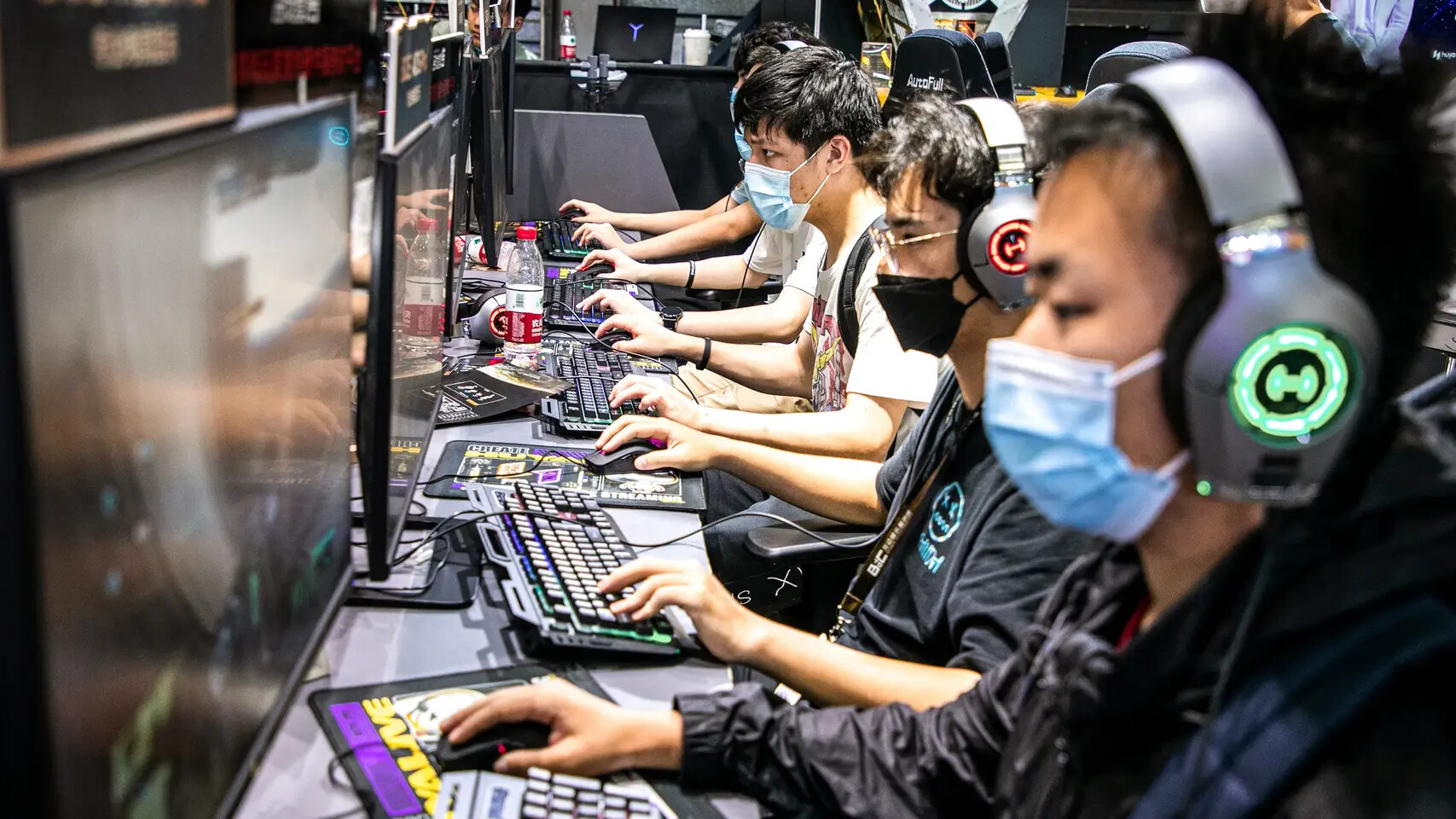
China, earlier today, brought into effect new online gaming and gambling regulations, which aim to curb down the time spent by gamers online, and remove all incentives to play daily, by regulating the way games reward gamers to play daily or often, causing them to spend more time and money online. The announcement sent shockwaves through the financial markets, causing investors to drain about $80 billion in value from two the leading online gaming stocks, Tencent and NetEase. The regulations essentially set spending limits for online games, by spelling out the exact ways in which game studios can monetize their online experiences and play reward systems. Tencent lost about 16% in share price, while that of NetEase crashed by 25%. Prosus, which owns a 26% stake in Tencent, slid by 14.2% in the markets. This is expected to have an effect on Western markets that open for trading in a bit.
More...
HP OMEN Transcend OLED Monitor Detailed Ahead of CES 2024
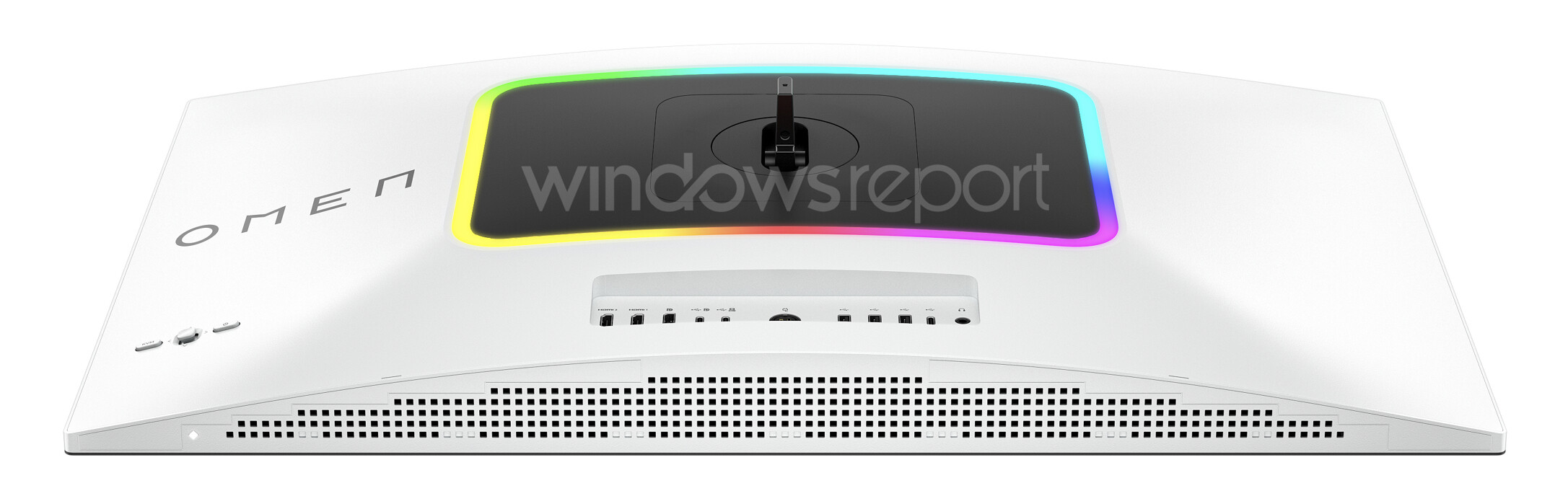
Hot on the heels of LG's UltraGear 4K OLED monitor with Dual-Hz feature, specifications and pictures of the upcoming HP OMEN Transcend 4K OLED monitor have leaked online. It will come with 32-inch 4K OLED panel with 240 Hz refresh rate and peak brightness of 1000 nits in HDR mode. The monitor will feature HP's Omen Tempest Cooling Tech to mitigate the risk of burn-in problems, as well as support for AMD FreeSync and Dolby Vision.
The rest of the known specifications, reported by Windows Report, include KVM switch, a feature that is quite popular in monitors these days, as well as HDMI 2.1 and DisplayPort 2.1 support. It also includes several other USB Type-C and Type-A ports. The monitor is expected to be the star of HP's OMEN CES 2024 lineup.

More...
Microsoft Pulls the Plug on Windows Mixed Reality, Reportedly Downsizing VR Division
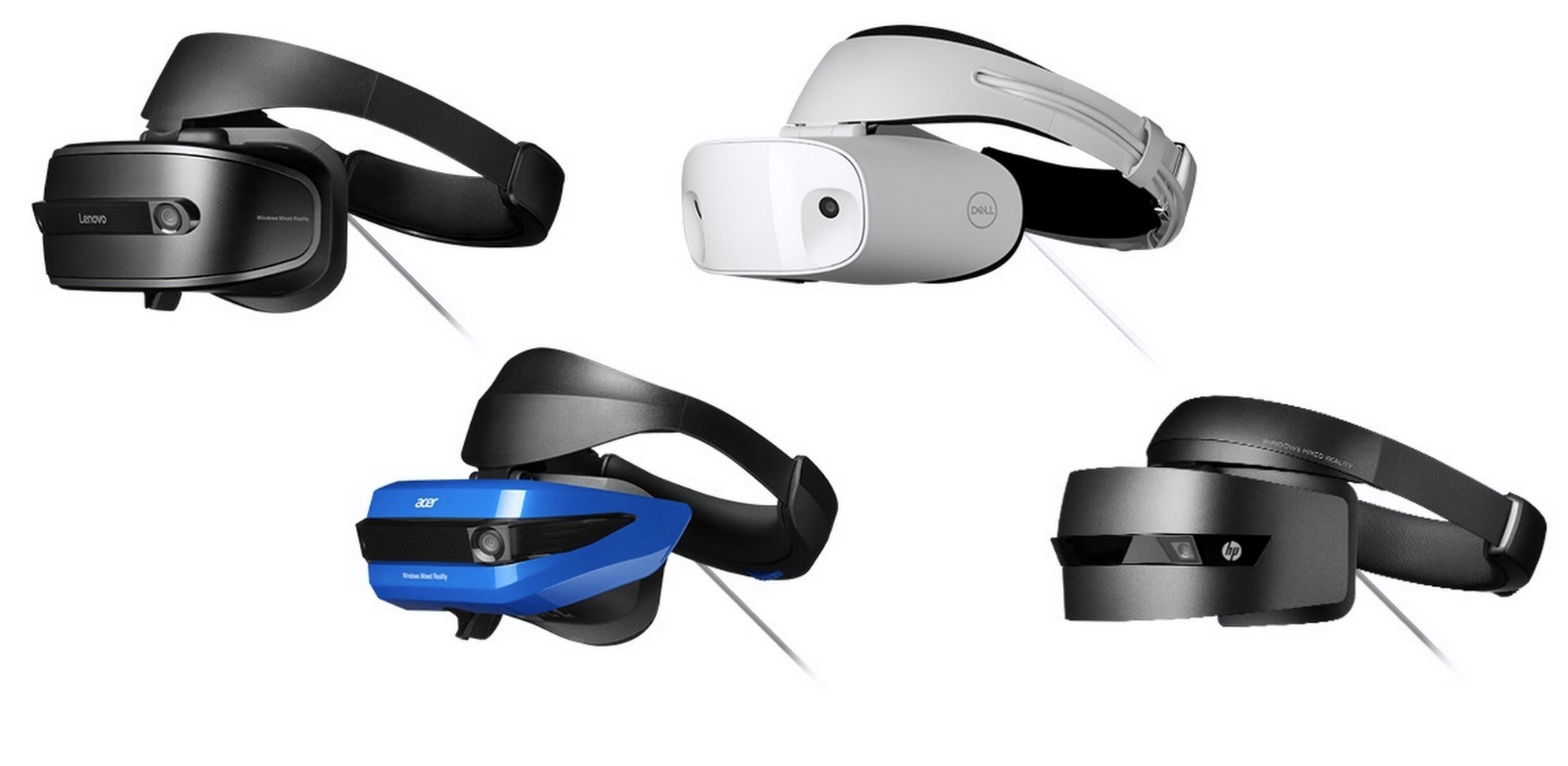
Microsoft is discontinuing Windows Mixed Reality. This was discovered when the company added it to a list of deprecated Windows features. The Windows Mixed Reality platform, along with its accompanying Mixed Reality Portal app, and Mixed Reality for Steam VR, are on the list. For now it is deprecated, and Microsoft says that it will be removed in a future release of Windows. Mixed Reality was released in 2017, during the thick of the VR craze in the tech industry, a time when Facebook, having acquired Oculus, and betting big on the Metaverse, an endeavor that cost the company over $20 billion since. Mixed Reality served as a gateway to games and apps in the VR space. The company developed its own HoloLens Mixed Reality headset rivaling Oculus Rift, and got its OEM partners, such as Acer, Dell, Lenovo, ASUS, and HP, to invest in ones of their own. In all this, it doesn't look like Microsoft is winding down its enterprise-focused HoloLens 2 headset just yet.
More...
ASUS BIOS Update Improves Intel Core Ultra 155H "Meteor Lake" Performance/Watt
UltrabookReview, which recently took the ASUS Zenbook 14 OLED UX3405 for a spin, noticed something interesting with the Intel Core Ultra 155H "Meteor Lake" processor powering it—apparently Intel is still working with its device partners to improve performance and efficiency, and a UEFI firmware update (BIOS update) from ASUS improves the processor's performance/Watt. The reviewer compares the notebook with its original BIOS version 201, to the updated version 203, and notices improvements in performance/Watt at 28 W. The firmware apparently updates the notebook's power management. The improvements are most apparent with Cinebench R23, where the best-run score with the original 201 firmware was 12357 points, and the updated 203 firmware was 13873 points (a 12.25% improvement). You can catch the review in the source link below.
More...
Samsung and Naver Developing an AI Chip Claiming to be 8x More Power Efficient than NVIDIA H100
Naver, the firm behind the HyperCLOVA X large language model (LLM), has been working with Samsung Electronics toward the development of power-efficient AI accelerators. The collaboration brings Naver's expertise with Samsung's vast systems IP over silicon design, the ability to build complex SoCs, semiconductor fabrication, and its plethora of DRAM technologies. The two recently designed a proof of concept for an upcoming AI chip, which they iterated on an FPGA. Naver claims the AI chip it is co-developing with Samsung will be 8 times more energy efficient than an NVIDIA H100 AI accelerator, but did not elaborate on its actual throughput. Its solution, among other things, leverages energy-efficient LPDDR memory from Samsung. The two companies have been working on this project since December 2022.
More...
Autistic Lapsus$ Hacker Who Leaked GTA 6 Clips Sentenced to Life in a Hospital
18-year old Arion Kurtaj from Oxford, UK, was a key member of the international hacking gang Lapsus$, which, among several cases of cyber crime against tech giants, has been behind the recent leak of the Grand Theft Auto VI video clips, ahead of the official trailer by Rockstar Games. Over the years, Lapsus$ hit big tech companies, including Rockstar Games, NVIDIA, and Uber, with their exploits assessed to have caused these companies about $10 million in losses. In an interesting twist to the case, the Kurtaj was deemed by doctors unfit to stand trial as he is severely autistic, and so the jury in the case was asked to determine only whether or not he committed the acts of cyber crime, and not if he did so with criminal intent.
The judge hearing the case said Kurtaj's skills and desire to commit cyber crime meant he remained a high risk to the public. While on bail from his previous arrest for hacking NVIDIA and UK telecommunication giants EE and BT, and in police protection in a hotel, Kurtaj pulled off his most daring hack of breaching Rockstar Games, using only an Amazon Firestick, his hotel's TV, and a mobile phone. He stole 90 clips of unreleased footage from gameplay of Grand Theft Auto VI. He also broke into Rockstar's internal Slack channel, threatening to leak the game's source code if the studio didn't contact him within 24 hours. He was immediately re-arrested and in lock-up until his trial. Rockstar Games told the court that it cost the company $5 million to recover from the hack, in staff billable hours.
Read full story
More...
CableMod Recalls 12VHPWR v1.0 and v1.1 Angled Adapters
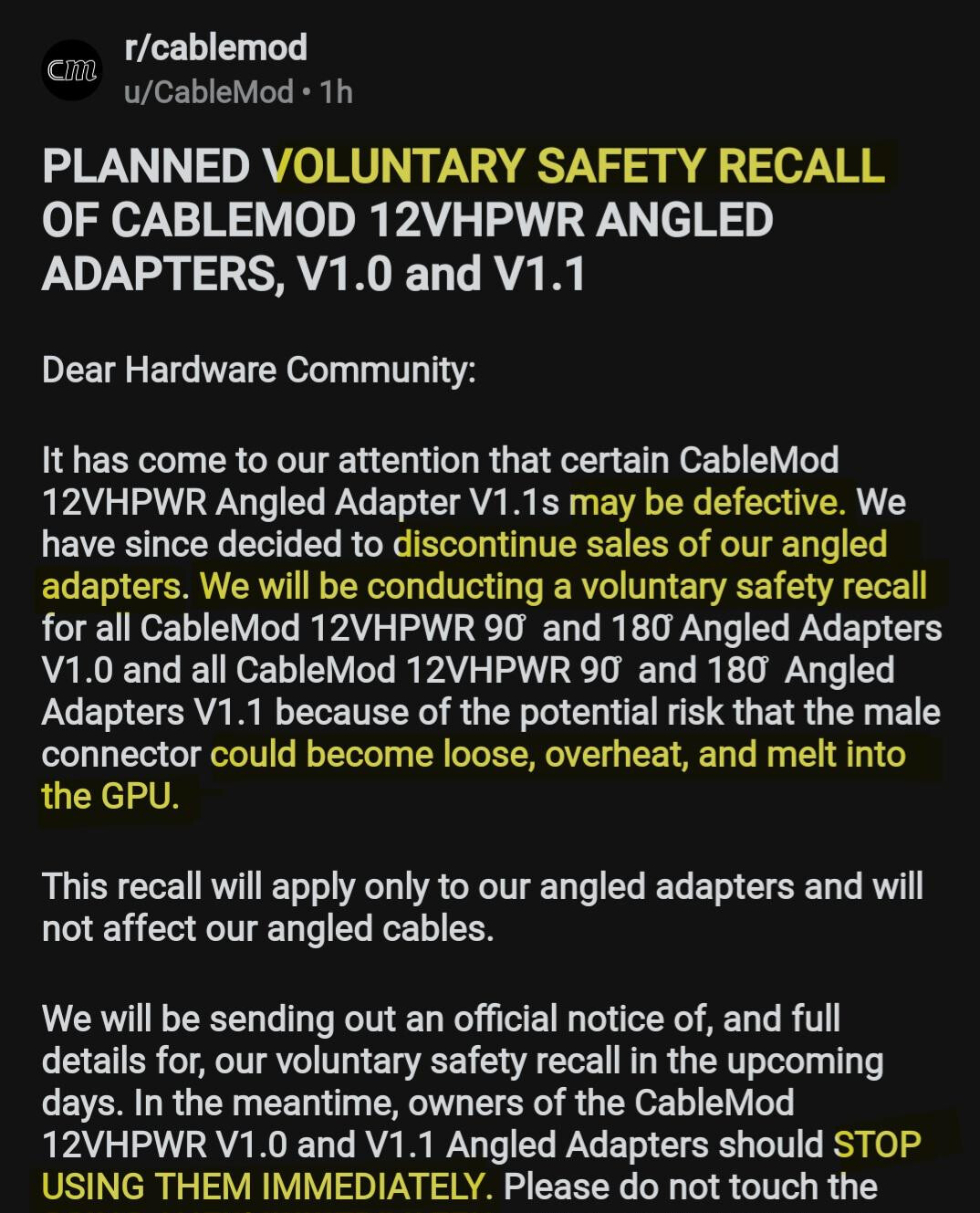
CableMod issued a safety recall of its 16-pin 12VHPWR angled adapters, versions 1.0 and 1.1. The company cites safety issues behind the recall. This includes both the company's 90° angled, and 180° hard connectors. The company observed that the contact points in the male connector is improper, causing it to overheat and melt into the GPU. The safety issue only affects CableMod's hard adapters, and not its angled cables. Owners of these cables are advised to stop using the adapters immediately, and contact CableMod to be part of the recall, and further service recovery options.
More...
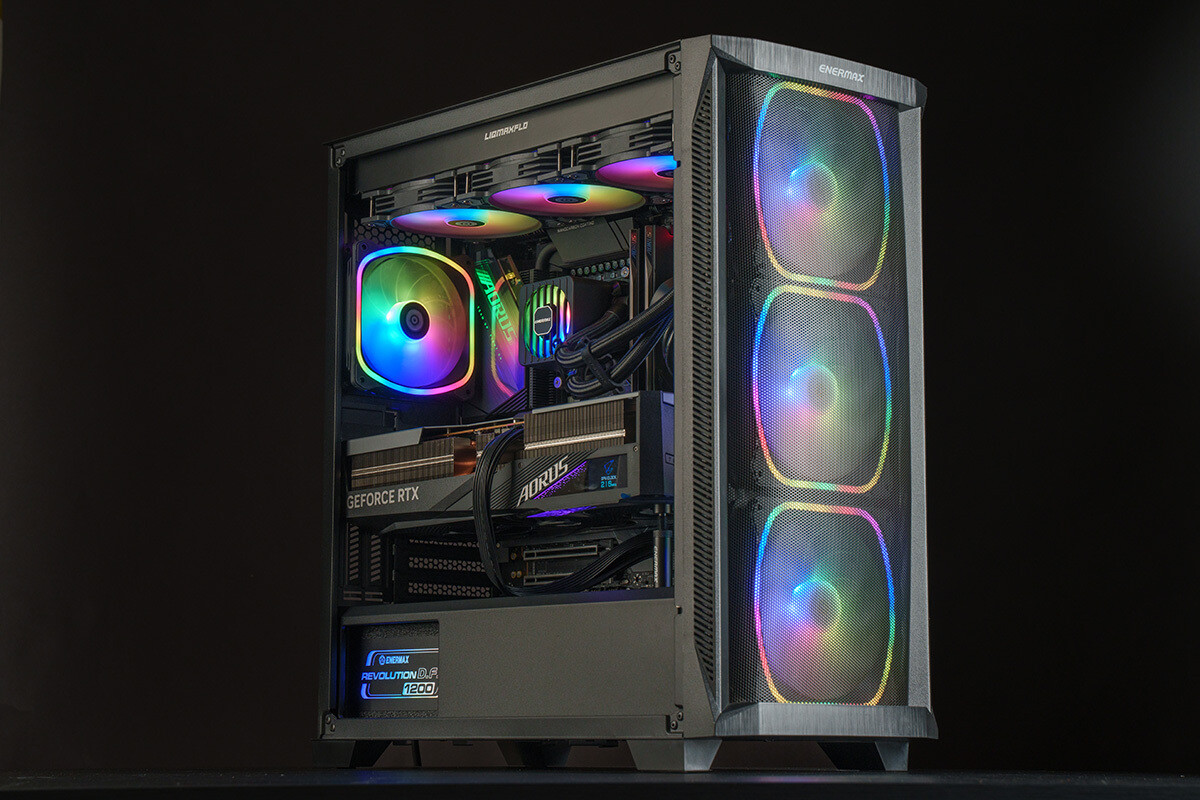
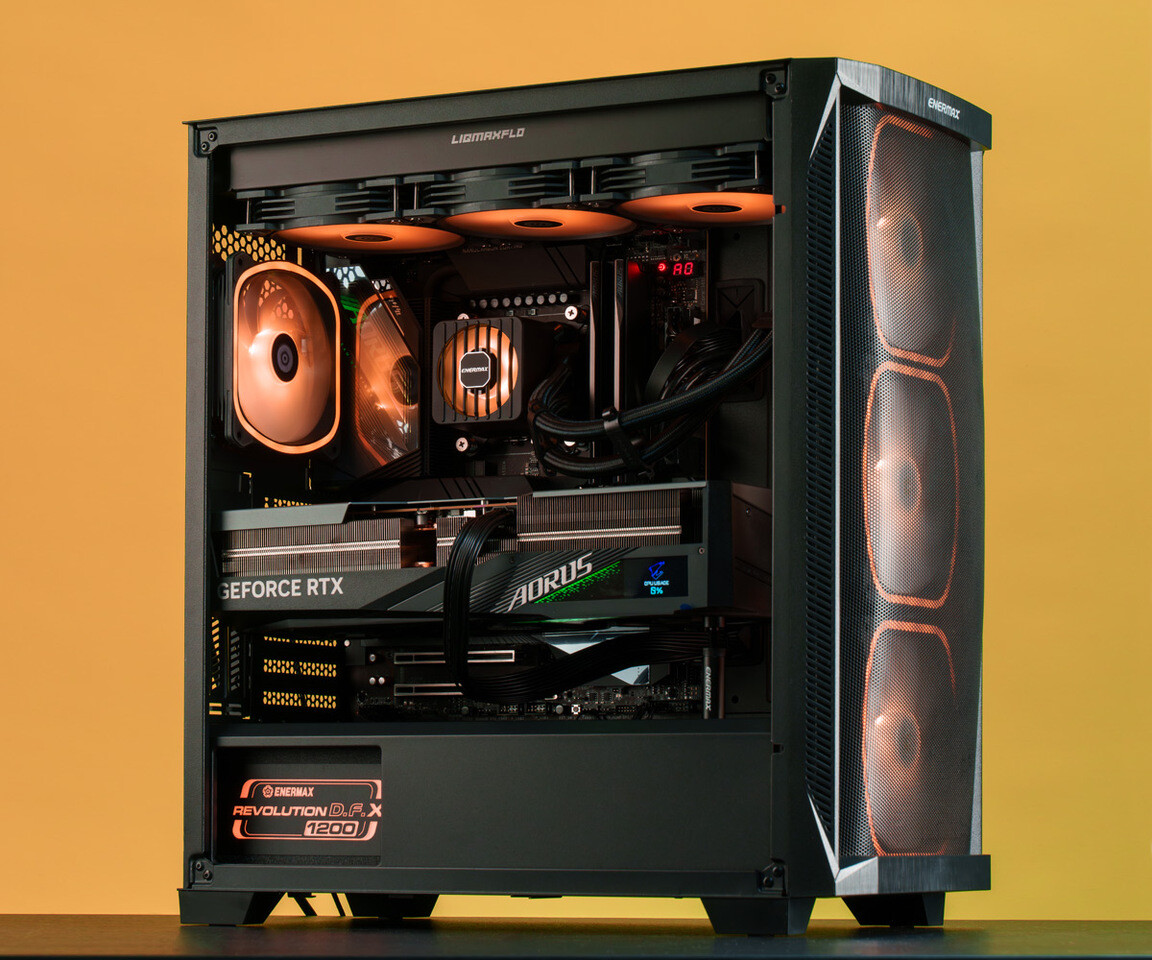
(PR) ENERMAX Introduces The StarryKnight SK30 V2 Airflow Mid-Tower PC Case with USB 3.2 Gen 2 Type C
ENERMAX, an industry-leading force dedicated to designing high-performance computer hardware and cooling solutions, today announced the new StarryKnight SK30 (SK30 V2) mid-tower PC case, a follow-up and upgrade of its last-generation SK30 PC case.
The SK30 V2 comes with three pre-installed 140 mm and one 120 mm ENERMAX SquA RGB ADV fans with PWM function. The SquA RGB ADV fan, as one of ENERMAX's most powerful ARGB fans, delivers 40% stronger airflow than other regular-case fans with an enlarged blade surface. The combination of air-inlet and vortex-frame design will not only bring in more air but also direct and concentrate airflow across the system's components.


Read full story
More...
 Posting Permissions
- You may not post new threads
- You may not post replies
- You may not post attachments
- You may not edit your posts
-
Forum Rules