-
Robot
Most Wanted

- Rep Power
- 82
 (PR) ASUS Announces All-New Zenbook 14 OLED (UX3405)
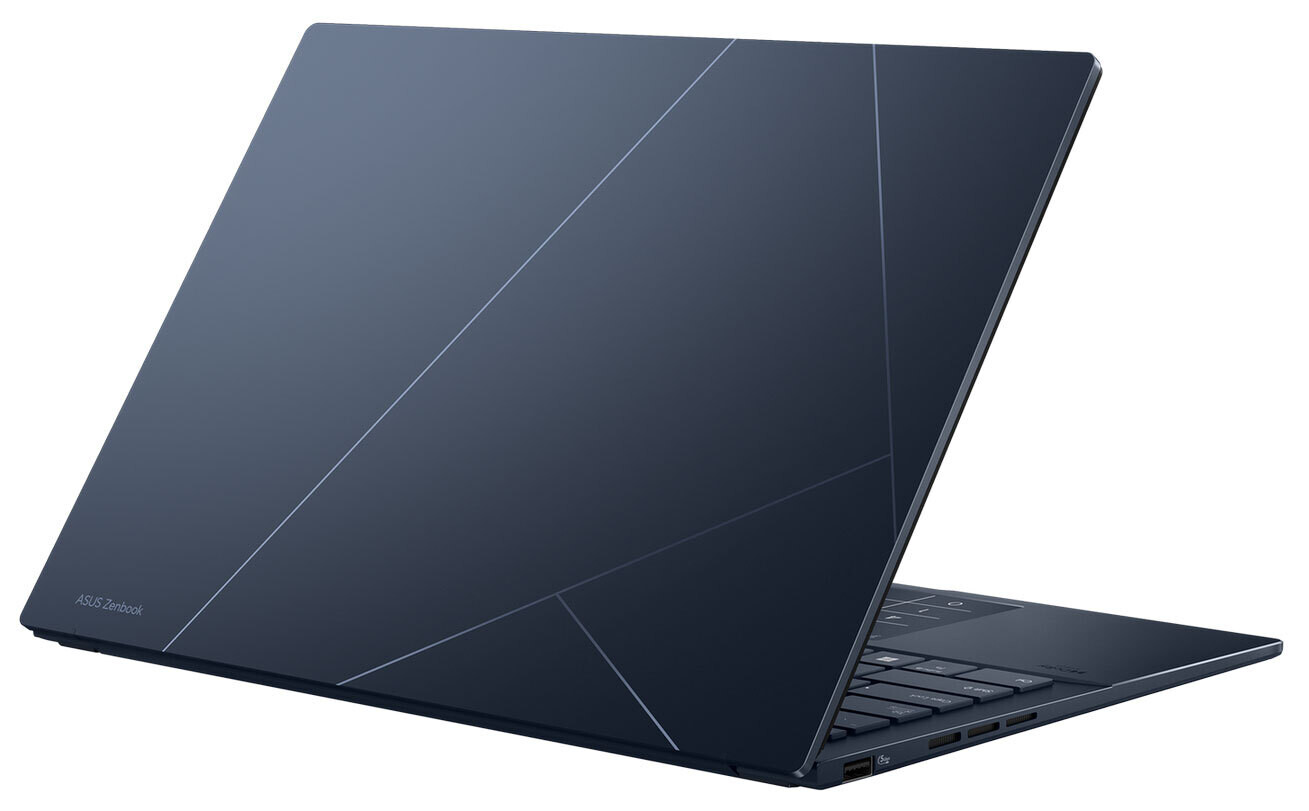
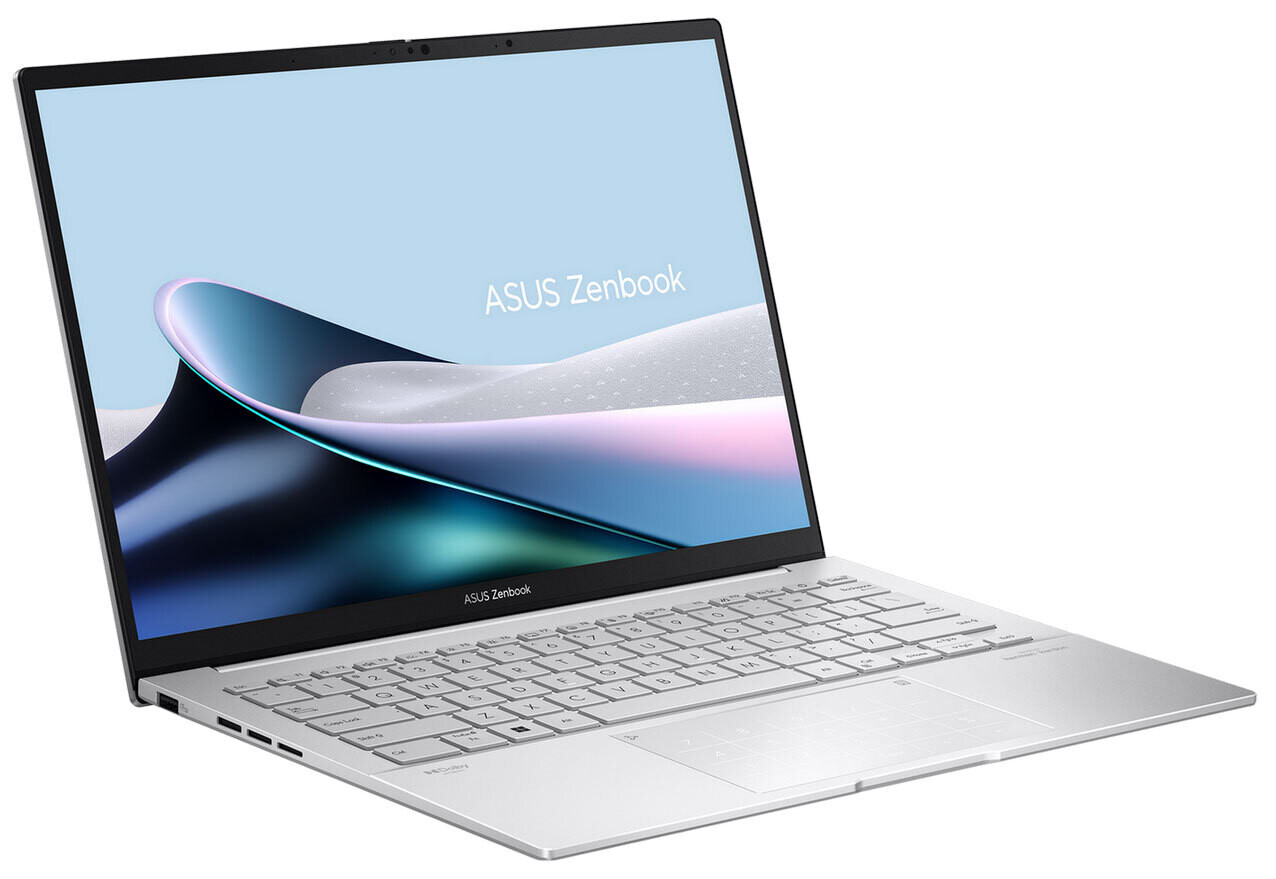
ASUS today announced the all-new Zenbook 14 OLED (UX3405), a premium ultraportable laptop. The sleek Zenbook 14 OLED is the ultimate Intel Evo Edition ultraportable laptop that takes sophistication to a whole new level. Users can seize every moment using the enhanced, extended-life 75 Wh battery, amplify their efficiency with up to the top-tier Intel Core Ultra 9 processor and Intel Arc graphics, and achieve seamless connectivity via all the essential I/O ports—including two Thunderbolt 4, USB 3.2 Gen 1 Type-A, HDMI 2.1 (TMDS) and a 3.5 mm audio jack.
An immersive audiovisual experience is provided by the vivid 3K ASUS Lumina OLED 120 Hz touchscreen and powerful new super-linear speakers, and the user-friendly design incorporates convenient face login, an FHD IR camera with a physical shutter for privacy, and a new quiet ASUS ErgoSense keyboard. The new design offers improved sustainability with the extensive use of recycled materials for the laptop and its packaging, and US military-grade durability testing maximizes the device's service life.


Read full story
More...
(PR) EK Announces White Upgrade Kits for EK-Quantum Velocity²
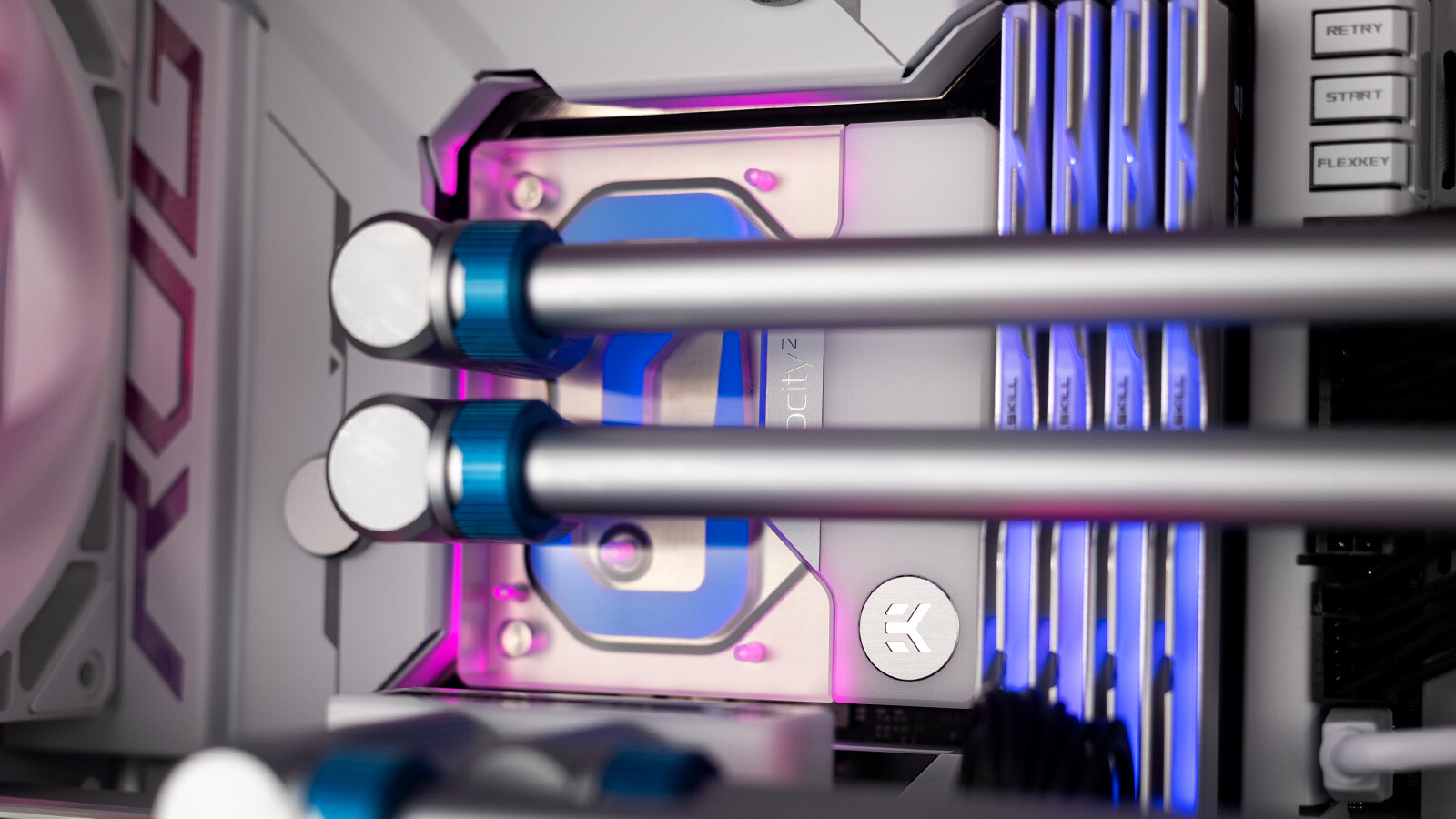
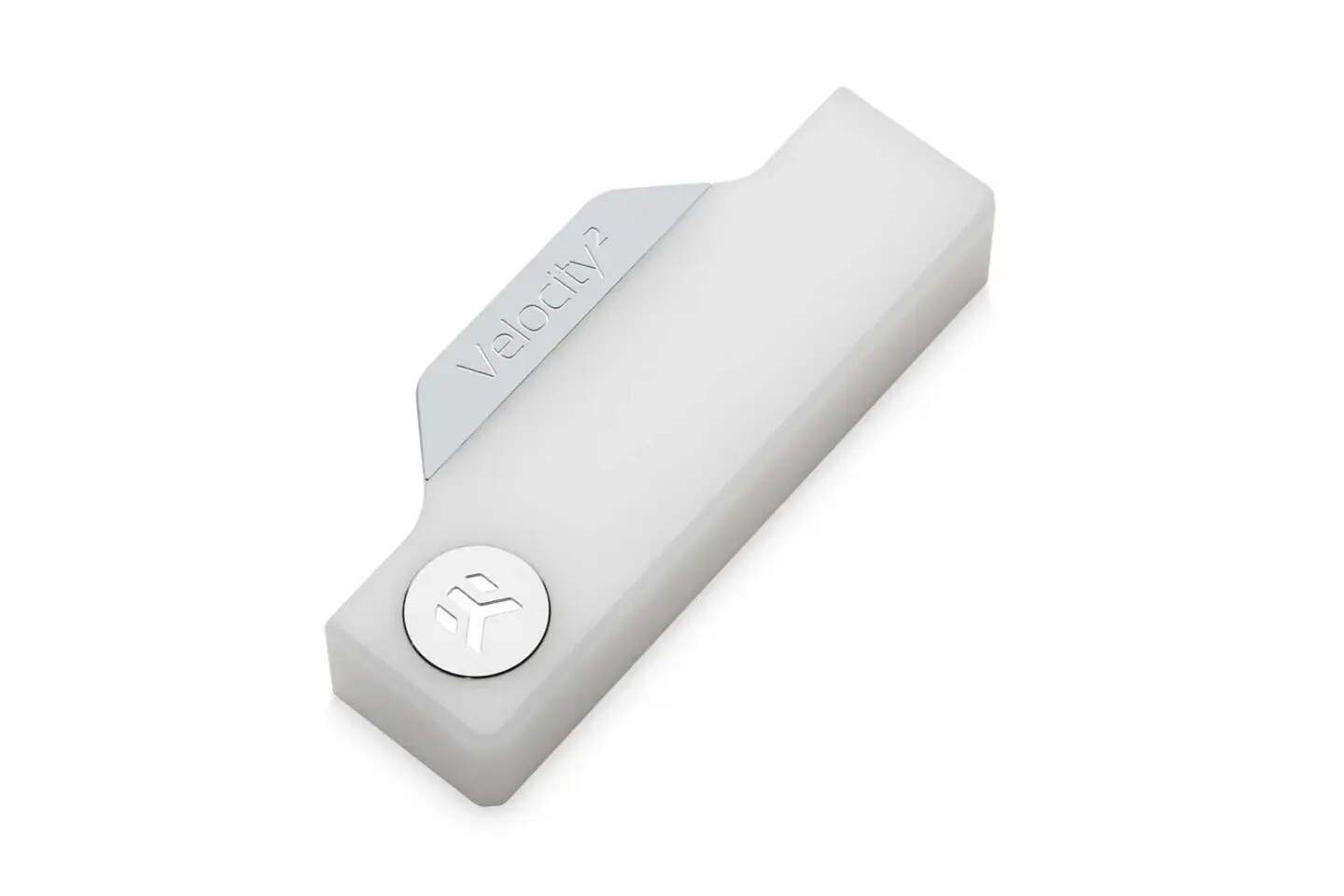
EK, the premium liquid cooling gear manufacturer, now offers white upgrade kits for EK-Quantum Velocity² as separate products. These kits can be used to change the color of the stand-out to white so they better match white-themed builds and overall aesthetics. The users now don't need to buy a whole new water block if they want a white build. Instead, they can simply use this kit to upgrade their existing Plexi Velocity² water block and transform it into a white one.
EK-Quantum Velocity² D-RGB - AM5/1700 White Upgrade Kit
As the Velocity² CPU water block is socket-specific, separate upgrade kits are made for the AM5 and LGA 1700 sockets. This was necessary due to the size difference of the water blocks. The kit contains a white stand-out, a white Velocity² label, and a new EK badge. This exclusive series allows you to seamlessly transform the appearance of your Nickel + Plexi Velocity² by replacing the original components with pristine white alternatives.

Read full story
More...
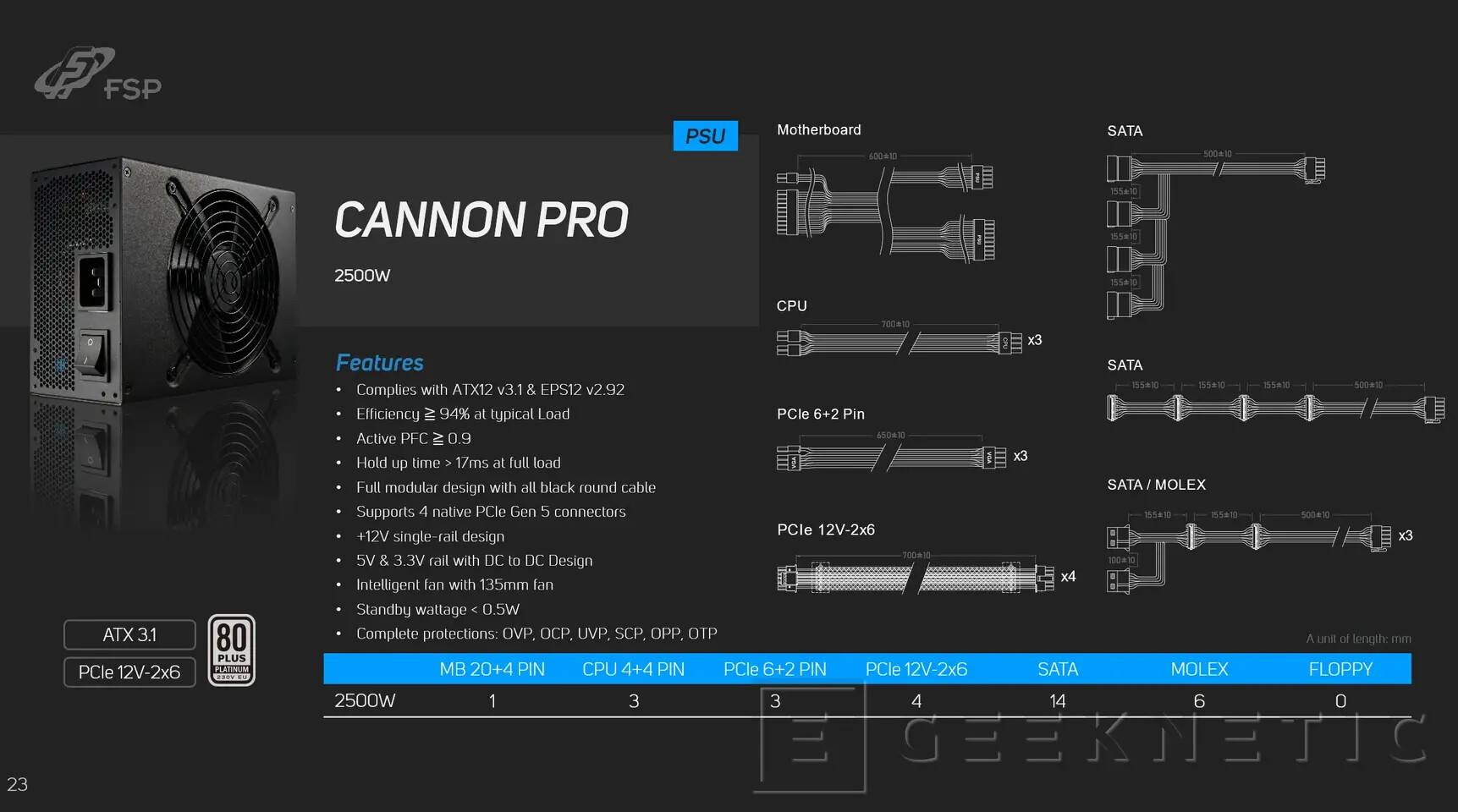
FSP Readies 2500 Watt PSU with Four PCIe 12V-2×6 GPU Power Cables
Taiwanese power supply manufacturer FSP showcased upcoming products for 2023 and 2024. This included new power supply lineups with updated naming schemes - the entry-level VITA series, mid-range ADVAN series, and high-end MEGA and DAGGER series. The simplified naming clarifies the differentiation between affordable, mainstream, and premium offerings across wattages and efficiency certifications. Specific new PSU models include 1500+ Watts beasts for maxed-out systems, redundant server-class units ensuring uptime, and 80+ Titanium efficiency ratings for eco-conscious builds. Star of the show is FSP's flagship unit, which boasts a staggering 2500 Watts, 100% modular cabling, and cutting-edge 12V-2x6 PCIe Gen 5 graphics card power connectors.
Called the Cannon Pro, the 2500-watt power supply has four 12V-2x6 PCIe Gen 5 connectors to feed even the highest power-rated GPUs and the three 6+2-pin connectors. This new PSU is also rated for ATX 3.1 specifications, 80+ Platinum Specification, and the upgraded version of the 12VHPWR PCIe Gen 5 connector, supposedly overcoming all the issues, in the form of a 12V-2x6 PCIe Gen 5 connector. The PSU should be able to power four NVIDIA GeForce RTX 4090 GPUs simultaneously with its high capacity. Pricing and availability aren't specified, so we must wait for FSP to launch these products in 2024.


More...
ExtraSS Framework Paper Details Intel's Take on Frame Generation
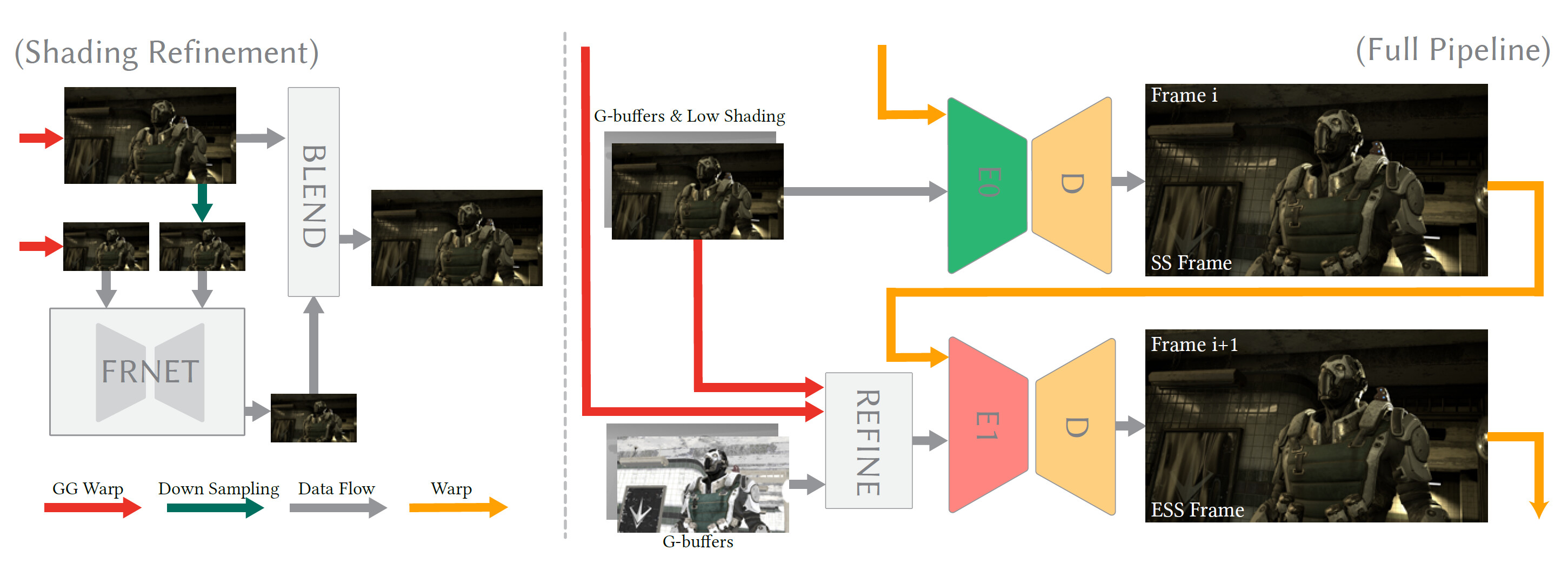
With both NVIDIA and AMD having the ability to nearly double frame-rates in games using frame generation technologies such as DLSS 3 and FSR 3, Intel Graphics couldn't be too far behind. The company is taking a significantly different approach than the other two GPU makers. In a research paper titled "ExtraSS Framework Details Intel's Take on Frame Generation," Intel provides an overview of how ExtraSS works, and its obvious advantage over DLSS 3 and FSR 3—latency.
ExtraSS is a technology that relies on frame extrapolation, instead of interpolation on FSR 3 and DLSS 3. In interpolation, the software uses past- and future frames to guess an in-between frame, using motion vectors and temporal data. This adds latency, which is why NVIDIA and AMD rely on technologies such as Reflex and Anti-Lag+ to mitigate it. There's no such technological problem to solve with ExtraSS. On the other hand, generating frames entirely using past frames (i.e. extrapolation in the literal sense of the word), can result in artifacts and ghosting. Intel intends to solve this using a new warping method, and AI. ExtraSS should come in particularly handy as Intel is betting big on giving its processors powerful iGPUs, such as the Xe-LPG powering the Core Ultra "Meteor Lake," while its Arc "Alchemist" GPUs remain a generation older than what NVIDIA and AMD have in the dGPU market. Intel hopes to launch its next-generation "Battlemage" discrete GPUs in 2024.


More...
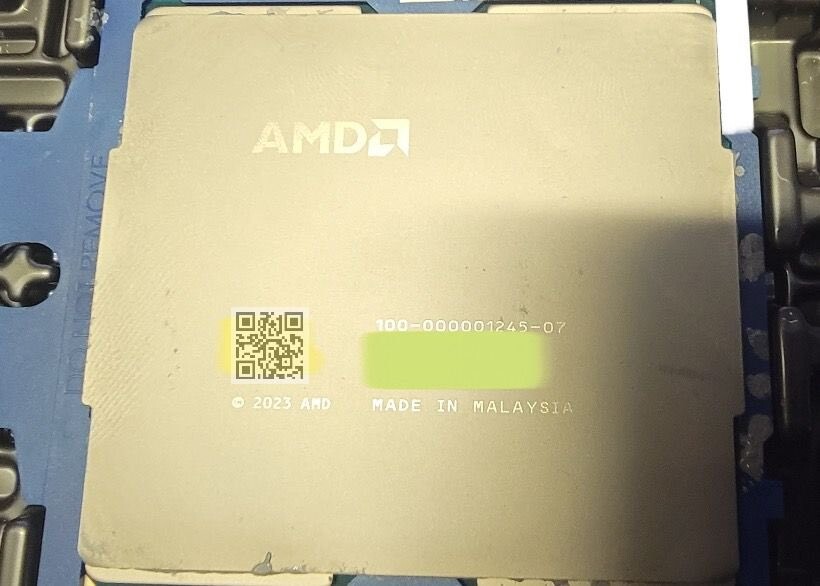
AMD 5th Gen EPYC "Turin" Pictured: Who Needs Accelerators When You Have 192 Cores?
AMD's upcoming server processor, the 5th Gen EPYC "Turin," has been pictured as an engineering sample is probably being evaluated by the company's data-center or cloud customers. The processor has a mammoth core-count of 192-core/384-thread in its high-density cloud-focused variant that uses "Zen 5c" CPU cores. Its regular version that uses larger "Zen 5" cores that can sustain higher clock speeds, also comes with a fairly high core-count of 128-core/256-thread, up from the 96-core/192-thread of the "Zen 4" based EPYC "Genoa."
The EPYC "Turin" server processor based on "Zen 5" comes with an updated sIOD (server I/O die), surrounded by as many as 16 CCDs (CPU complex dies). AMD is expected to build these CCDs on the TSMC N4P foundry node, which is a more advanced version of the TSMC N4 node the company currently uses for its "Phoenix" client processors, and the TSMC N5 node it uses for its "Zen 4" CCD. TSMC claims that the N4P node offers an up to 22% improvement in power efficiency over N5, as well as a 6% increase in transistor density. Each of the "Zen 5" CCDs is confirmed to have 8 CPU cores sharing 32 MB L3 cache memory. A total of 16 such CCDs add up to the processor's 128-core/256-thread number. The high-density "Turin" meant for cloud data-centers, is a whole different beast.


Read full story
More...
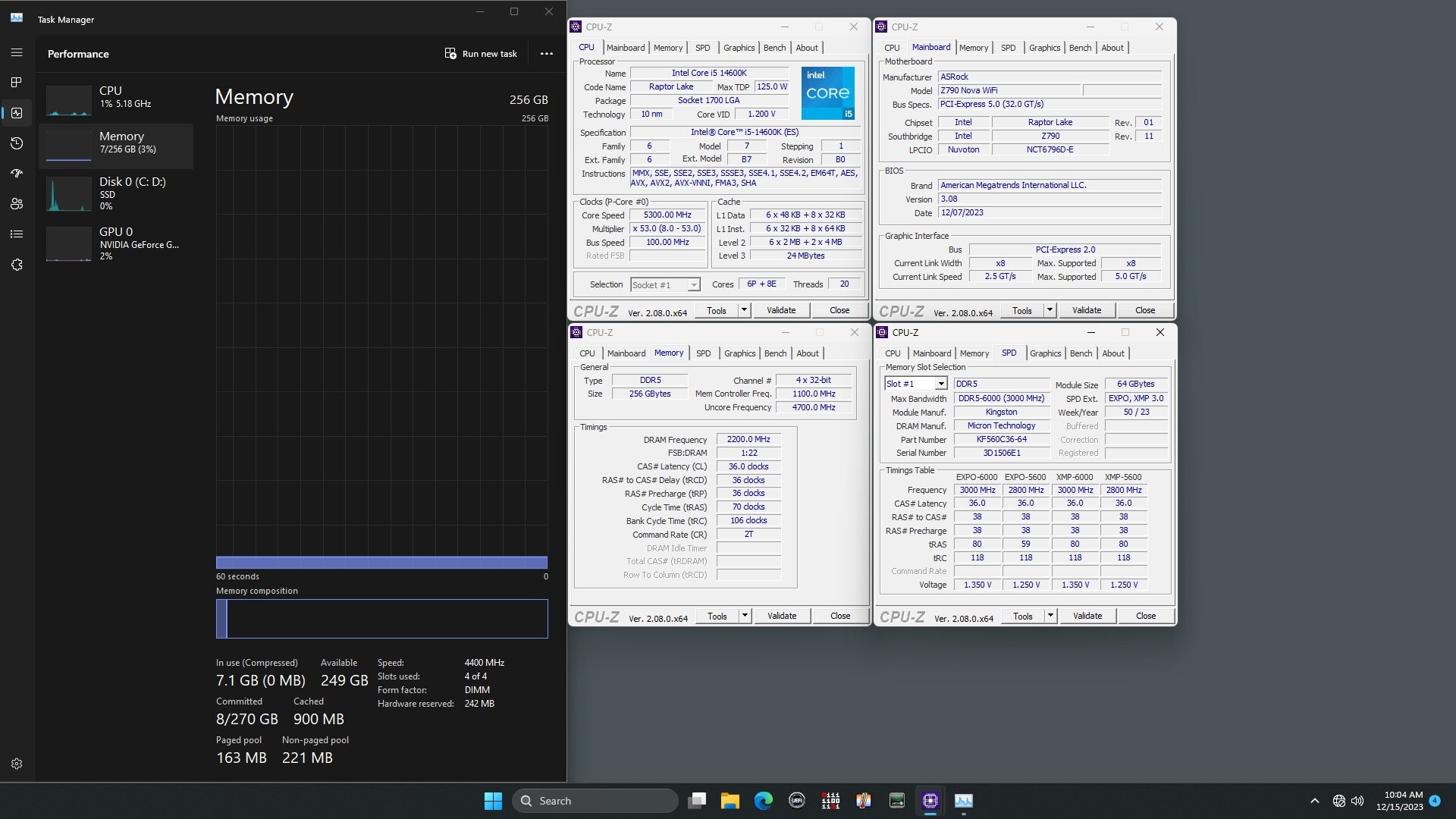
(PR) ASRock Adds 256GB Max Memory and 64GB DIMM Support to its AMD AM5 and Intel 700-series Motherboards
ASRock is announcing the support of 64 GB DDR5 memory module across Intel 700 Series and AMD AM5 Series motherboards. This enhancement boosts the maximum memory capacity to 256 GB with 4 DIMMs, offering increased performance and compatibility for enthusiasts. Additionally, we are committed to expanding support for the 64 GB DDR5 memory module across more motherboards with various chipsets, enhancing productivity for memory-intensive multitasking applications.

More...
 Posting Permissions
- You may not post new threads
- You may not post replies
- You may not post attachments
- You may not edit your posts
-
Forum Rules