-
Robot
Most Wanted

- Rep Power
- 82
 Intel Releases PresentMon with a User-friendly Interface
PresentMon is a popular utility that lets you analyze system latencies at a software level, helping you determine how the interplay between various hardware devices and their software contribute to various performance metrices, such as frame-rates, and frame-times. Developed by Intel engineer Jefferson Montgomery and first introduced to the public in 2017, PresentMon has been an SDK that other performance tools have leveraged, such as CapFrameX, NVIDIA FrameView, and GPUOpen OCAT. Intel decided to release PresentMon as an application with its own front-end that has Intel branding. The company will continue to enable PresentMon SDK for third-party applications.
The new Intel PresentMon beta application comes with a configurable overlay that has real-time graphing. It leverages the new GPU_busy performance counter that is the time between two presents (i.e. the time taken for the GPU to execute API commands issues by the CPU for the generation of a particular frame. The PresentMon application retains multi-vendor support—NVIDIA and AMD GPUs remain supported—as do AMD CPUs. It also retains support for all prevalent 3D graphics APIs, including DirectX, Vulkan, and OpenGL. For power-users, the PresentMon SDK and Overlay application will continue to be open-source and available on GitHub, and the company has only increased its usability by adding more commandline options. Everyone else can grab the ready-to-use Intel PresentMon Beta application from the Intel website.
DOWNLOAD: Intel PresentMon Beta


More...
Lenovo Legion Go Handheld Leaks Powered by AMD Ryzen Z1 APU
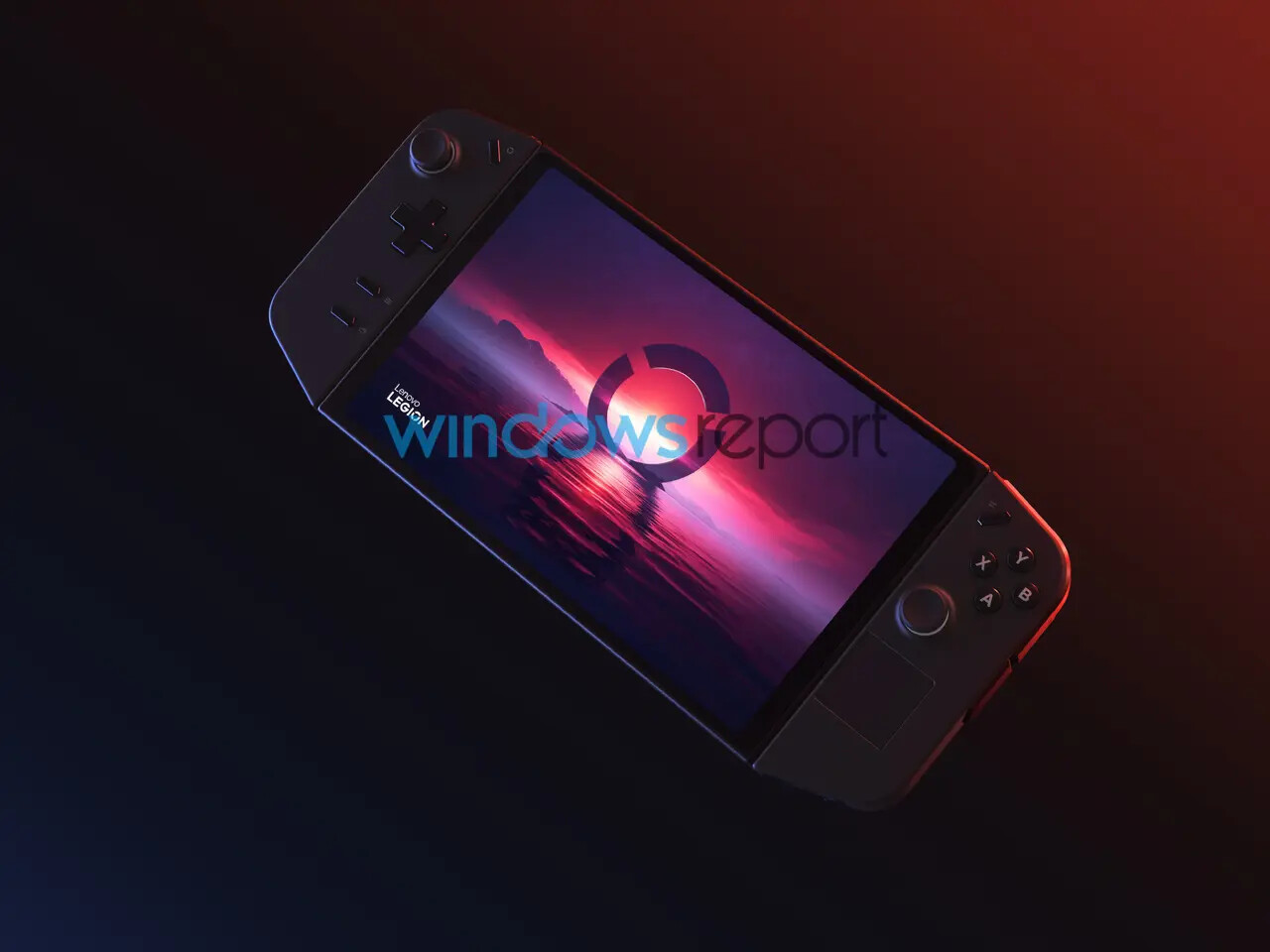
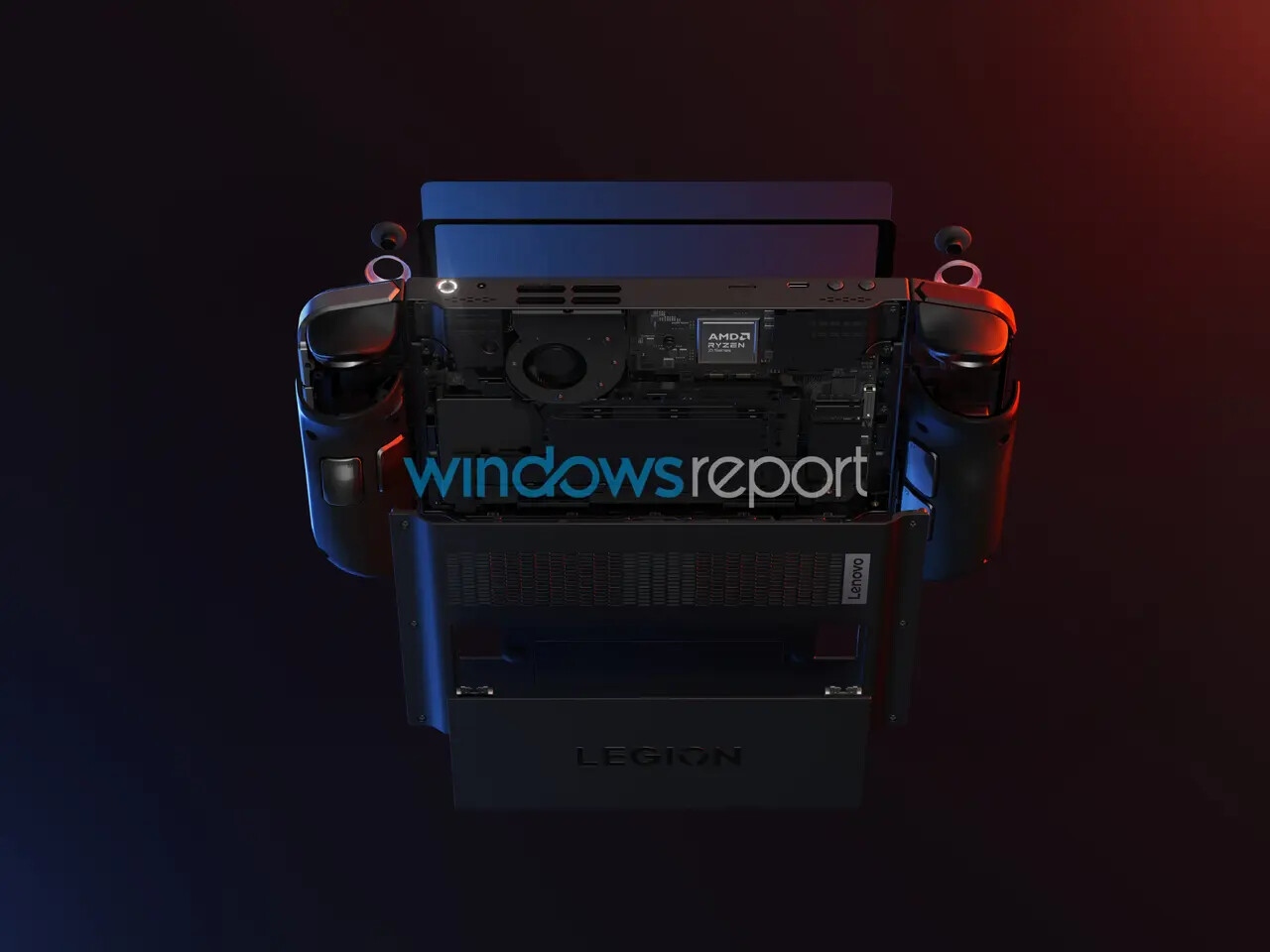
After a couple of speculations, rumors, and leaks, the latest one confirms that Lenovo is indeed working on a handheld gaming console, the Legion Go, and it could be launching pretty soon. The latest leak shows it powered by AMD Ryzen Z1 APU and featuring detachable JoyCon-like controllers. It will run on Windows 11 OS and could be paired up with the Legion AR Glasses.
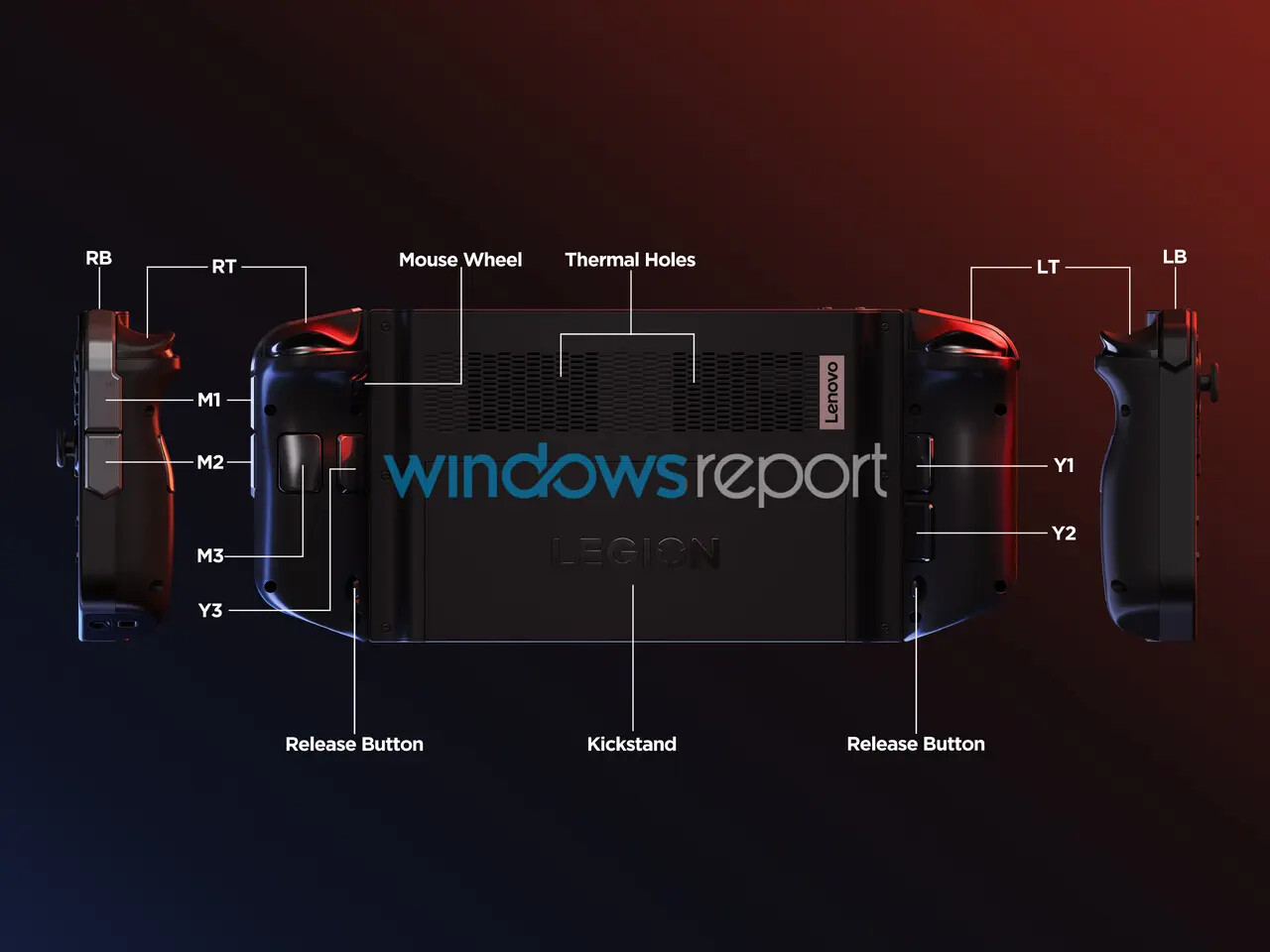
Unfortunately, the leak over at Windowsreport.com show does not include specifications, but according to pictures, it will feature dual speakers, two mics, microSD card reader, a couple of USB-C ports, dedicated FPS switch, a mouse wheel, integrated kickstand, and AMD Ryzen Z1 APU, same as the ASUS ROG Ally. Unfortunately, it is not clear if it will be the Ryzen Z1 or the Ryzen Z1 Extreme APU.


Read full story
More...
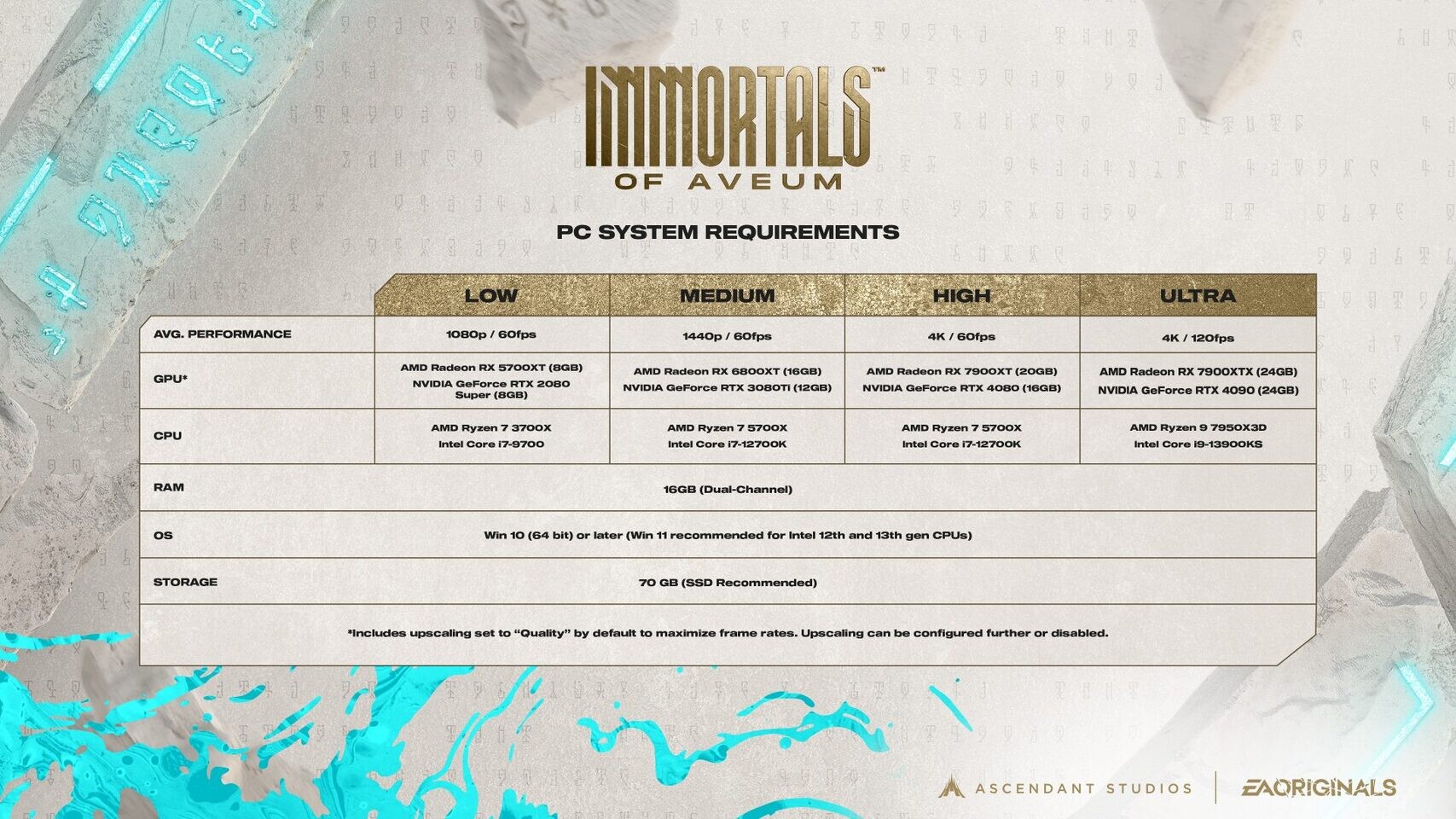
(PR) Immortals of Aveum Gets Updated PC Requirements, Confirms DLSS 3 and FSR 2.2 Support at Launch
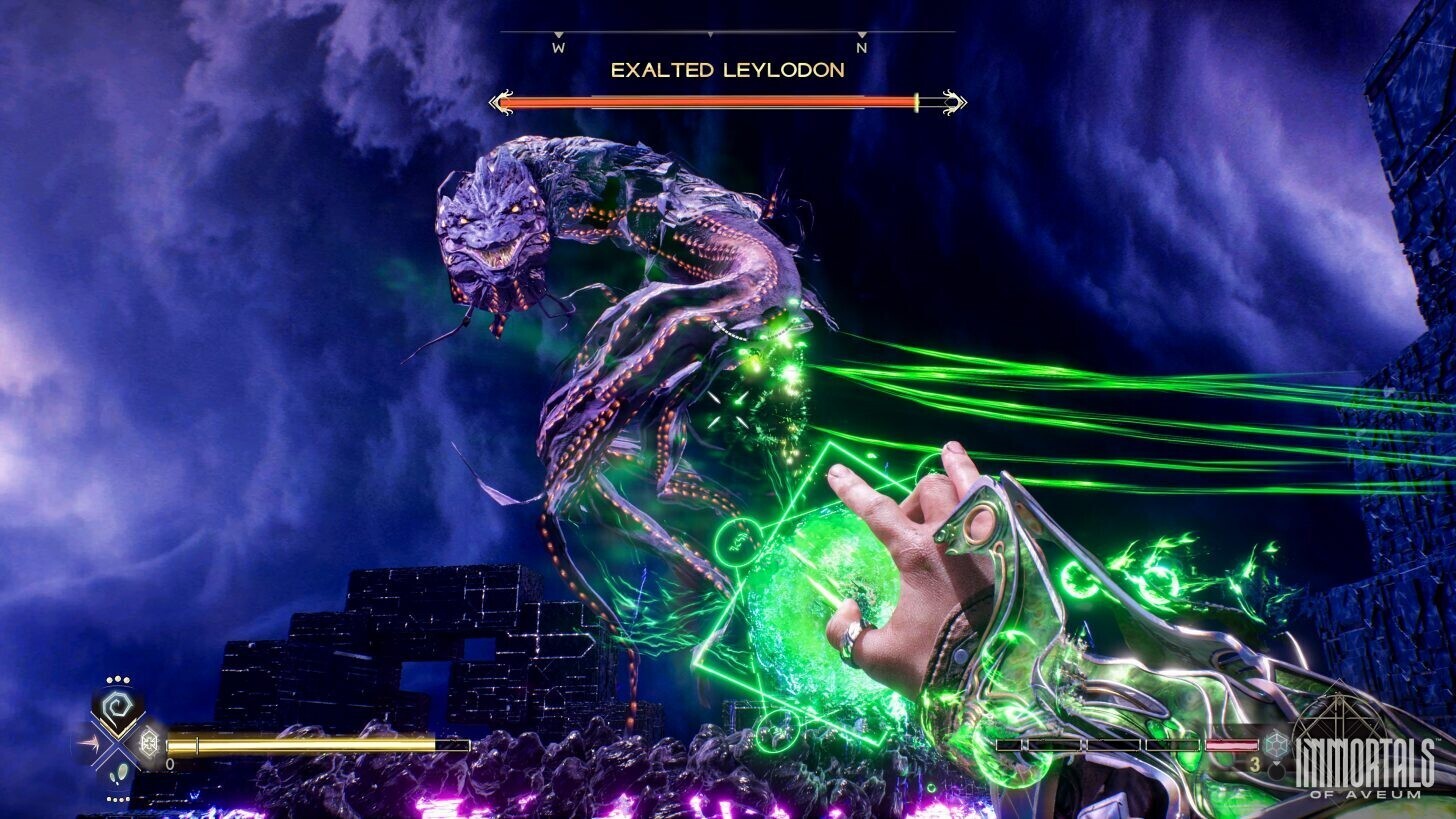
The day is almost here. The release of Immortals of Aveum is just around the corner, and we here at Ascendant Studios are so incredibly excited for players to get to experience what we've been building all this time. As we inch closer to August 22nd, we wanted to take a moment to talk a bit more about the technology that's powering our game, and what that means for PC players in particular.
Earlier this year, we talked about some of the amazing tools we've had at our disposal as one of the first studios to release a AAA game using Unreal Engine 5.1. There's Nanite, for example, which automatically adjusts the details the player sees based on distance, letting us build huge, detailed 3D objects that look every bit as good up close as they do from virtual miles away. The additional surface detail of our objects provide significantly more places for lighting to bounce off of.


Read full story
More...
(PR) BIOSTAR Launches B650MT and B650MS2 Motherboards
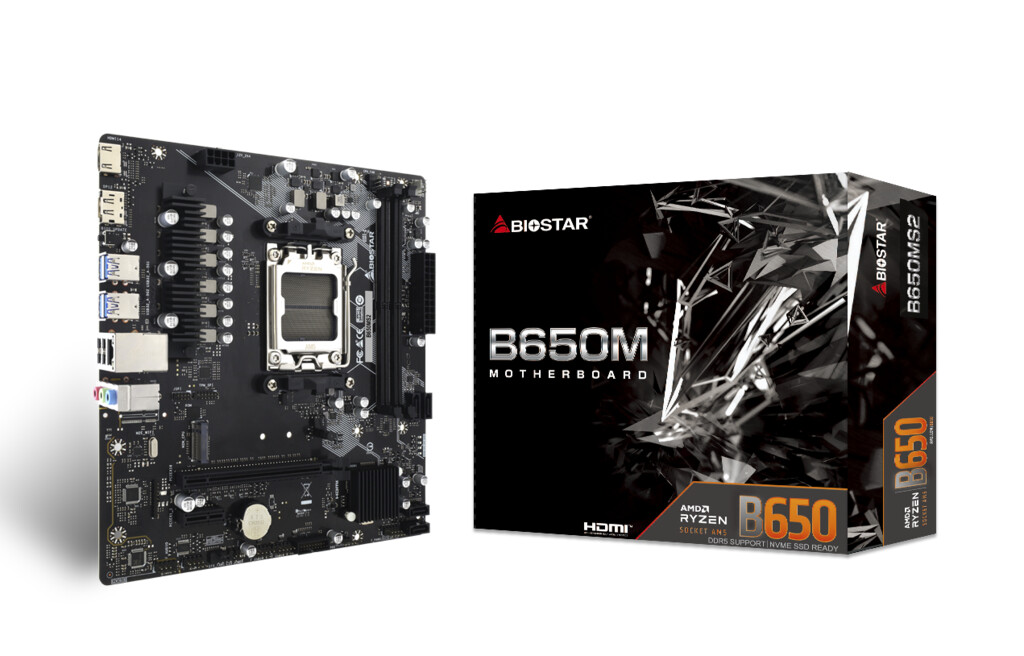
BIOSTAR, a leading manufacturer of motherboards, graphics cards, and storage devices today, is proud to present the brand-new B650MT and B650MS2 motherboards, designed to empower both work and entertainment. Built on the performance-oriented AMD B650 chipset, with support for AMD Ryzen 7000 series processors and the latest Ryzen 7000X3D line, these motherboards stand out with unmatched features and top-notch performance for casual and business use, optimized for system integration businesses, enabling seamless management of business data and overall business processes.
The B650MT and B650MS2 feature DDR5 memory, boasting an impressive capacity of 48 GB per module and a 50% increase in bandwidth compared to its predecessor, DDR4. These features make multitasking a breeze and provide a significant increase in productivity. Users can enjoy hassle-free data transfer speeds thanks to the inclusion of PCIe 4.0 and PCIe 4.0 M.2, with the latter offering a bandwidth of 64 Gb/s, making it twice as fast as the PCIe 3.0 M.2. System updates are now more seamless and efficient, courtesy of the Smart Update feature and the SMART BIOS UPDATE, designed to offer online updates and driver installations automatically.

Read full story
More...
(PR) AMD Releases Radeon GPU Detective (RGD) 1.0
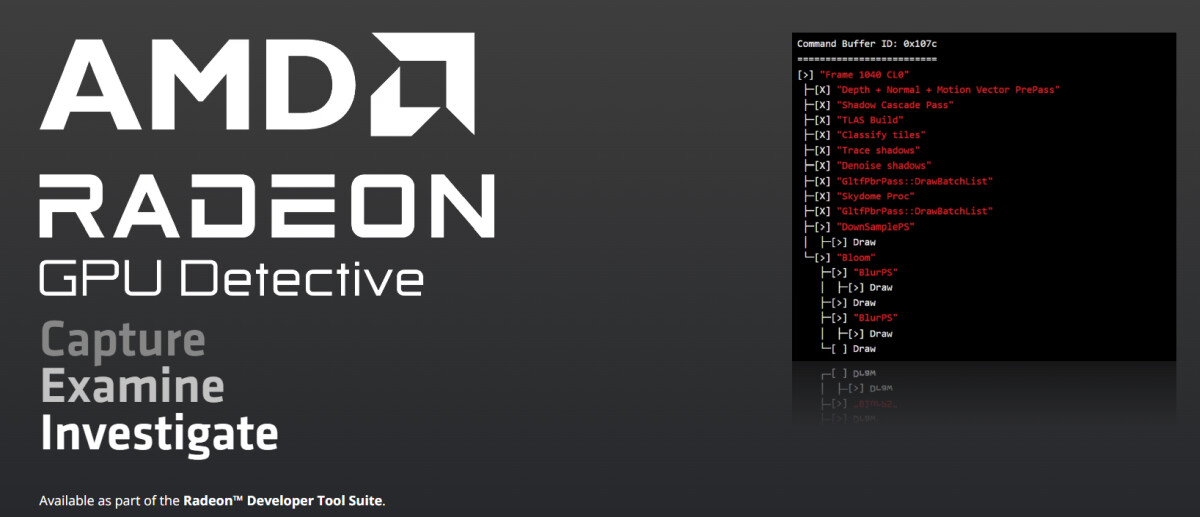
We are happy to announce the release of Radeon GPU Detective (RGD) v1.0 - a tool for post-mortem analysis of GPU crashes. The tool allows developers to retrieve and analyze AMD GPU crash dumps and produce information that can help narrow down the search for a crash's root cause. Such information includes page fault details, resource details and execution markers reflecting the GPU work that was in progress at the moments leading to the crash.
This first version of the tool supports analysis of GPU crashes on Windows ("TDRs") in Direct3D 12 applications and requires a RX 6000 series (RDNA 2) or RX 7000 series (RDNA 3) card, in addition to the latest public AMD Radeon Adrenalin Software.
Read full story
More...
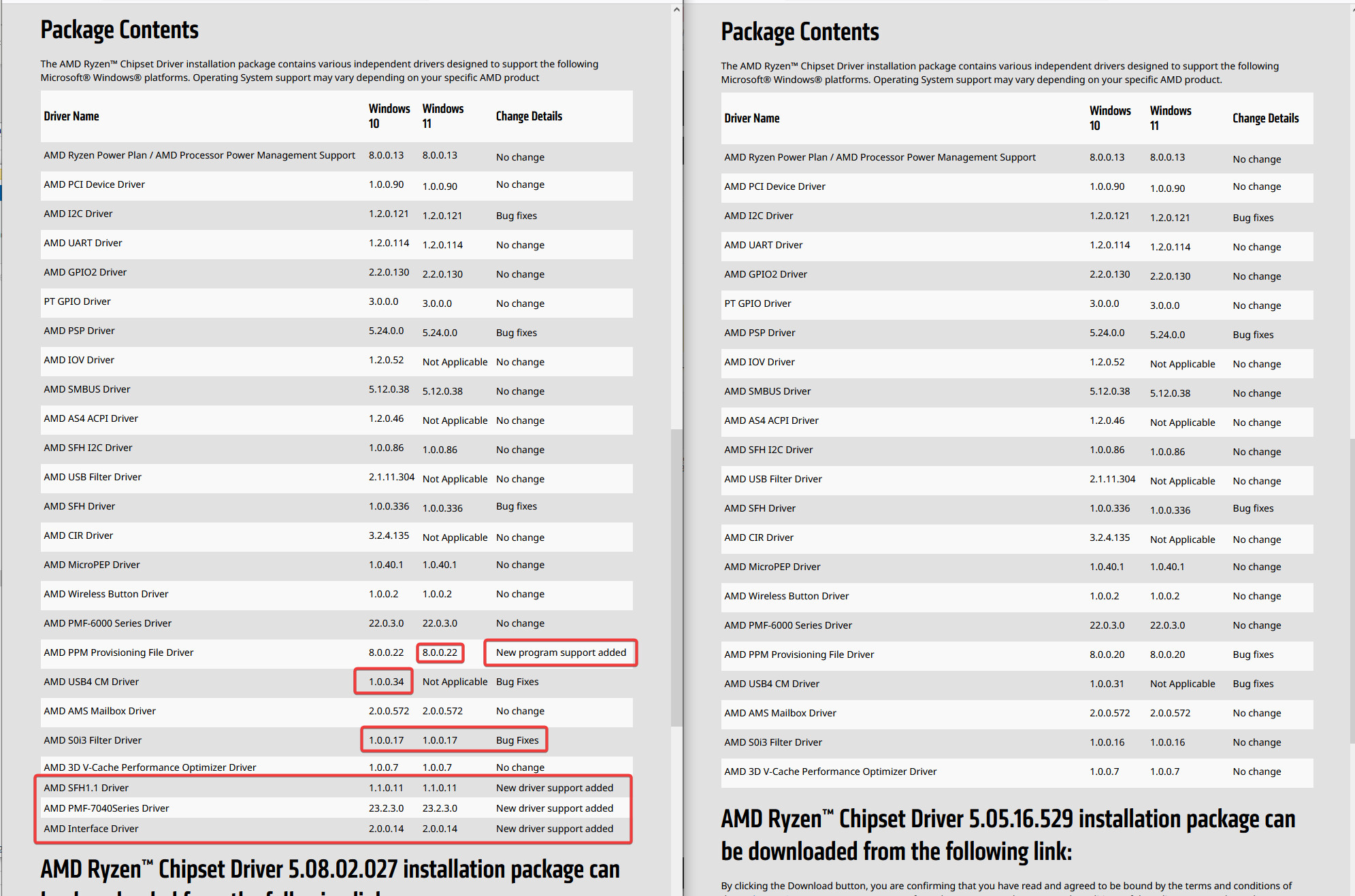
AMD Updates Ryzen Chipset Drivers with Greater 3D V-cache Optimization?
AMD released updated Ryzen Chipset software, version 5.08.02.027. In addition to bug fixes for its various components, the drivers introduce application support for a "New program support and some new drivers added." The package now includes three new components—AMD SFH 1.1 driver, AMD PMF-7040Series driver, and a curiously named AMD Interface driver. SFH, or Sensor Fusion Hub, is a mobile-relevant component where various sensory devices, such as cameras, motion-sensors, etc., can be presented to the OS to drive applications that need them, such as Windows Hello. AMD PMF-7040 driver provides Platform Management Framework, and is specific to the Ryzen 7040-series "Phoenix" mobile processors. "AMD Interface driver" is a mystery.
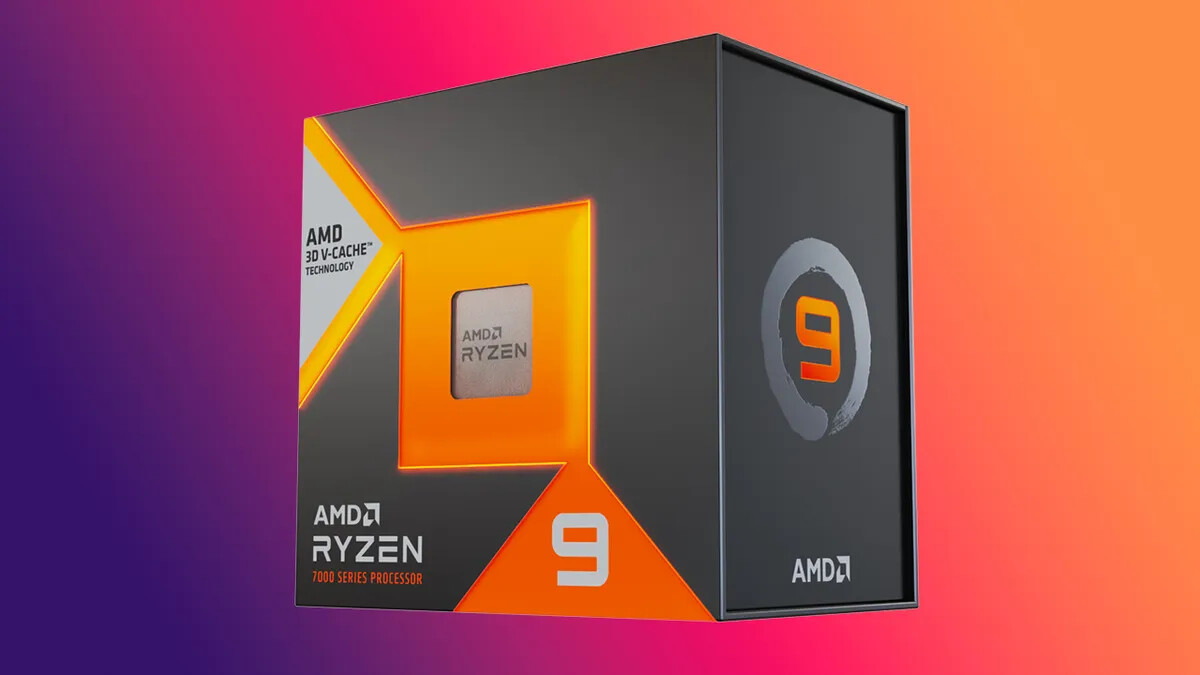
AMD's first processor with 3D V-cache, the Ryzen 7 5800X3D, didn't face optimization issues, as it was a single-CCD processor. The company's latest 7900X3D and 7950X3D are dual-CCD processors, where one of the two CCDs has 64 MB 3D V-cache on top of the 32 MB on-die L3 cache, and the other is a regular "Zen 4" CCD with just the on-die 32 MB L3 cache. To ensure the right kind of workload is scheduled to the right kind of CCD, AMD has been using a driver that assists Windows scheduler with this exact task. "AMD Interface driver" could serve as a backend to an application that probably gives some kind of control for this 3D V-cache control driver; or perhaps it is just a backend for Ryzen Master. If AMD has to give end-users the ability to tinker with 3D V-cache application scheduling, the logical way it would go about doing it is add functionality to the Ryzen Master app. If there is a separate front-end application planned for the task, then it is probably non-public, and meant for AMD and its ISV partners.
DOWNLOAD: AMD Chipset Software 5.08.02.027

Read full story
More...
 Posting Permissions
- You may not post new threads
- You may not post replies
- You may not post attachments
- You may not edit your posts
-
Forum Rules