-
Robot
Most Wanted

- Rep Power
- 82
 Artificial Intelligence Helped Tape Out More than 200 Chips
In its recent Second Quarter of the Fiscal Year 2023 conference, Synopsys issued interesting information about the recent moves of chip developers and their usage of artificial intelligence. As the call notes, over 200+ chips have been taped out using Synopsys DSO.ai place-and-route (PnR) tool, making it a successful commercially proven AI chip design tool. The DSO.ai uses AI to optimize the placement and routing of the chip's transistors so that the layout is compact and efficient with regard to the strict timing constraints of the modern chip. According to Aart J. de Geus, CEO of Synopsys, "By the end of 2022, adoption, including 9 of the top 10 semiconductor vendors have moved forward at great speed with 100 AI-driven commercial tape-outs. Today, the tally is well over 200 and continues to increase at a very fast clip as the industry broadly adopts AI for design from Synopsys."
This is an interesting fact that means that customers are seeing the benefits of AI-assisted tools like DSO.ai. However, the company is not stopping there, and a whole suite of tools is getting an AI makeover. "We unveiled the industry's first full-stack AI-driven EDA suite, sydnopsys.ai," noted the CEO, adding that "Specifically, in parallel to second-generation advances in DSO.ai we announced VSO.ai, which stands for verification space optimization; and TSO.ai, test space optimization. In addition, we are extending AI across the design stack to include analog design and manufacturing." Synopsys' partners in this include NVIDIA, TSMC, MediaTek, Renesas, and IBM Research, all of which used AI-assisted tools for chip design efforts. A much wider range of industry players is expected to adopt these tools as chip design costs continue to soar as we scale the nodes down. With future 3 nm GPU costing an estimated $1.5 billion, 40% of that will account for software, and Synopsys plans to take a cut in that percentage.
More...
Intel Arrow Lake-HX Interposer Appears Online
The Intel Design tools webpage has this week once again provided an early preview of upcoming processors - following on from an LGA1851-MTL-S CPU interposer appearing on the site late last month - indicating that a Meteor Lake-S desktop CPU range was due at some point later in 2023. Intel's latest webpage entry features the "BGA2114-ARL-HX Interposer for the Gen 5 VR Test Tool" with an SKU code that reads: "Q6B2114ARLHX."
The BGA 2114 design points to a mobile processor platform, and industry analysts are fairly certain that Intel is preparing next generation high-end laptop CPUs in the form of its rumored Arrow Lake-HX lineup. This range is set to succeed the 13th generation Core-HX Raptor Lake family of mobile processors. The new BGA package looks to be slightly larger than the closest predecessor, possibly accommodating Intel's new "disaggregated" tile-based (tile is their term for chiplet) internal layout.

More...
(PR) DDN QLC SSD Storage Delivers 10X Speed for AI and Data Centers at Any Scale
DDN, the global leader in artificial intelligence (AI) and multi-cloud data management solutions, today announced a major breakthrough for its all flash and hybrid storage solutions. DDN's parallel file system technology, combined with AI and data center specific data compression, delivers the highest performance efficiency straight into generative AI, machine learning and other enterprise high-performance applications.
Eliminating the need for complex networking and heavily bottlenecked performance found in other data storage solutions, DDN's new AI400X2 QLC and hybrid storage arrays combine DDN's parallel file system with novel client-side data compression, increasing performance by 10x, growing effective capacity by up to 15x and reducing data center footprint by 2x.
Read full story
More...
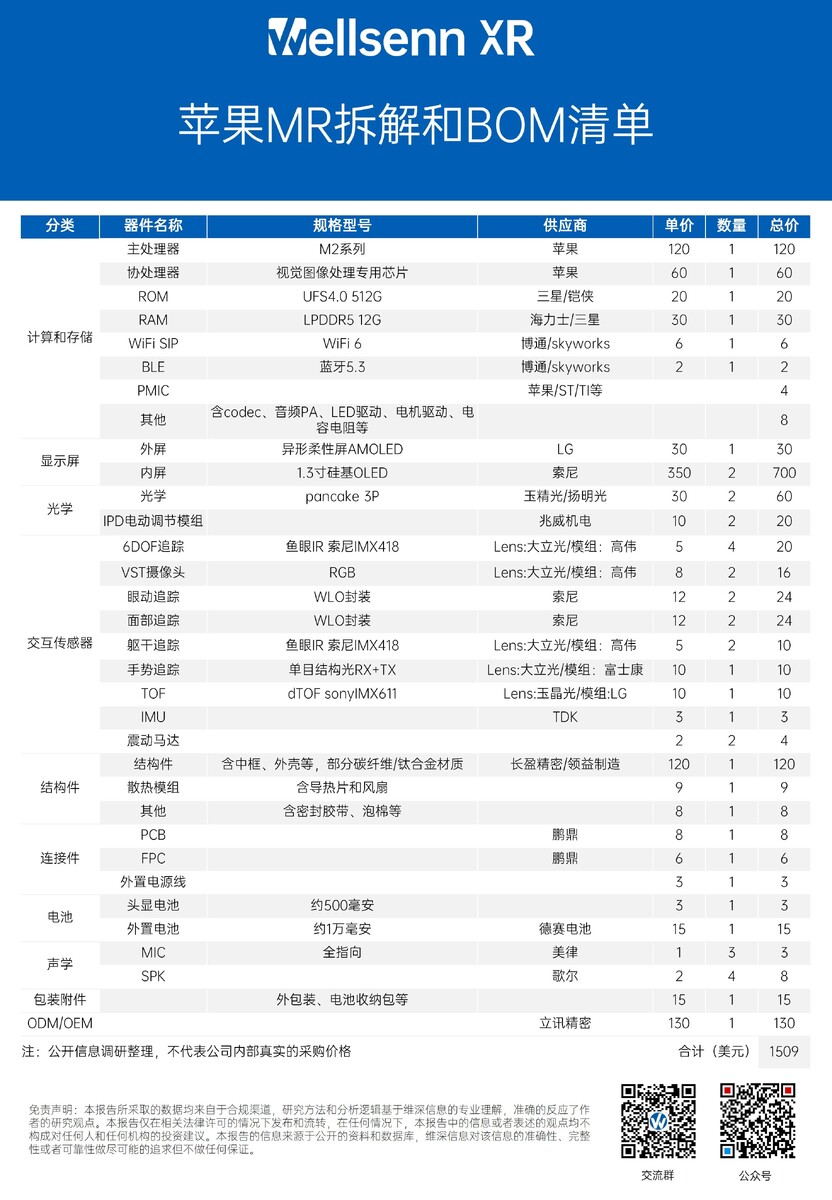
Alleged Apple Mixed Reality Headset Material Cost Leaks Out
Self-described mixed reality nerd, Brad Lynch, has tweeted out several interesting details about Apple's yet-to-be announced VR/AR headset. He has managed to compile information from several sources - mostly reports produced by hardware analysts based in China. His summation of the leaked info states: "The Apple HMD's Bill of Materials (BoM) cost to be about $1500-1600 (USD). This is about double the reported BoM for the (Meta) Quest Pro (which was 800 dollars including the controllers and charging pad)."
Minsheng Electronics's article suggests that 400,000 - 500,000 headset units are set for production in the second half of this year. An operating system with the codename "rOS" is reportedly clashing with Apple's traditional iOS mobile platform, but the author does not provide further information about these compatibility issues. The headset's operating system is supposedly capable of supporting a wide range of games, productivity applications and methods of video communication.

Read full story
More...
 Posting Permissions
- You may not post new threads
- You may not post replies
- You may not post attachments
- You may not edit your posts
-
Forum Rules