-
Robot
Most Wanted

- Rep Power
- 82
 (PR) AMD Announces Availability of the Ryzen PRO 3000 Series Processor
Today, AMD announced the global availability of its new AMD Ryzen PRO 3000 Series desktop processor lineup, along with new AMD Ryzen PRO processors with Radeon Vega Graphics and AMD Athlon PRO processors with Radeon Vega Graphics. The AMD Ryzen PRO and Athlon PRO desktop processors combine powerful performance, built-in security features, and commercial-grade reliability to get the job done. Starting in Q4 2019, robust enterprise desktops from HP and Lenovo powered by AMD Ryzen PRO and Athlon PRO desktop processors are slated to be available.
"The launch of the Ryzen PRO 3000 Series processors for commercial and small business users is the latest demonstration of our commitment to technology leadership in 2019," said Saied Moshkelani, senior vice president and general manager, AMD Client Compute. "Designed specifically to efficiently data-crunch, design, compose, and create - AMD Ryzen PRO and Athlon PRO processors accelerate enhanced business productivity while offering protection safeguards with built-in security features, such as full system memory encryption and a dedicated, on-die security processor."
More...
GoodOffer24 Helps You Upgrade to Windows 10 Enterprise and Office 2019 Saving Big
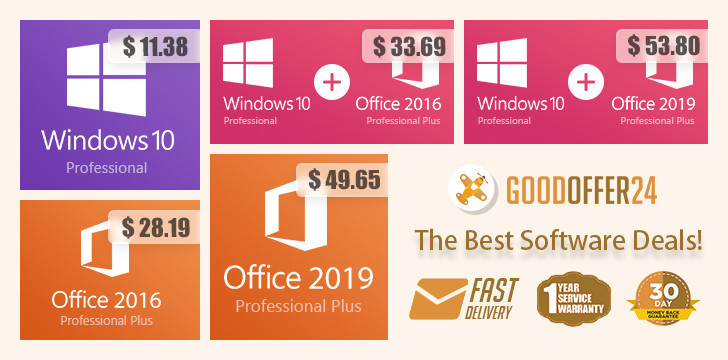
GoodOffer24 is a great way for businesses, PC enthusiasts, and gamers to save big on genuine, globally-valid licenses to key software, and particularly useful with the inflection between Microsoft discontinuing Windows 7 and rising PC hardware prices. Businesses of any scale can soak up genuine Windows 10 Enterprise 2019 LTSC licenses for as low as USD $13.29 a piece. Gamers and PC enthusiasts can pick up Windows 10 Pro for just $11.38. These offers beat prevalent licensing prices by triple-figure margins, and also compete with large volume licensing. Office 2019 Professional Plus is another must-have for businesses and home users alike. GoodOffer24 has it in-stock for $56.74. You can also explore combo-packs of Windows 10 and Office licenses from the links below, that help you save even more. GoodOffer24 is backed by 30-day moneyback guarantees, secure PayPal payment gateways, and a high Trustpilot score. Start saving big with GoodOffer24!
Apply the discount code JGM25 at check-out for 25% off, to avail the prices you see here.
Buy Windows 10 Enterprise 2019 LTSC at $13.29 | Buy Windows 10 Pro at $11.38 | Buy Windows 10 Pro 2-pack at $19.50 | Buy Office 2016 Professional Plus at $28.19 | Buy Windows 10 Pro + Office 2016 Professional Plus Bundle at $33.69 | Buy Windows 10 Home at $11.87
Apply the 30% off coupon-code JGO24OFFICE2019 at check-out to avail the prices you see above for the following software:
Buy Office 2019 Professional Plus at $56.74 | Buy Windows 10 Pro + Office 2019 Professional Plus at $61.48 | Buy Windows 10 Home + Office 2019 Professional Plus at $52.14
More...
(PR) Shuttle Unveils New Palm-sized, 4K Capable Nano PC with Intel Whiskey Lake
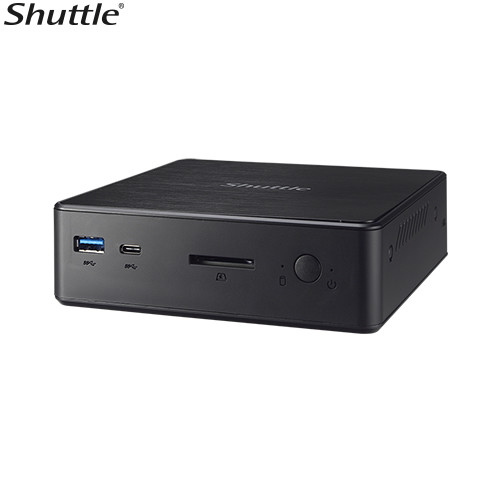
Shuttle Inc., the global leader in small form factor computer technology, today announces its newest addition to the Nano PC solution: NC10U series. Powered by the new Intel Whiskey Lake ULV platform, the NC10U series is a palm-sized, 4K capable and low-power PC perfect for a variety of applications including home, office, and digital signage.
The NC10U series comes with a selection of Intel's 8th Generation ULV processors ranging from Celeron, Core i3, Core i5 to Core i7 and supports for dual-channel memory with up to 32 GB of DDR4. With an 8th Gen technology, the system reduces power consumption while delivering significant performance improvement. The NC10U series features HDMI 2.0a and DisplayPort connections to support dual-screen displays for increased productivity and efficiency. Plus with the availability with HDMI 2.0a, the NC10U series gives a smooth playback of 4K content and 4K HDR videos as well.
More...
(PR) Razer Launches Seiren Emote Microphone
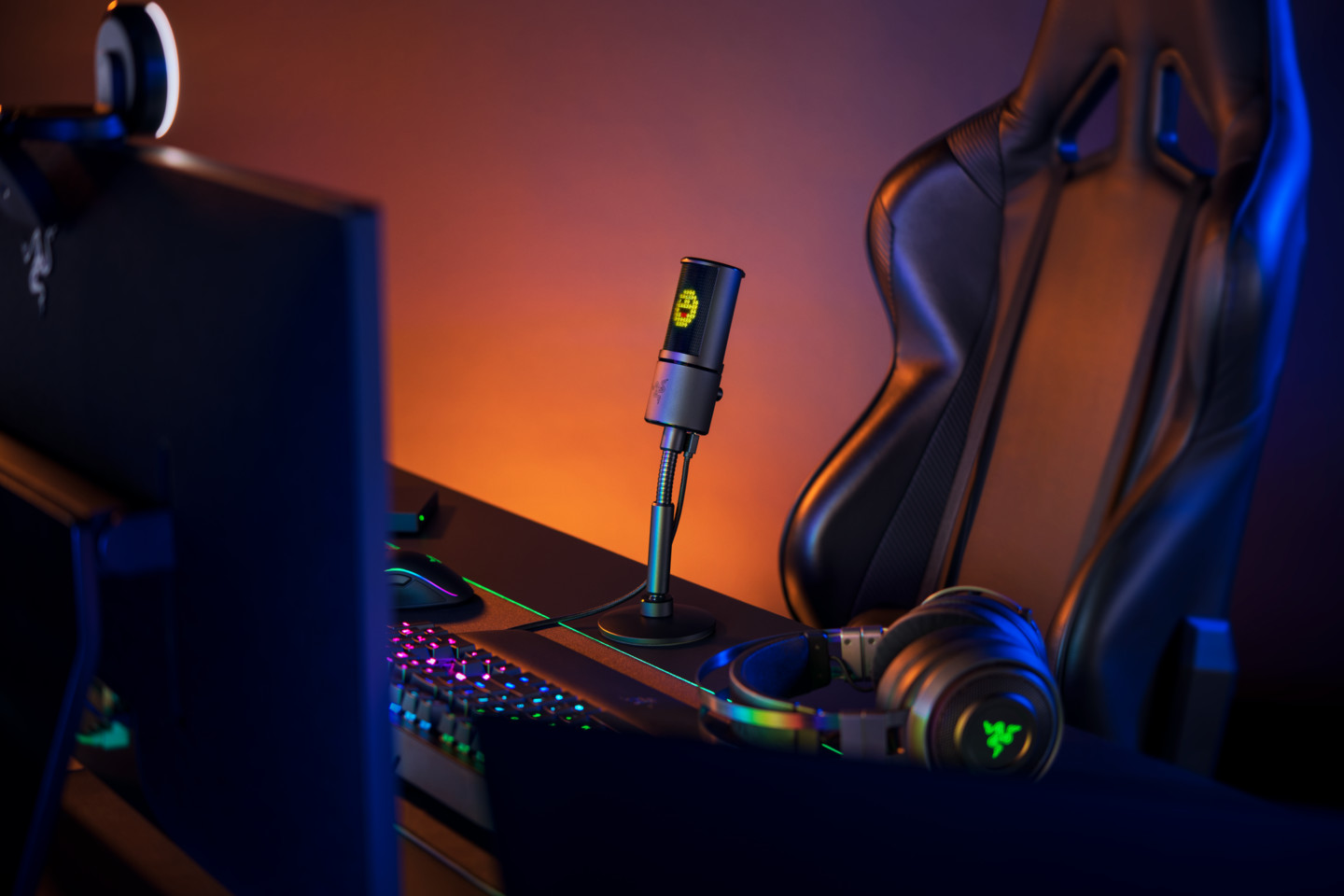
Razer, the leading global lifestyle brand for gamers, today introduced the Seiren Emote, the world's first professional-grade streaming microphone featuring an emoticon display. The Razer Seiren Emote synchronizes the emoticons displayed on the microphone to on-stream events, allowing streamers to engage with their audience in a whole new way.
At the heart of the Seiren Emote is the world's first 8-bit Emoticon LED display powered by Razer's Emote Engine. The Emote Engine synchronizes emoticon responses to on-stream audience interaction like alerts, chat messages, follows, donations and more. Streamers are free to express themselves and entertain in their own unique way through hundreds of presets or customizable emoticons that they can add or design themselves.
More...
Intel Sunny Cove Successor Significantly Bigger: Jim Keller
Sunny Cove is codename for Intel's first truly new performance CPU core design since "Skylake," and made its debut with the company's 10 nm "Ice Lake" processors, packing the first tangible IPC increase in years. VLSI guru Jim Keller is leading the effort to build Intel's future CPU core designs, and dropped a big hint on what to expect, speaking at a gathering in U.C. Berkeley. It's unclear which specific core Keller is referring to. The immediate successor to "Sunny Cove" is codenamed "Willow Cove," and Intel's own public sketch hints at an incremental upgrade over Sunny Cove, with faster caches and process-level optimization. It's only with "Golden Cove," slated for 2021, that Intel speaks of its next round of IPC increases (dubbed "ST perf"). It's plausible that Keller is referring to this core since a 2021 launch would fit better with a 2018-19 design phase.
In his talk, Keller describes Intel's next big CPU core as being "significantly bigger" than "Sunny Cove," with its 800-wide instruction window, and "massive" data- and branch-predictors, to put Intel back on a linear performance growth trajectory between generations. Keller also commented on this being a "mindset change" at Intel, which over the past decade, only delivered minor IPC increments between generations, and focused on other areas, such as efficiency. In stark contrast, through the 1990s and 2000s, Intel delivered IPC leaps between generations, such as the one between "Netburst" and "Conroe," and onwards to "Nehalem." These were in-part helped by rapid process advancements that slowed in the 2010s as Intel approached the sub-10 nm scale.The video presentation by U.C. Berkeley follows.
More...
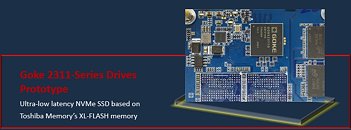
(PR) Goke Microelectronics Launches Toshiba XL-Flash Based NVMe SSDs
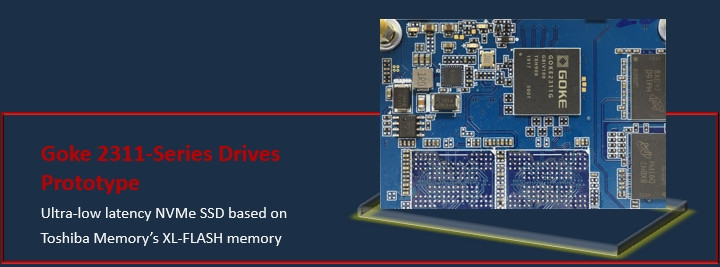
As the industry's leading provider of SSD controllers and storage solutions, Goke Microelectronics was invited to the 2019 Flash Memory Summit to demonstrate an ultra-low latency NVMe SSD based on Toshiba Memory's XL-FLASH memory. One year ago, Toshiba Memory announced XL-FLASH at the 2018 Flash Memory Summit, promising to use ultra-low latency 3D SLC flash to reduce read latency to 5μs, which is equivalent to 1/10th of read latency of 3D TLC NAND.
Goke 2311-series drives are based on the 2311 SSD controller and are paired with Toshiba Memory's XL-FLASH memory. The prototype of 2311-series drives have implemented an overall 4K random read latency under 20μs and the final drives will offer a 4K random read latency in less than 15μs. Goke 2311-series drives support up to 4 TB capacity with a maximum write bandwidth of 1 GB/s and read bandwidth of 3 GB/s through a PCIe Gen 3 x4 interface. They will also support SM2/3/4 and SHA-256/AES-256 with built-in security engines.
More...
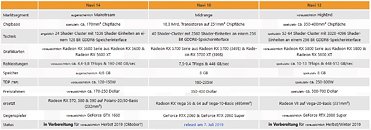
AMD "Navi 14" and "Navi 12" GPUs Detailed Some More
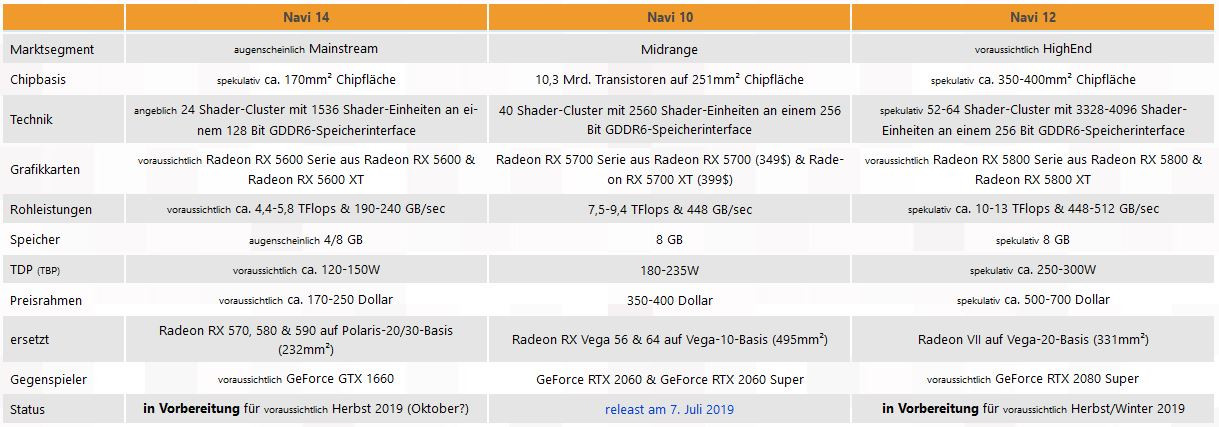
The third known implementation of AMD's "Navi" generation of GPUs with RDNA architecture is codenamed "Navi 14." This 7 nm chip is expected to be a cut-down, mainstream chip designed to compete with a spectrum of NVIDIA GeForce GTX 16-series SKUs, according to a 3DCenter.org report. The same report sheds more light on the larger "Navi 12" GPU that could power faster SKUs competing with the likes of the GeForce RTX 2080 and RTX 2080 Super. The two follow the July launch of the architecture debut with "Navi 10." There doesn't appear to be any guiding logic behind the numerical portion of the GPU codename. When launched, the pecking order of the three Navi GPUs will be "Navi 12," followed by "Navi 10," and "Navi 14."
"Navi 14" is expected to be the smallest of the three, with an estimated 170 mm² die-area, about 24 RDNA compute units (1,536 stream processors), and expected to feature a 128-bit wide GDDR6 memory interface. It will be interesting to see how AMD carves out an SKU that can compete with the GTX 1660 Ti, which has 6 GB of 192-bit GDDR6 memory. The company would have to wait for 16 Gbit (2 GB) GDDR6 memory chips, or piggy-back eight 8 Gbit chips to achieve 8 GB, or risk falling short of recommended system requirements of several games at 1080p, if it packs just 4 GB of memory.
More...
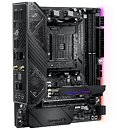
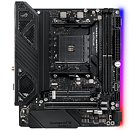
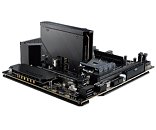
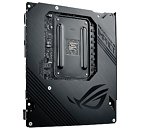
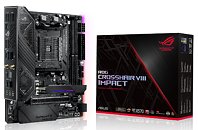
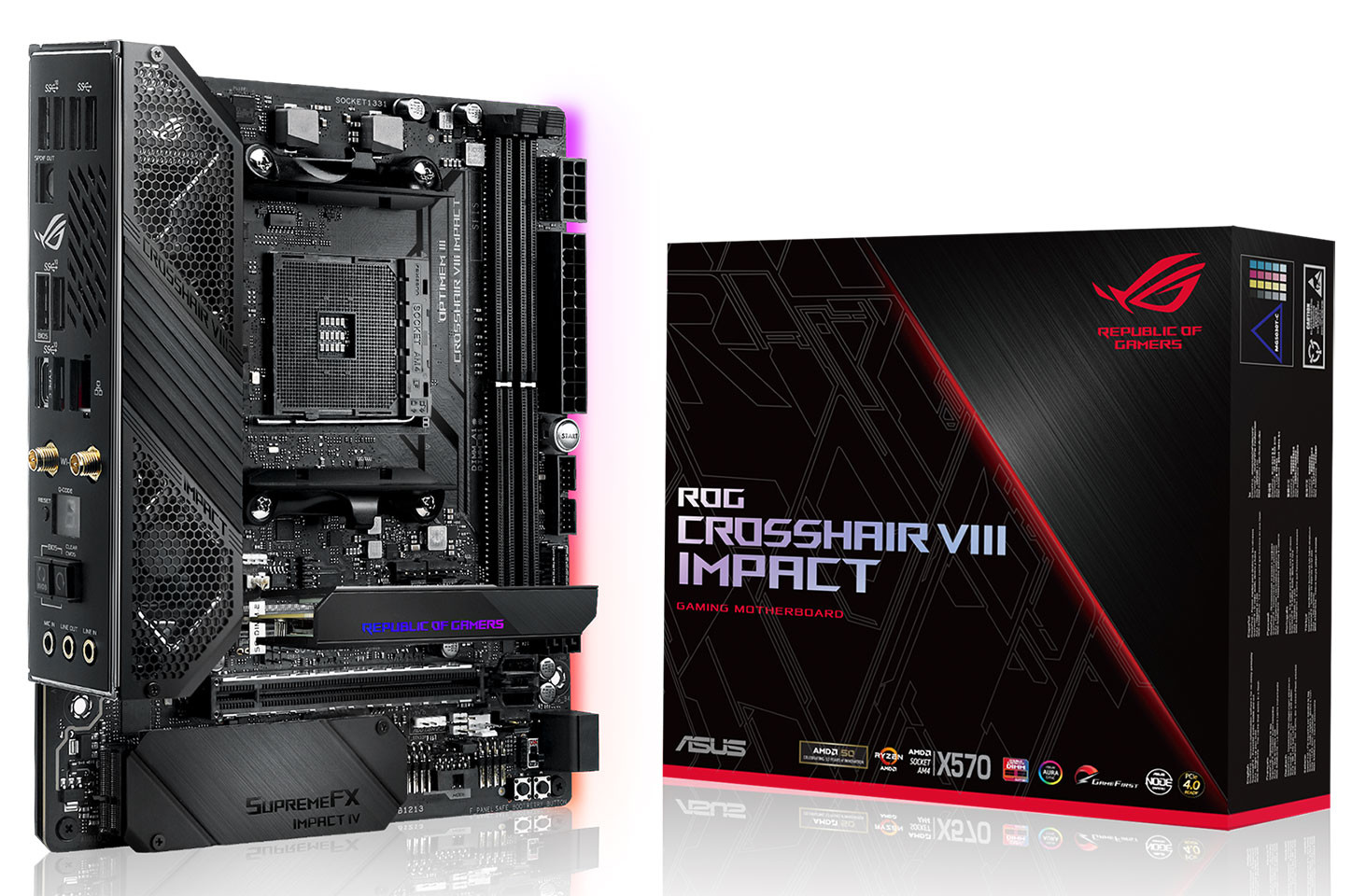
ASUS Rolls Out ROG Crosshair VIII Impact - Not Strictly Mini-ITX
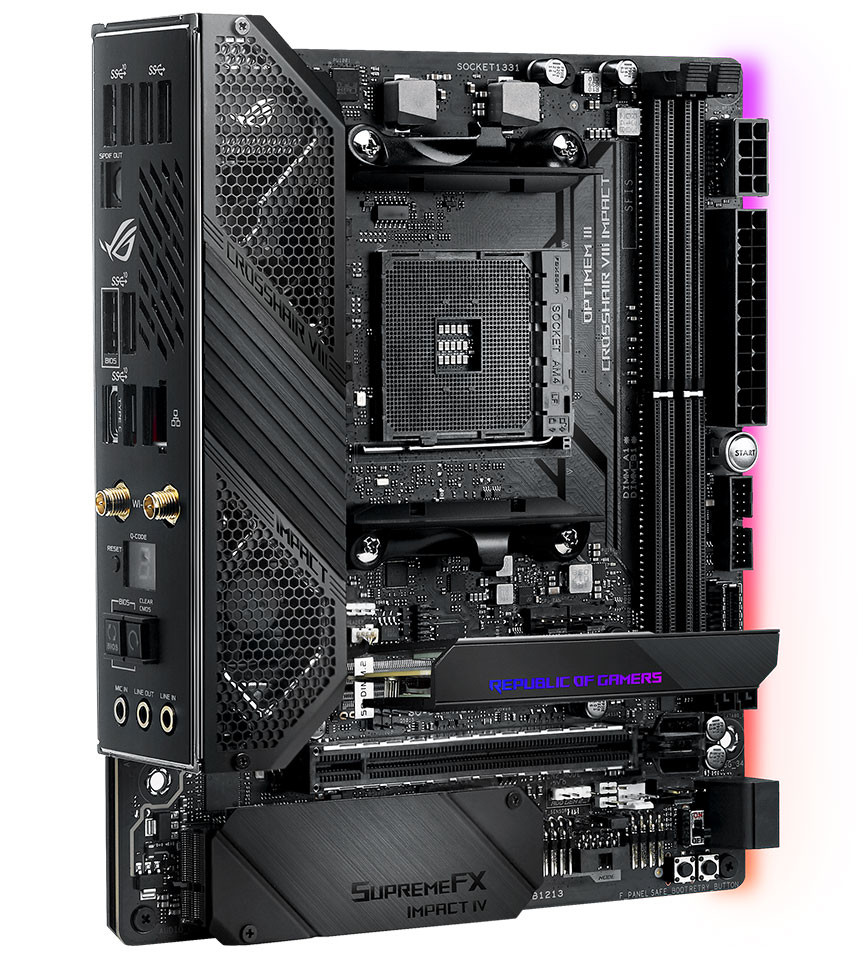
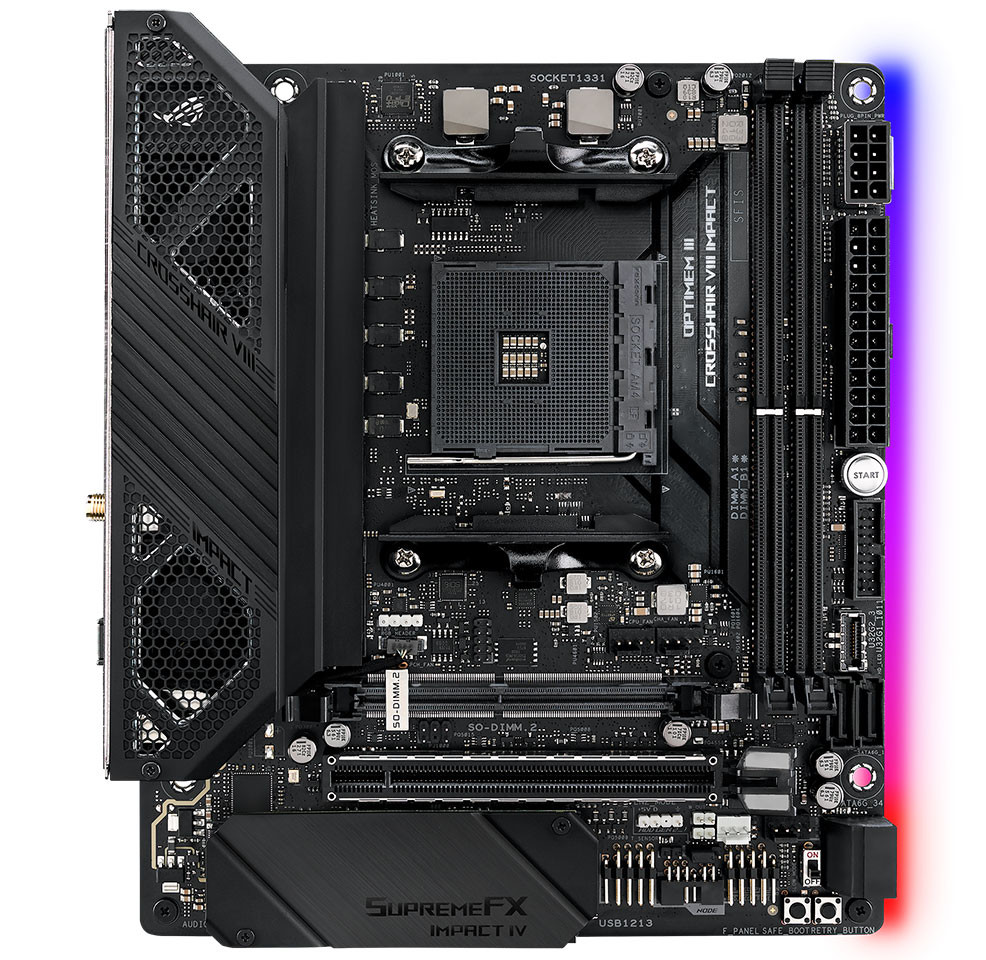
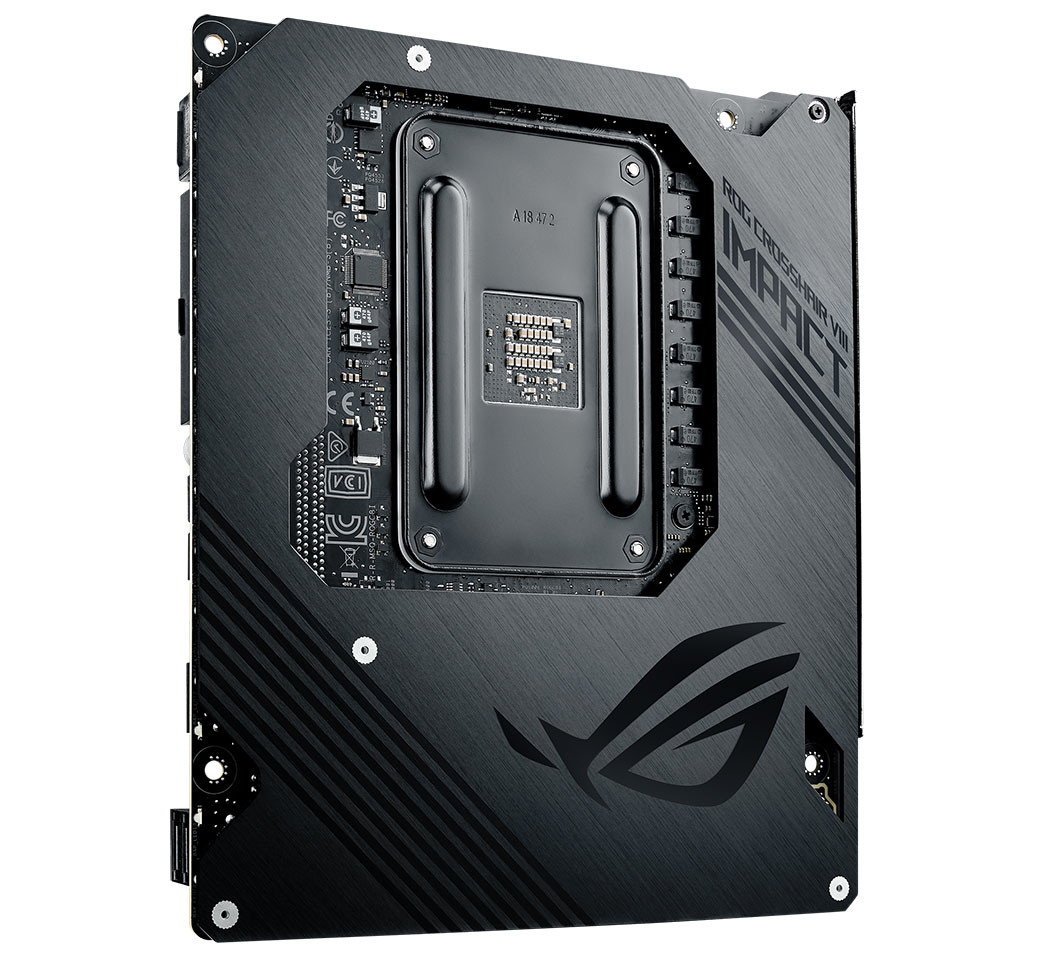
ASUS over the past week rolled out its flagship socket AM4 motherboard for SFF gaming PC builds, the ROG Crosshair VIII Impact. Based on the AMD X570 chipset and supporting the latest 3rd generation Ryzen processors, this board is slightly longer than the Mini-ITX specification, while retaining its mount-hole layout. The logic here is that most ITX gaming PC cases have two expansion slots to accommodate dual-slot graphics cards, and so it would make sense to extend the motherboard's PCB up until there, reclaiming precious PCB real-estate. Technically this board would qualify as mini-DTX, but ASUS believes it should fit in most ITX cases that have two expansion slots. The board's dimensions are 203 mm x 170 mm.
The ROG Crosshair VIII Impact draws power from a combination of 24-pin ATX and 8-pin EPS connectors, conditioning power for the AM4 SoC using a massive 8-phase VRM. The AM4 socket is wired to a pair of DDR4 DIMM slots, the board's sole expansion slot, a PCI-Express 4.0 x16, and the interestingly-named SO-DIMM.2 slot. Physically, this is an SO-DIMM slot that's been re-wired with PCIe gen 4.0 leading up to a proprietary SO-DIMM daughterboard that holds two M.2-2280 slots with PCIe 4.0 x4 and SATA 6 Gbps wiring, each. Four SATA 6 Gbps ports make for the rest of the storage connectivity. The area of the motherboard just below the PCIe x16 slot has another proprietary slot that holds the second daughterboard, this one with the SupremeFX Impact IV onboard audio solution, which has been physically isolated from the main PCB, and has an EMI-shielded Realtek ALC1220 main CODEC, ESS Sabre ES9023P DAC for the main stereo channel, a de-pop circuit, and audio-grade capacitors.
More...
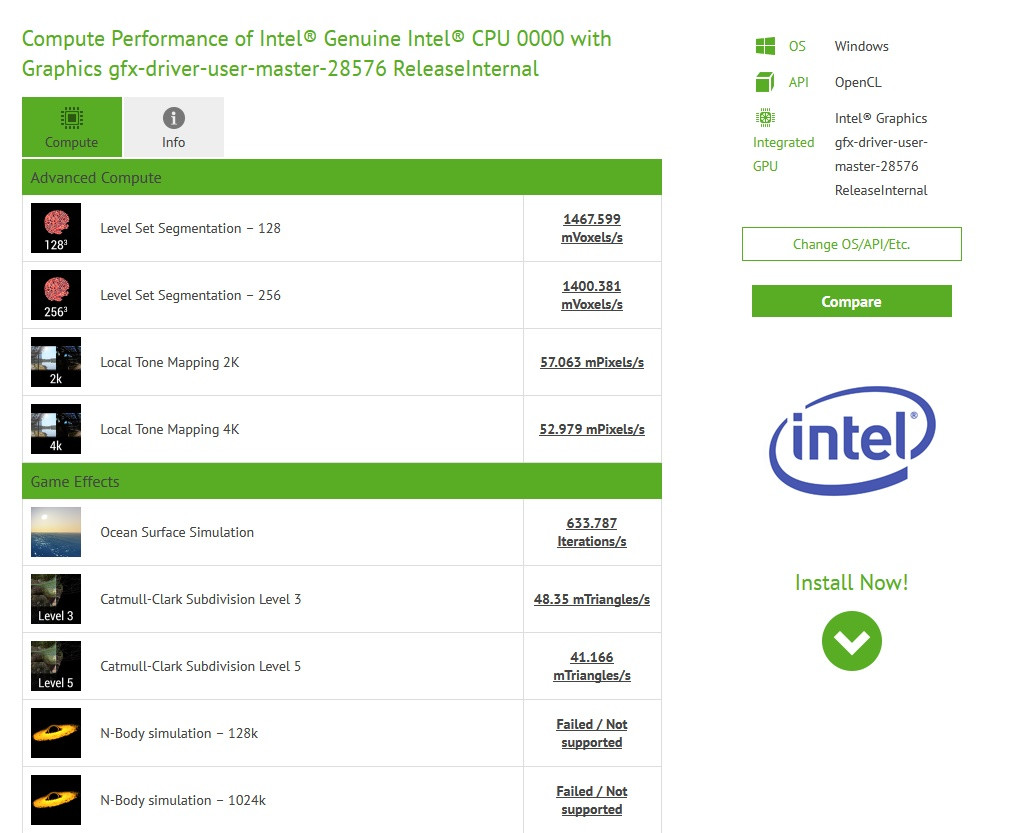
Intel Gen12 iGPU With 96 Execution Units Rears Its Head in Compubench
Intel's upcoming Gen12 iGPU solutions are being touted as sporting Intel's greatest architecture shift in their integrated graphics technologies in a decade. For one, each Execution unit will be freed of the additional workload of having to guarantee data coherency between register reads and writes - that work is being handed over to a reworked compiler, thus freeing up cycles that could be better spent processing triangles. But of course, there are easier ways to improve a GPU's performance without extensive reworks of their design (as AMD and NVIDIA have shown us time and again) - simply by increasing the number of execution units. And it seems Intel is ready to do just that with their Gen12 as well.
An unidentified Intel Gen12 iGPU was benchmarked in CompuBench, and the report includes interesting tidbits, such as the number of Execution Units - 96, a vast increase over Intel's most powerful iGPU to date, the Iris Pro P580, with its 72 EU - and far, far away from the consumer market's UHD 630 and its 24 EUs. The Gen12 iGPU that was benchmarked increases the EU count by 33% compared to Intel's top performing iGPU - add to that performance increases through the "extensive architecture rework", and we could be looking at an Intel iGPU part that achieves some 40% (speculative) better performance than their current best performer. The part was clocked at 1.1 GHz - and the Iris Pro P580 also clocked to that maximum clock under the best Boost conditions. Let's see what next-gen Intel has in store for us, shall we?
More...
 Posting Permissions
- You may not post new threads
- You may not post replies
- You may not post attachments
- You may not edit your posts
-
Forum Rules