-
Robot
Most Wanted

- Rep Power
- 82
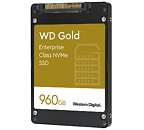
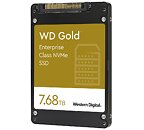
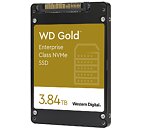
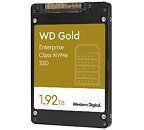
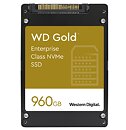
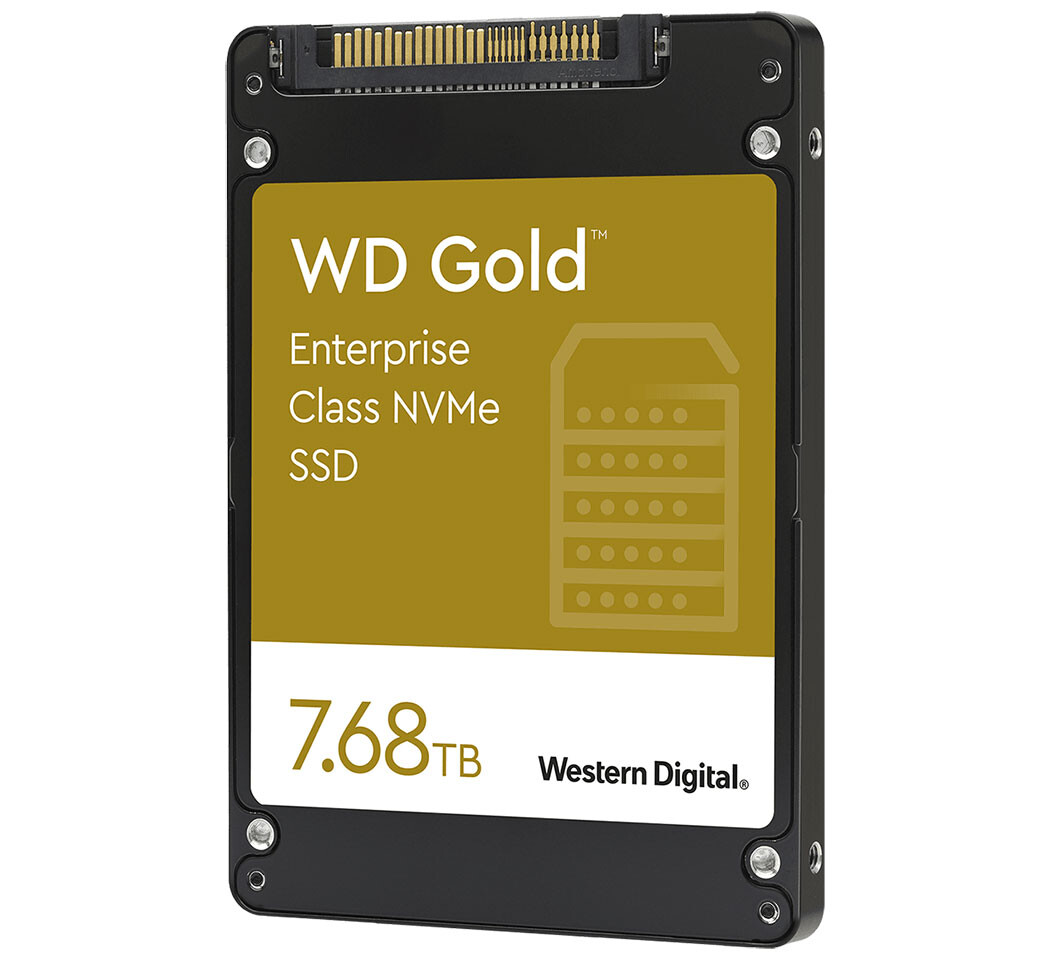
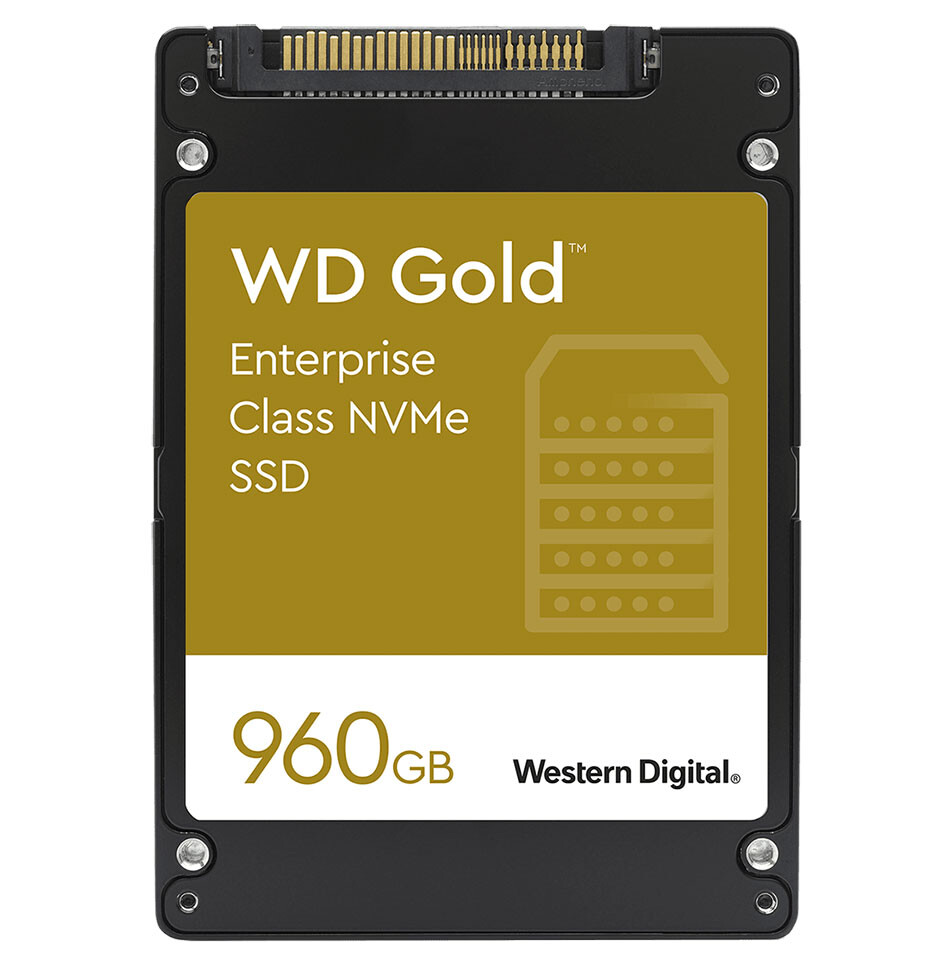
 (PR) Western Digital Announces the WD Gold Series U.2 NVMe Enterprise
Western Digital is enabling small and medium-sized enterprises (SMEs) to easily transition to NVMe storage and dramatically improve application performance with a new addition to its portfolio of data center NVMe SSDs: the first enterprise-class NVMe SSD in the WD Gold family. Industry analyst firm IDC expects NVMe unit shipments to reach more than 79 percent of the market by 2023. With advancements in multi-core, multi-threaded CPUs, legacy storage technology has become a bottleneck to maximum application performance.
Shipping in early cQ2 2020, the new WD Gold NVMe SSDs will be available in four capacities to channel partners and end customers. The WD Gold NVMe SSD is designed to be the primary storage in servers delivering superior response times, higher throughput and greater scale than existing SATA devices for enterprise applications. WD Gold NVMe SSDs complement recently launched WD Gold HDDs by providing a high-performance storage tier for applications and data sets that requires low latency or high throughput.
More...
A Peek Under the Hood of Intel IGCC Game Capture (beta) Feature
Late last week, Intel released a public beta of its own low-'cost' game capture and streaming feature that's part of Intel Graphics Command Center (IGCC) application that's distributed through Microsoft Store. At the time, Intel claimed that those gaming on Intel Graphics can yet record or stream their games with negligible performance impact. We now have a couple of under the hood details on how this feature works. The Game Capture and Streaming feature lets people record their gameplay or stream it to popular social networks such as Twitch, YouTube, etc.
Intel's game capture and streaming feature leverages the VDEnc hardware AVC encoder featured in the company's Gen9 (and later) iGPUs, found on "Skylake" (or later) microarchitectures. At default quality settings, the feature only needs VDEnc, and hence offers practically zero iGPU performance impact when rendering 3D. At higher quality settings by the user, however, the feature switches to a dual-pipe encoder that taps into the compute power of the iGPU's execution units (EUs). These hence come with a performance impact on the iGPU when rendering 3D. We've also learned that IGCC game capture tech does not leverage discrete GPUs of other brands.
More...
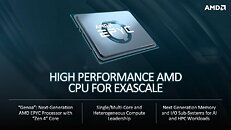
AMD Scores Another EPYC Win in Exascale Computing With DOE's "El Capitan" Two-Exaflop Supercomputer
AMD has been on a roll in both consumer, professional, and exascale computing environments, and it has just snagged itself another hugely important contract. The US Department of Energy (DOE) has just announced the winners for their next-gen, exascale supercomputer that aims to be the world's fastest. Dubbed "El Capitan", the new supercomputer will be powered by AMD's next-gen EPYC Genoa processors (Zen 4 architecture) and Radeon GPUs. This is the first such exascale contract where AMD is the sole purveyor of both CPUs and GPUs, with AMD's other design win with EPYC in the Cray Shasta being paired with NVIDIA graphics cards.
El Capitan will be a $600 million investment to be deployed in late 2022 and operational in 2023. Undoubtedly, next-gen proposals from AMD, Intel and NVIDIA were presented, with AMD winning the shootout in a big way. While initially the DOE projected El Capitan to provide some 1.5 exaflops of computing power, it has now revised their performance goals to a pure 2 exaflop machine. El Capitan willl thus be ten times faster than the current leader of the supercomputing world, Summit.
More...
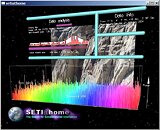
Hold on to Your Aliens: SETI@Home to Enter Hibernation March 31st
Well, folks, if you've had your GPU happily cycling through computations for Berkeley SETI Research Center's Search for ExtraTerrestrial Intelligence program, you can start counting the watts you'll now be saving. In a post on the SETI@Home page, the researchers explained the reason they'll be politely refusing any additional computations: one, that they're already hitting the point of diminishing returns on computational uptime and have already analyzed all the required data; two, that they require all hands on deck to actually peruse the already gathered data for work on research papers, instead of hard at work managing the distributed processing of data.
SETI@Home recommends users to attach their freely given computing power to another BOINC-based project, but I'd say there is no need to ask that: people who contribute to distributed computing projects such as these always want to do all their can for us all. Kudos to all of you who added your PC hardware to this project. Now, it's time to find a new home - and might I suggest Folding@Home's new project to thwart the current Coronavirus scourge? And also, remember to make use of the TechPowerUp! team ID with Folding@Home (id 50711). If you want to take part in our folding community, feel free to hit up our forums.PS: No wording on whether aliens have been found, so we'll all have to wait for these actual research papers to come out.
More...
Three Unknown NVIDIA GPUs GeekBench Compute Score Leaked, Possibly Ampere?
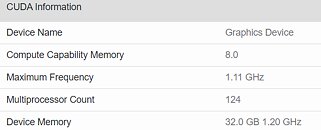
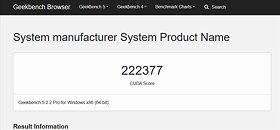
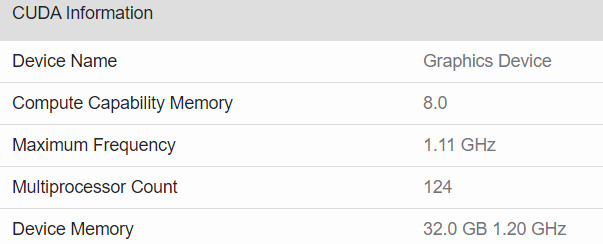
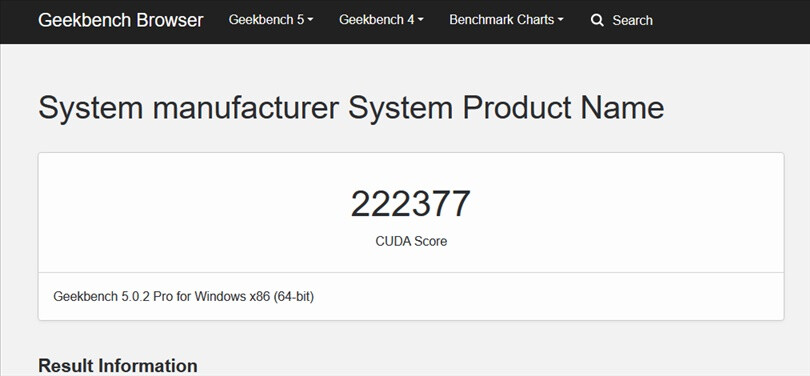
(Update, March 4th: Another NVIDIA graphics card has been discovered in the Geekbench database, this one featuring a total of 124 CUs. This could amount to some 7,936 CUDA cores, should NVIDIA keep the same 64 CUDA cores per CU - though this has changed in the past, as when NVIDIA halved the number of CUDA cores per CU from Pascal to Turing. The 124 CU graphics card is clocked at 1.1 GHz and features 32 GB of HBM2e, delivering a score of 222,377 points in the Geekbench benchmark. We again stress that these can be just engineering samples, with conservative clocks, and that final performance could be even higher.)
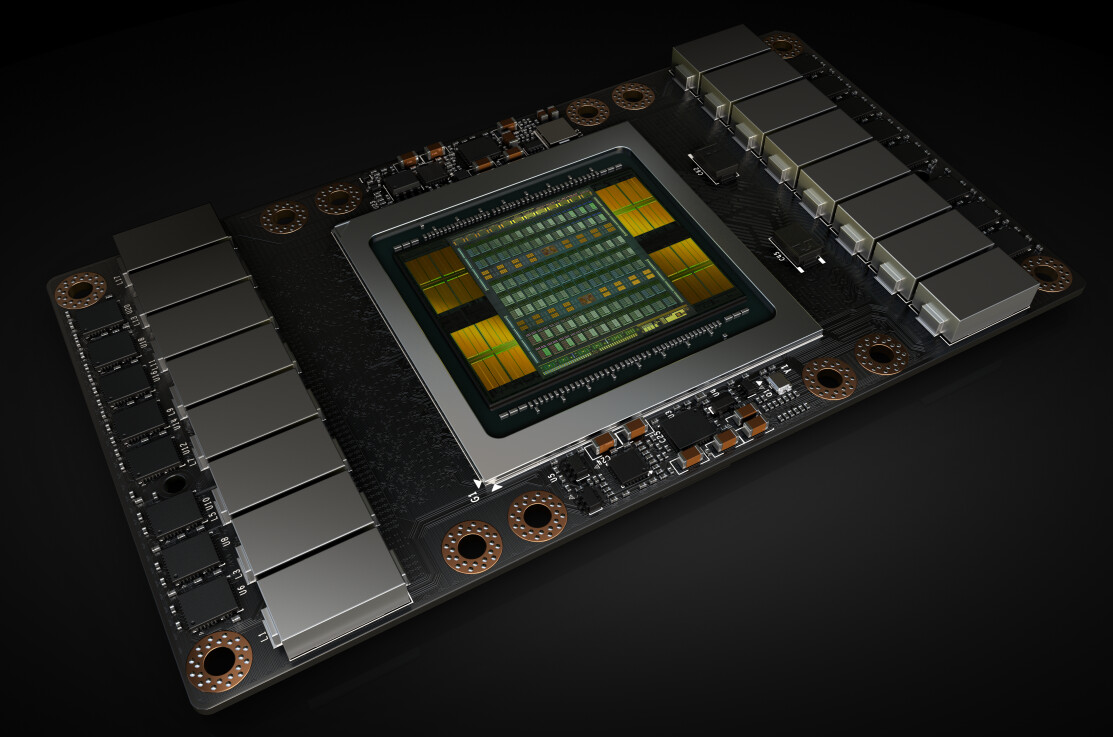
NVIDIA is expected to launch its next-generation Ampere lineup of GPUs during the GPU Technology Conference (GTC) event happening from March 22nd to March 26th. Just a few weeks before the release of these new GPUs, a GeekBench 5 compute score measuring OpenCL performance of the unknown GPUs, which we assume are a part of the Ampere lineup, has appeared. Thanks to the twitter user "_rogame" (@_rogame) who obtained a GeekBench database entry, we have some information about the CUDA core configuration, memory, and performance of the upcoming cards.
More...
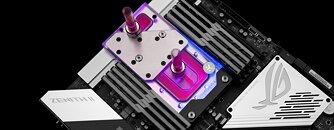
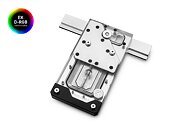
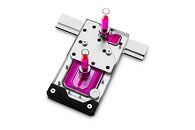
(PR) EK Water Blocks Announces the EK Quantum Momentum TRX40 Monoblock for ASUS ROG Zenith II Extreme Motherboard
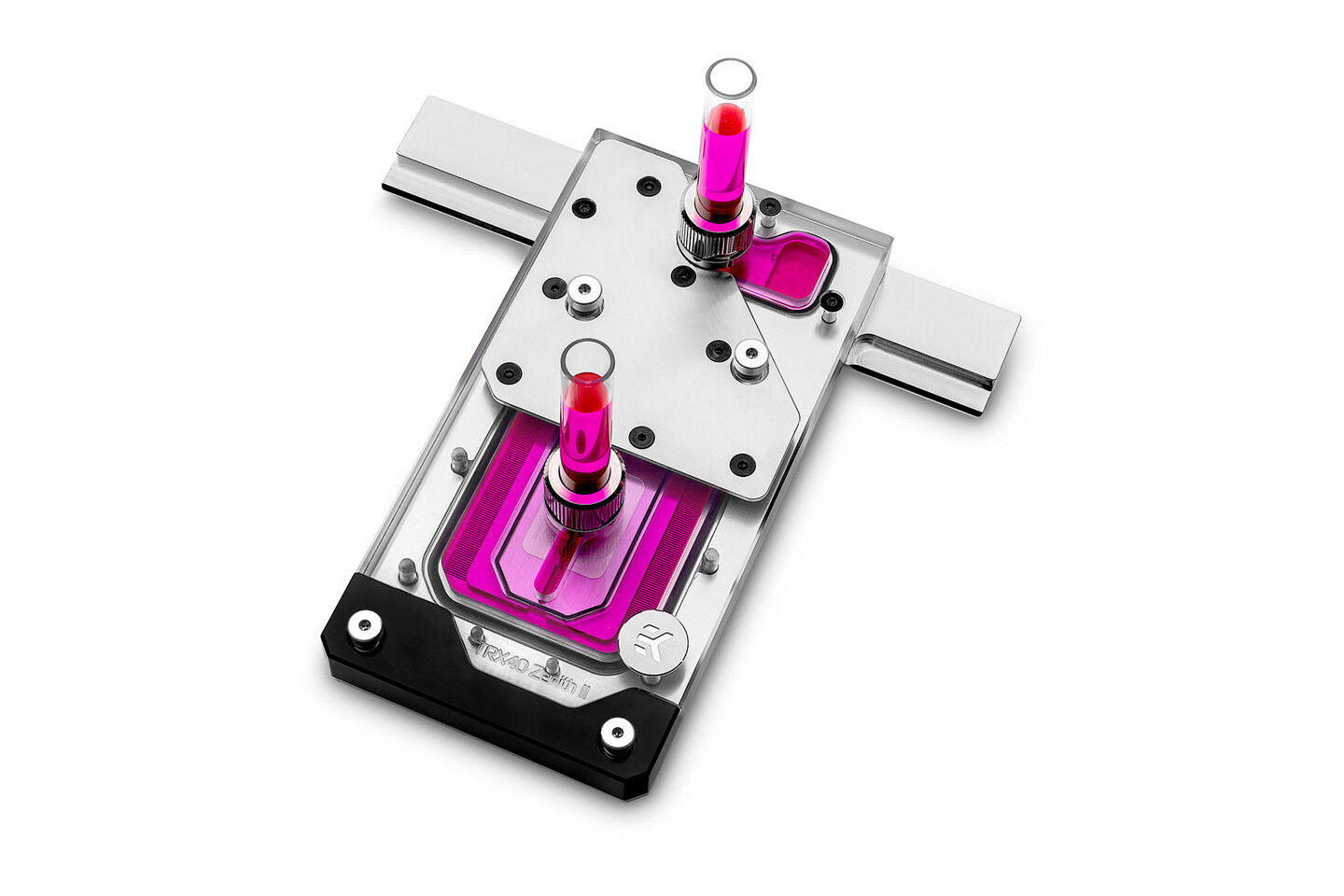
EK Water Blocks, the Slovenia-based premium computer liquid cooling gear manufacturer, makes another push into the HEDT market by releasing the world's first Socket sTRX4 based monoblock made for made for the ROG Zenith II Extreme motherboard. This is a complete all-in-one (CPU and motherboard) liquid cooling solution for the ASUS motherboard that is based on AMD TRX40 chipset for AMD Ryzen Threadripper processors. This monoblock is compatible with the ASUS ROG Zenith II Extreme motherboard.
Designed and engineered in cooperation with ASUS, this monoblock uses Velocity sTR4 cooling engine to ensure the proper cooling of the large IHS that hides the spread-out chiplets. This water block directly cools AMD sTR4X type CPU, as well as the voltage regulation module (VRM). This kind of efficient VRM cooling on a TRX40 platform opens up even greater overclocking capabilities. Using a monoblock gets rid of the small fans that can be found on these TRX40 motherboards, hidden under the VRM heatsink grill.
More...
 Posting Permissions
- You may not post new threads
- You may not post replies
- You may not post attachments
- You may not edit your posts
-
Forum Rules